1961 – The Children’s Hour

1961 – The Children’s Hour

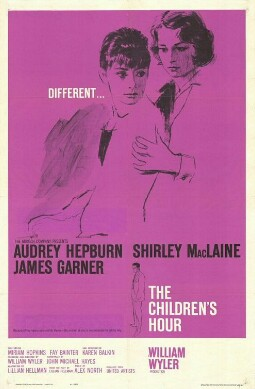
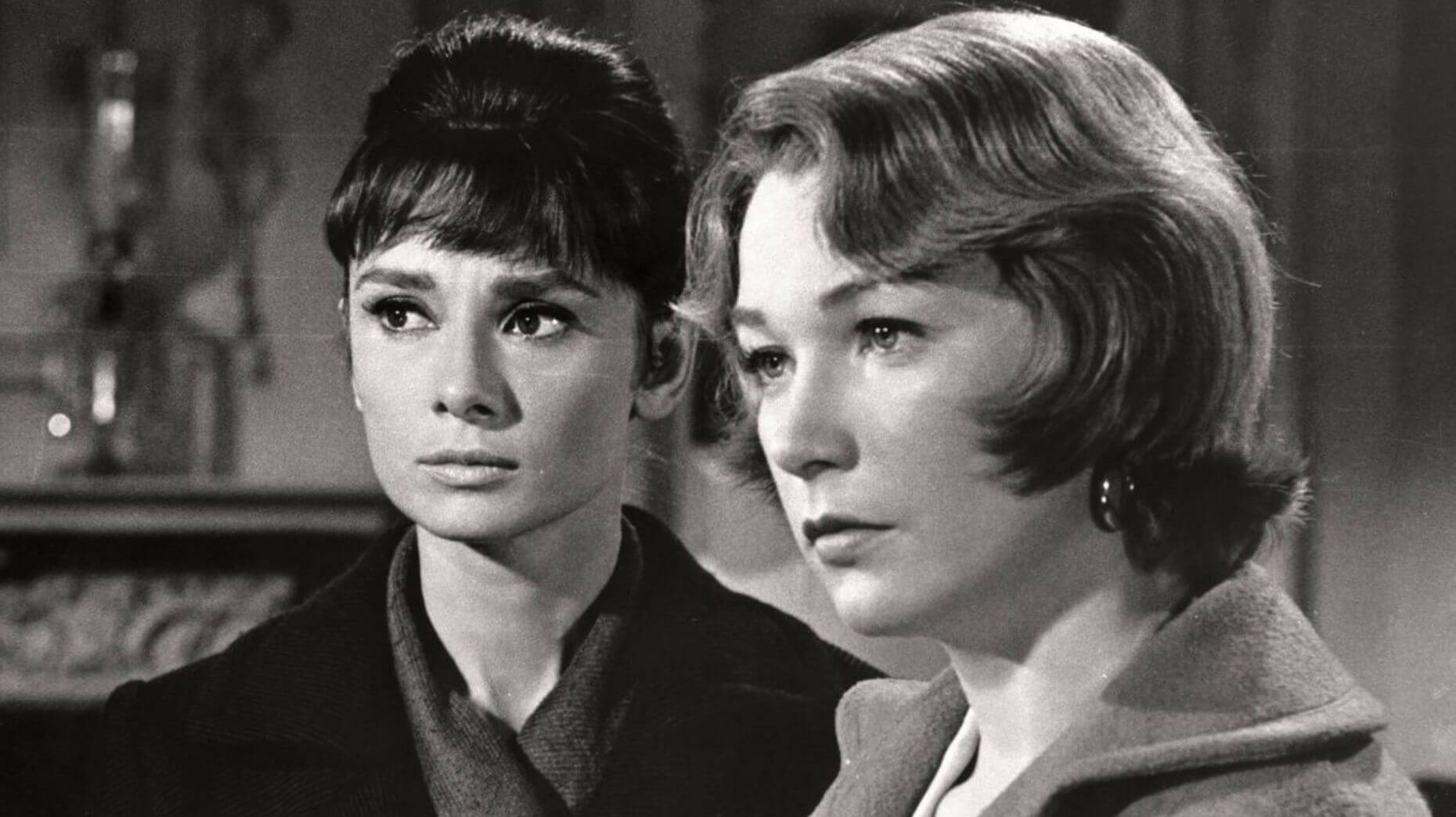
It’s a psychological drama produced and directed by William Wyler (oh, hello again) with a screenplay by John Michael Hayes, based on the 1934 play of the same title by Lillian Hellman, which itself is inspired by a real case in 1810 that happened to two ladies running a school in Scotland. It stars Audrey Hepburn as Karen and Shirley MacLaine as Martha who run a girls school and find themselves in social and financial ruin after a student accuses them of engaging in a lesbian relationship. I saw it on YouTube here.

Sorry, I am a day late. I was on a little family trip and World Cup is on, so my interests are with that for the moment, hehe. I was even contemplating whether to just skip a week, but since I did watch this movie last night, I count it as being on time. Looking back, it would’ve coincided with June 28th better as it’s the anniversary of the Stonewall Riots, but hey, all of June is Pride Month! Choosing this movie was fairly random, it seemed interesting, I liked both actresses, was not in the mood for a Samurai Kurosawa movie (Yojimbo) and weirdly I have seen a lot of 1961 movies.

So the premise of the movie is fairly simple to tell: a reckless student in an all-girls boarding school accuses the two women who run it of having a romantic relationship and the repercussions that scandalous accusation bring. You know how often we say that children should rule the world, then it would be a better place? Nah, children are the worst, because they often have no idea how bad the consequences of their actions are. Here this kid, who is like 12-13 thoroughly destroys the lives of two women just out of spite, because she didn’t want to be punished for her lies. She manipulates her fellow students with blackmail and fully gaslights her grandmother into her evil story.

I liked the premise very much. It offered so many possibilities. It fully passes the Bechdel test, lol. Unfortunately, the movie has two flaws that take somebody completely out of it.

(a) it’s so badly acted – everybody is running around screaming and whaling their intentions to each other in such a dramatic way. James Gardner, who plays Karen’s love interested even sings his lines in that typical “Hey, I’m acting” way. Horrible, it took me out of the movie. The only person that saves the movie is Audrey Hepburn, with the quiet hurt, but also dignity that she can convey in her eyes. It really saved the movie. The rest of the cast (yes, even Shirley MacLaine, as much as it pains me to write this) is horrible.

(b) Oh the melodrama! I really didn’t know if it was supposed to be camp, but they sure didn’t present it that way. Rather than quietly explore something of what could’ve been, it’s just a bunch of howling and shrieking that leads to a very disappointing ending, even for 1961 and especially for 2026 – it’s just too Hays coded. Man, how far we have come!

Glad I watched it, but unfortunately, it didn’t speak to me, precisely because it wasn’t brave enough to really tackle the subject.

1952 – Ikiru (To Live)

1952 – Ikiru

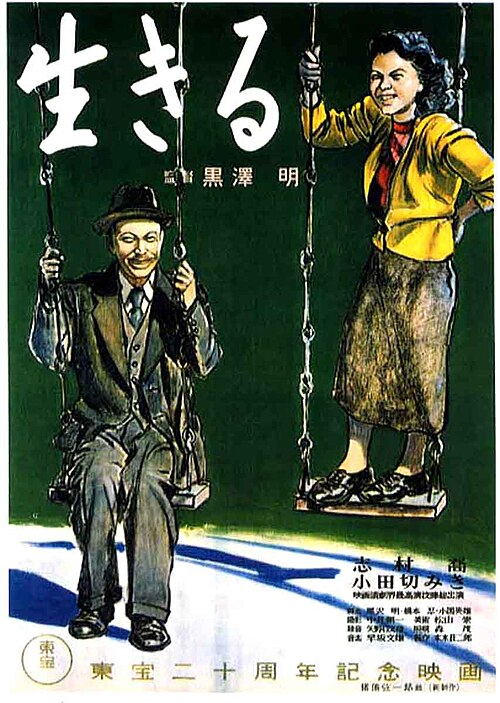
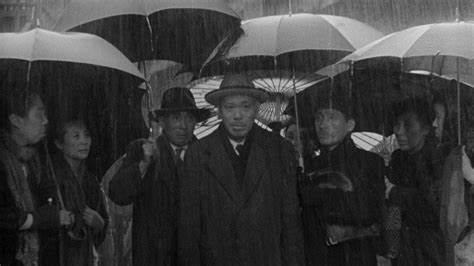
It’s a japanese drama film by the master Akira Kurosawa (only my 2nd after Seven Samurai) from a screenplay by Shinobu Hashimoto and Hideo Oguni. It is said to be inspired by Leo Tolstoy’s 1886 novella “The Death of Ivan Ilyich“. It mainly stars Takashi Shimura as a terminally ill bureaucrat as he examines how his life has been going. I rented it from filmingo for 6 Eur.

It’s nothing new, that there is plenty of nostalgia on social media right now. The newest trend in 2026 is to share your photos from 2016, to romanticize its aesthetic, to reminisce of a time before the pandemic where there was less polarization, less constant crisis. I, on the other hand, went on an even deeper rabbit hole to a nostalgia core corner that says that The Matrix was right, actually: 1999 was peak humanity! And so I stumbled across Baz Luhrman’s Sunscreen video. Huh, I hadn’t seen that since almost 25 years, way before YouTube, probably when visiting New York city after having moved to Northern California, faithfully as the video had said. By the time the video was halfway done, I was a weeping mess. Even though there were few regrets, most of the advice is generic and I had tried to follow a lot to some degree after having received it in a chainmail e-mail back in 1997, it hits differently when looking back. And if this examination of ones life right in the middle of it at 47 hits so hard, would it be even be more of a gut punch were I older or my deathbed?

Here the movie Ikiru (roughly translated as “to live” or “living”) comes in. The movie starts on the protagonist Kanji being a zombie bureaucrat – a coworker even gave him the nickname “the mummy”. All the time working, at one time full of ideals and with great hopes for a family until the great ideas were beaten and hollowed out of him and the relationship with his son is superficial at best. These themes are Universal, of course, just think of Cat Stevens’ Cat’s in the Cradle or Arthur Miller’s Death of a Salesman. And then Kanji gets the stomach cancer diagnosis (not officially, he has to tragicomically infer it and the fact that he has less than a year to live).

I love that the movie at first goes all hedonistic. He goes on a drinking spree, gambles at pachinko parlors, dances, stays out all night, first with a poet, then with a disillusioned younger female co-worker. Similar to the song Live Like You Were Dying by Tim McGraw at first he tries to make it so that his life was worth living. But with respect to the movie, The Bucket List, you can’t simply selfishly cross of items on a list to make your life mean something. In the second half is where the movie really cooks and goes beyond the themes in the first and it does it in a wonderful flashback manner. The kind you wish for at your funeral, the realization that you were a good person, when you touched even strangers profoundly. And all with a simple contentment that is often inherent in Japanese life.

It’s quite a feat that the movie managed to touch me. I was on quite a cynical mood the whole day yesterday and seeing the new release of Wuthering Heights just left me cold and eye-rolling (like this is supposed to be steamy?). Well done graphically, but it just missed the emotional mark on me. So this quiet contemplation, very simple even, could have elicited the same reaction, it is a 74 year-old movie, after all.

But in its simple honesty it hit the mark, I googled the emotional centerpiece song Kanji keeps on requesting and singing and translated its lyrics:

“Gondola no Uta” (The Gondola Song)

Life is brief. Fall in love, maidens. Before the crimson bloom fades from your lips, Before the tides of passion cool within you, For those of you who know no tomorrow.

Life is brief. Fall in love, maidens. Before his hands take up his boat, Before the flush of his cheeks fades, For those of you who will never return here.

Life is brief. Fall in love, maidens. Before the boat floats away on the waves, Before the flame in your heart flickers and dies, For those of you who have no today.

And that seems very much like the generic advice from Sunscreen that moved me so deeply when I was 18 years old. And it all came full circle and I have to agree with the world what a wonderful movie this is and that the arc it portrays is deeply moving, especially the joy he has swinging in the snow on the new playground he built.

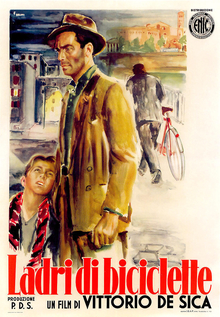
1948 – Bicycle Thieves

1948 – Bicycle Thieves – (Ladri di biciclette)

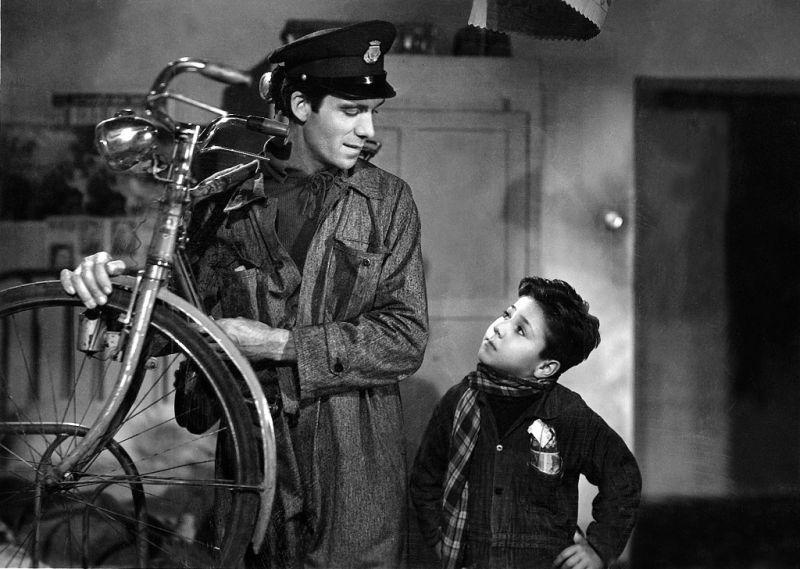
It’s an Italian neorealist drama film directed by Vittorio De Sica. It stars totally unknown actors Lamberto Maggiorani as the father (Antonio) and Enzo Staiola as the son (Bruno), who are looking for a stolen bike in poverty stricken post-WWII Italy. I saw it on YouTube, thanks to this amazing list I found on there. I chose it because it was at one time (1952) rated number 1 in Sight an Sound’s Greatest Movie of all time.

As a kid, I loved my bike. Rode it up and down our little neighborhood in the afternoons, down dirt paths, trying to get amazing jumps in. On the weekend my dad would take me to the BMX park and I would dive into the bowl with joy and try (and fail) some jumps on the half pipe. I even dreamt of my bike, that I could fly over the big cliff near our house, that I would win some bike race. I wasn’t even super good at it; I just loved the bike. Not for nothing, at one point I could recite you the lines of Pee-wee’s Big Adventure, by heart. Poor Peewee’s beautiful red bike (mine was red, too) gets stolen and he has to track it down all over America, what’s not to like?

I was also captivated by the two staples of Italian cinema when I was young: Cinema Paradiso and Life is Beautiful. Both are centered around the relationship between a boy and his father figure and both boys are so cute to look at. The pictures I had seen of Bruno in this movie seemed enough to convince me to watch this movie.

But then… I kinda hated this movie. First of all, the bleakness – yes, of course, post war Italy is bleak. People are fighting for survival, there aren’t any jobs around. But that’s just it, everybody is miserable, everybody is suffering, of course some people are going to resort to stealing. I could just simply no warm up to the main character. So self righteous, as if he deserved special treatment, as if he is the only one to be believed by the police. He gets all indignant and impatient when his wife goes to see a fortune-teller and nags at her, but then he goes to see her himself and whines that his wife nags at him. But the worst is his treatment of his son, he constantly yells at him when all he’s trying to do is to help his father. Poor kid falls and gets scraped in the rain, gets beaten by his old man and in the end is berated for having such a dead beat dad.

And the movie drags, too. It gets boring after a while to go from street to street of Antonio accusing yet another person of stealing his damn bike. There are some scenes, which are cute, for example Bruno eating his mozzarella sandwich (yum!), but I had to stop the movie at several points, because I was bored. Sorry, but I will just go back to Pee-Wee and let Antonio wallow in his misery.

This is my second-to-last entry for this year and I don’t want to end my last entry on a sour note, so before I leave, I want to wish you, some happy holidays and merry Christmas! Thanks for reading the blog!

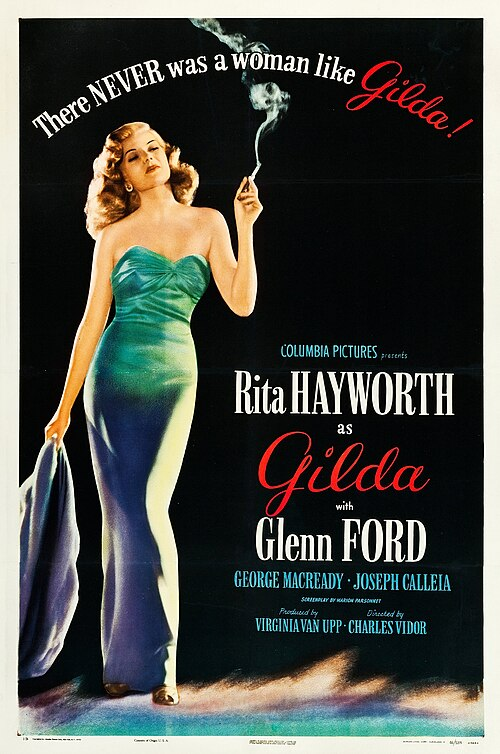
1946 – Gilda

1946 – Gilda

It’s an american noir directed by Charles Vidor. It stars Rita Hayworth as Gilda, Glenn Ford as Johnny Farrell and George Macready as Ballin Mundson in a deliciously elegant antagonist role. It’s the story about a gambler rediscovering his old girlfriend in Argentina, only she’s out for revenge and is married to his new boss. I rented it on Apple TV for 3.99 Eur.

One of the reasons movies are so special to us is they often transport us to a world that is far beyond our reach. Whether it’s a fantasy adventure like Lord of the Rings or a historic epic like Gladiator, heck, even a Western like The Searchers, you are wholly in an unfamiliar setting. What has become less and less prevalent, are movies about far away lands, the exoticism, coupled with opportunity of a clean slate. Even growing up, the movies of the 80s and 90s were often: “I did a crime, I’m going to Mexico!”. 80 years ago, every country outside our own seemed ripe and full of possibilities, because we didn’t know any better. The world of sophisticated and elegant actors, a dream to journey on for riches.

Today, nothing is exotic anymore, every little cafe in the middle of nowhere has a Google review and GPS makes sure you aren’t lost even in the deepest jungle or the most arid landscape. I’ve been fascinated this year reading about Point Nemo or the adventures of wandering to Bir Tawil, the last truly unknown places. It seems I am not alone with this feeling, one of my favorite YouTubers expressed as much for the way we travel, in that it somehow lost its magic.

So it was nice to travel back in time with this movie, to a place where you could Tabula Rasa your way in – Buenos Aires, Argentina (and also Montevideo later) seemed exotic enough. The war had just ended, the world full of possibilities for gamblers and sinners to start anew.

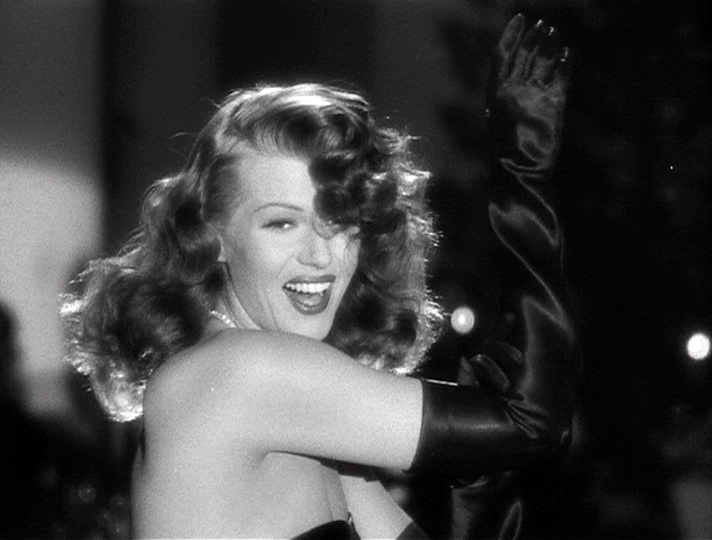
And boy does this movie look great. It’s not for nothing that Andy Dupree was stricken by Rita Hayworth and put her up on that wall in The Shawshank Redemption, that flick with the hair inmortailized. The hip action in her songs – what amazing rendition of Put the Blame on Mame dubbed in by Anita Ellis. And even old Johnny chap is very nice on the eyes. I only ever knew him for being Pa Kent in Superman, but that smirk and the way he leans… swoon. And the electricity between them is crackling, apparently it was real and they become “on again, off again” lovers during the filming of the movie.

But the plot is a convoluted mess, haha. As I said, go for the exotics, the elegance, the worldliness, but not for the story. Of course the villain is somehow involved with the Germans. Of course the elegant local policeman will be the one handing out sage advice. Of course our hero is a plucky american, a little rough on the edges, but with a little gamble in him, he’ll get what he want. At least the ending didn’t quite adhere to noir tropes. So an entertaining movie all around and a great escape to a time when you could just “escape” to Argentina – just don’t try looking for logic and please overlook the millions of plot holes.

1945 – Brief Encounter

1945 – Brief Encounter

It is a British romantic tragedy directed by David Lean from a screenplay by Noel Coward based on a 1936 one-act play Still Life. It stars Celia Johnson as Laura and Trevor Howard as Alec. I saw it on YouTube thanks to the wonderful restoration by the British Film Institute, the David Lean Foundation and Digital restoration by CineImage

I feel like my life has settled into a comfortable routine nowadays. It’s great, I get to travel the world and do amazing science and get to meet super interesting people. And then I get to go home to a kind and loving family. I have no money troubles, no illnesses, no major burdens. But one thing, I do try to do every so often, is to realize the uniqueness that lives in that routine, the small things you know. It occurred to me when I heard yet another person complaining about air travel, how we have forgotten how magical it is that we get into a metal flying tube and are at our destinations so quickly it was unimaginable just 120 years ago. It’s a bit like being in love sometimes, grateful for it, your senses are more tuned to the world around you and you see the good in everything.

I think that is what I take from this movie the most. It’s about a love story between two married people, that was so brief, it didn’t even fully get off the ground. It was so powerful for them, it makes it seem so powerful to us, too. Yet life around them goes on as normal, I like the little “will they, won’t they” routine the train conductor has with the refreshment room lady or how the kids are petulant, but nice. When they’re in love, suddenly everything, even a lady playing the base weirdly is wildly funny or an excursion to an old stone bridge meaningful.

Did I buy into the romance? Yes, I did. Celia Johnson plays the part marvelously, strikes just the correct balance (for that time acting, at least) to make us see and believe what she is going through. Her change in face when she is lying to her friend on the phone asking her to cover for her to when she hangs up, is well portrayed to us. And Trevor Howard makes it very easy for us, the audience, to fall for him, too. I also like the realism on how it won’t last – like what are they supposed to run away together? It takes me back to one of the final scenes in “The Bridges of Madison County“, how she is clinging to the door handle, but doesn’t act on it.

The movies this is most compared to, is the “Before-Trilogy” by Richard Linklater, the giddiness of the first encounter on the train, the played upon non-chalance in the second movie and the setting in of the realism in the third movie. It’s not just me, one of the top comments on Letterboxd is a misquote from Before Sunset (my favorite one of the three): “Baby, you’re going to miss your train!” (she says plane in the movie) and it’s all we can think of, that Laura (of Brief Encounter now) should give in to her feelings. Sadly, I do give the slight edge to the “Before Trilogy” in that sense, “Brief Encounter” is just a tad too melodramatic.

The final interesting aspect, which I didn’t know, was the music. In the background it kept playing the second movement of Sergei Rachmaninoff’s Piano Concerto No. 2, but we do now know it by the name “All by myself” made mostly famous by Celine Dion. If you don’t know the story of that note, how it gives you chills how she sang it after he husband died, I fully recommend this YouTube video David Neely made of the song. Anyway, I kept thinking about the sadness of the song as I watched the movie and it fit so perfectly. Well done, David Lean! I am now a bit more melancholic and romanic, but tuned to what is happening around me, thankful for what it has given me.