1967 – Bonnie and Clyde

1967 – Bonnie and Clyde

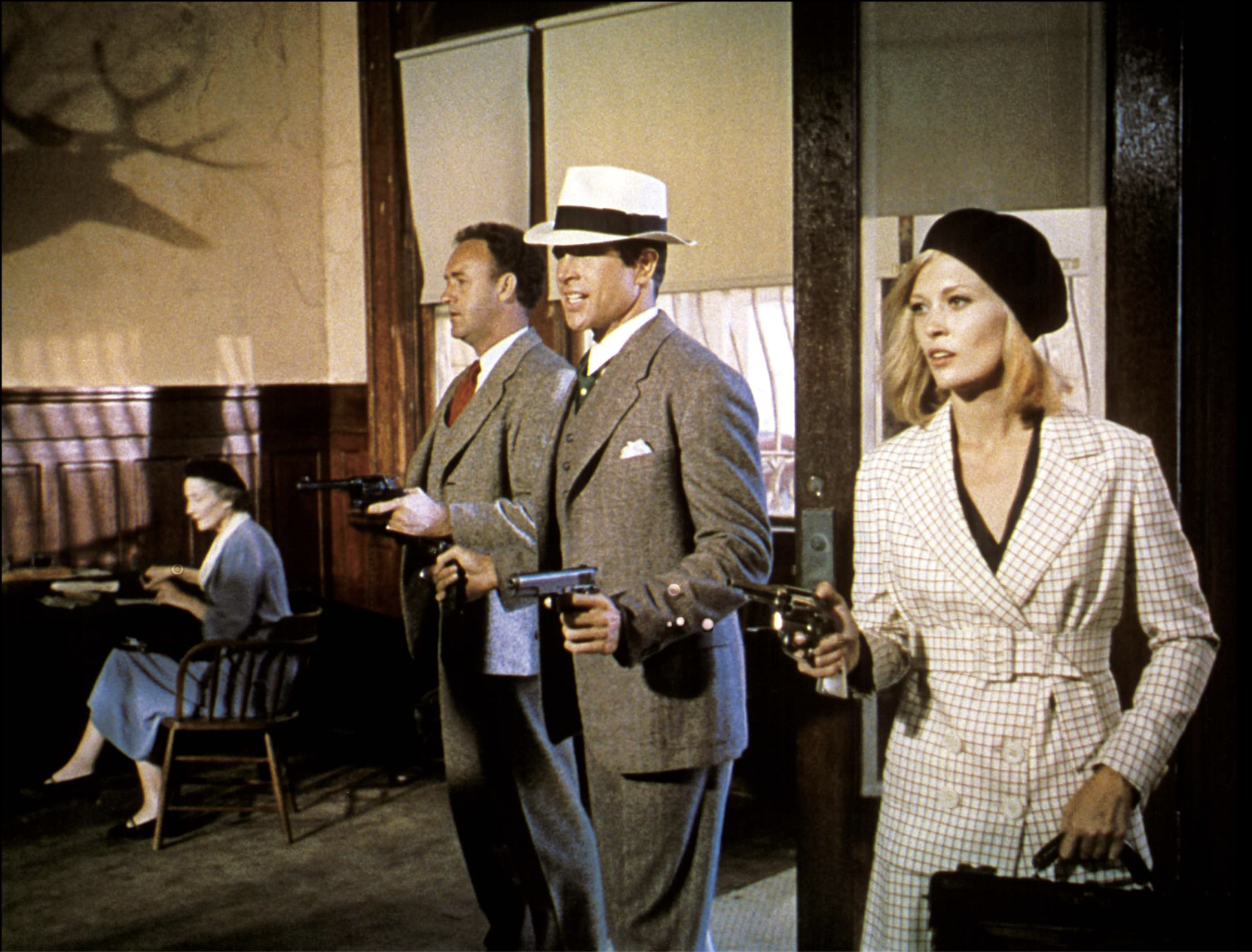
It’s an American biographical and gangster film directed by Arthur Penn and produced by Warren Beatty. It stars Faye Dunaway and Warren Beatty in the titular Bonnie Parker and Clyde Barrow roles. They are outlaws who roam the Depression-era South robbing banks and convenience stores together with others. It ushered in the era of New Hollywood, a more gritty, but honest form of cinema with self-auteur (away from the studio system and the Hays Code), morally ambiguous main characters and bleak or unresolved endings. I rented it on Apple TV for 3.99 Eur.
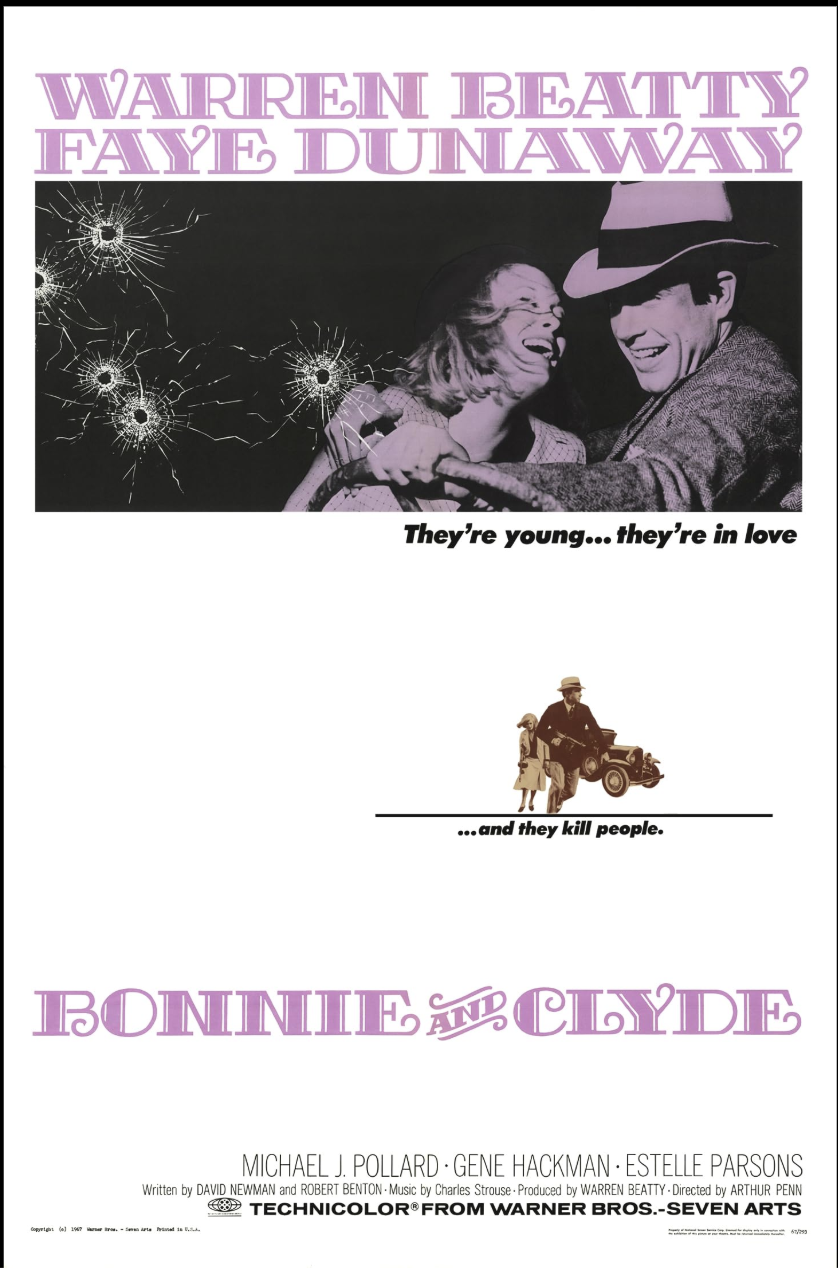
It’s time for another gangster movie and for yet another tonal shift in movie types. I had already commented on the earnestness of 50s type movies appealing to the better angels of our nature to the cynicism of the early 60s that made fun of the system often in biting satire. Well, now it’s time for showing the dirty parts of life, still cynical, but now you are taking part, riding shotgun instead of having a God’s-eye view over the bad parts of the system. Bonnie and Clyde represents that part of seeking freedom and fame during the Great Depression.

In the beginning, it seems glamorous. That shot of Faye Dunaway posing with a cigar and a gun in front of a car is one for the ages. It looks so stylish, she is dressed so fine, you want that too. Warren Beatty is so easy on the eyes, with his amazing suits accentuating his body. But then the movie very quickly transports you to the reality of what it means to live on the lam: sleeping in dirty cars or run-down accommodations, crawling out of iffy situations through muddy fields or lakes, killing people… Just like other gangster movies, the glamour is unceremoniously unveiled as grueling and unforgiving. And yet, you feel for them when Bonnie’s mother says goodbye to her, she suddenly seems so young. She starts talking of starting over, true regret in her eyes, she suddenly regrets being famous, even though she writes herself a poem.
Well, but did I feel it? The style of the movie is great. Those chase scenes really paved the way towards other movies, like the chase scene in Thelma and Louise. But much like other New Hollywood movies, which this one and The Graduate kicked off the movement, it is very boomerish in its depiction of yearning for freedom. I am sorry to say it, but Boomers do have the reputation of being self-involved. Their self-actualization comes before issues of the greater good. In the movie, they are partially magnanimous towards poor people, but their satisfaction comes first. My boomer teachers had us reading “The Catcher in the Rye” for school, I found Holden to be a whiny, privileged hypocrite, who complained about the phoniness of others while lying to others constantly. Our teachers also had us watching “Easy Rider” which I found so boring, their ideas of freedom being so selfish. It’s what I love about our current GenZ so much, they often do think in communal terms about the greater good.

Now part of it is circumstantial, Boomers didn’t have the greatest role models and were born into a rigid society, so a certain rebelliousness is understandable. But Penn tries to tie these themes to the Great Depression, so the juxtaposition of that boomer style with 30s downtrodden America is a bit jarring. The constant cuts and fast editing make you feel like you are yanked back and forth constantly into joy and despair, which is on purpose, but not very nice. Add to that its famous ending, which sort of leaves you aghast and unsatisfied – what was it all for? And that is what the movie left me, sad. Not feeling sorry for those criminals, they did kill so many cops, after all, just sad at the circumstances.
1966 – The Good, The Bad and The Ugly

1966 – The Good, The Bad and The Ugly

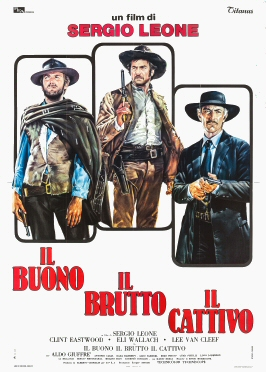
It is the classic spaghetti western epic (meaning it was written and produced by Italians and typically shot in Europe). It was directed by Sergio Leone and stars Clint Eastwood as “the Good”, Lee Van Cleef as “the Bad”, and Eli Wallach as “the Ugly”. Its story is original, written by Leone and one of his writers, Luciano Vincenzoni. There are many unique aspects to this movie, but one special standout is its music by Ennio Morricone. I rented it on Apple TV for €3.99. Incidentally, in Germany, this movie is called “Zwei glorreiche Halunken”, which roughly translates to “Two glorious bastards” — huh? Did the translator simply drop one of the key ingredients present in the original title?

Movie poster for 'Il Buono, Il Brutto, Il Cattivo' directed by Sergio Leone, featuring three main characters in cowboy attire.

When I was 8 years old, my parents took me to see “The Mission“; they had to really fight to let me enter with them, as it’s not a kids’ movie at all. There are a few images in my mind here and there, but I don’t really remember much of the movie anymore. What really stayed with me, and I recall it immediately like it was yesterday, was the amazing musical score that accompanied the film. I already mentioned somewhere in the blog being introduced to “Cinema Paradiso” by my dad. In the final scene where the protagonist watches all the cut kisses, that score that has been in the background all along starts to swell up and begs the tears on your face to flow, flow, flow – how can some kitchy kisses from movies make you cry so much? That is the mastery of Ennio Morricone! Before Hans Zimmer and Ludwig Göransson, even before John Williams “The Good, The Bad and The Ugly” defined score. Where you hear a few notes and are immediately transported into the movie. Parodied, copied, emulated, incorporated – he was the trailblazer.

So, it wasn’t a hard decision to choose which movie I would see for 1966. Why not the one that made him famous? Well, I have already discussed my reluctance toward Westerns, and this movie is 3 hours long, so I was a bit scared going into it. Part of it was wrong expectations: I really thought Clint Eastwood was going to be a caricature of “good”, the noble cowboy somehow fighting against the very good-looking “bad” character. It turned out that all three characters are some shade of gray (though Angel Eyes, “the Bad” is a scary character like Anton Chigurh in “No Country For Old Men“); there were no pure good guys here.

I actually liked that it poked fun at the nobleness portrayed in movies just a decade prior. There is that 1960s cynicism that keeps repeating, contrasting itself with the aspirations of the 1950s. I just never thought it would also translate to Westerns. The anti-war message about the senselessness of fighting over a bridge, for example, hits especially hard when one thinks that two years later in 1968, the Americans would pursue exactly that strategy in Vietnam: fighting over a hill with enormous casualties only to let it go later.

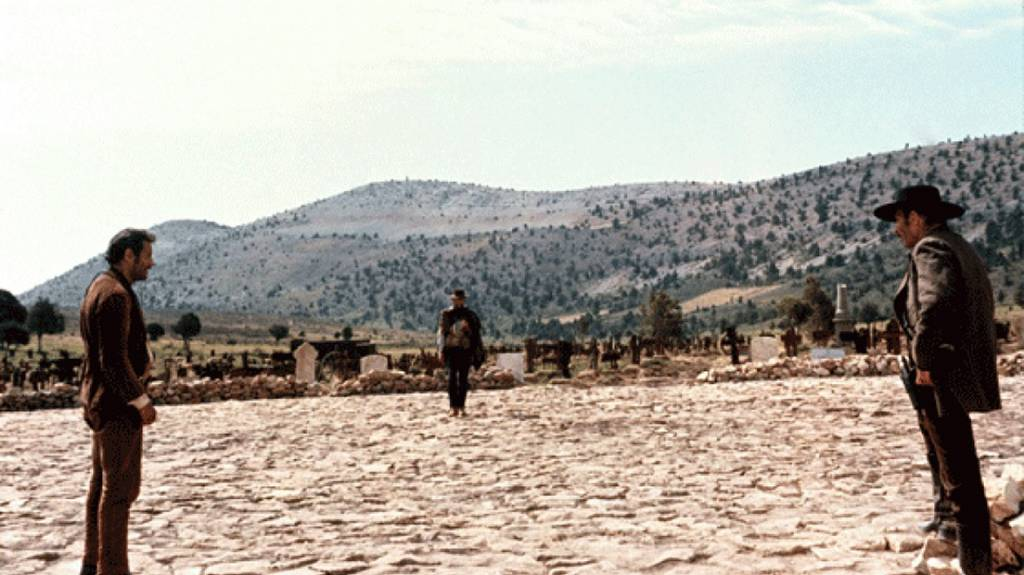
Three men facing each other in a dusty setting with mountains in the background, suggesting a tense standoff.

And then the movie also looks so damn good. From a technical aspect, you can really appreciate how well they coped. Does your “western town” movie set look dilapidated and poorly built due to budget constraints? No worries. We’ll just say it was marred by the Civil War passing back and forth through this town, with the Yanks and the Confederates taking it over. Add to that, it is really well portrayed. I don’t know how to describe it, but the movie is incredibly cinematic. It shows a close-up right at the exact moment when I thought, “Ah, now it’s time for a close-up!”, perfectly highlighting how scary somebody is or how much they want to redeem themselves. Perfect timing throughout! Even though it’s an epic, I didn’t feel like it lost a beat or meandered around.

So yes, come for the music and stay for a really good time. The climax features a tense three-way shootout between the titular characters — who will come out on top? I won’t reveal it, but my heart rooted for “the Ugly” the whole time!

P.S.: This review was supposed to come out already last Sunday, but I was quite sick a few days ago. So sometime in October I will have to do 2 Sundays in a row again, so that I finish with 25 movies by the end of the year.

1961 – The Children’s Hour

1961 – The Children’s Hour

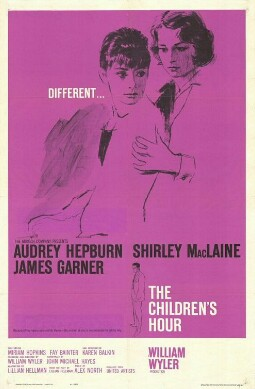
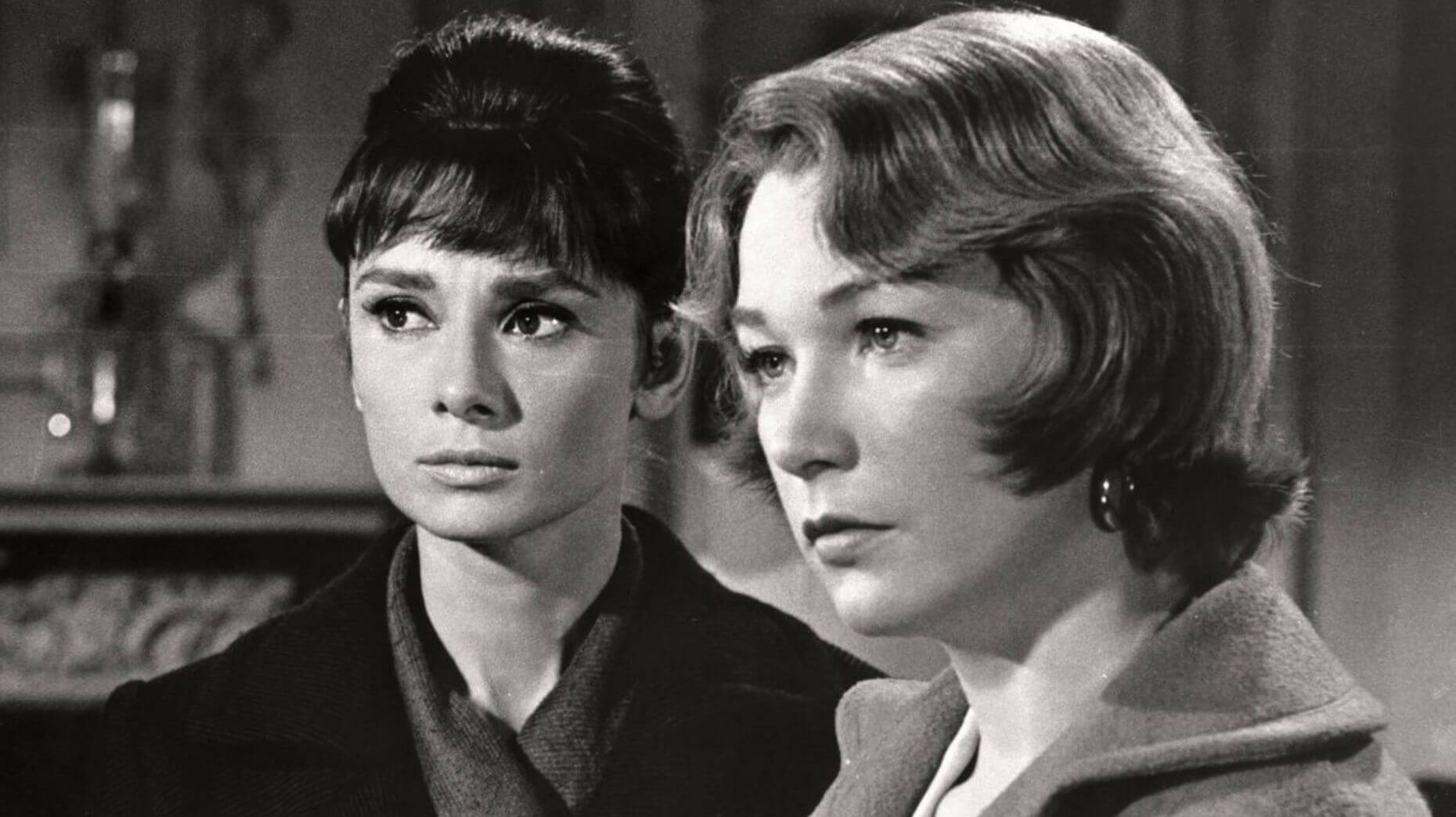
It’s a psychological drama produced and directed by William Wyler (oh, hello again) with a screenplay by John Michael Hayes, based on the 1934 play of the same title by Lillian Hellman, which itself is inspired by a real case in 1810 that happened to two ladies running a school in Scotland. It stars Audrey Hepburn as Karen and Shirley MacLaine as Martha who run a girls school and find themselves in social and financial ruin after a student accuses them of engaging in a lesbian relationship. I saw it on YouTube here.

Sorry, I am a day late. I was on a little family trip and World Cup is on, so my interests are with that for the moment, hehe. I was even contemplating whether to just skip a week, but since I did watch this movie last night, I count it as being on time. Looking back, it would’ve coincided with June 28th better as it’s the anniversary of the Stonewall Riots, but hey, all of June is Pride Month! Choosing this movie was fairly random, it seemed interesting, I liked both actresses, was not in the mood for a Samurai Kurosawa movie (Yojimbo) and weirdly I have seen a lot of 1961 movies.

So the premise of the movie is fairly simple to tell: a reckless student in an all-girls boarding school accuses the two women who run it of having a romantic relationship and the repercussions that scandalous accusation bring. You know how often we say that children should rule the world, then it would be a better place? Nah, children are the worst, because they often have no idea how bad the consequences of their actions are. Here this kid, who is like 12-13 thoroughly destroys the lives of two women just out of spite, because she didn’t want to be punished for her lies. She manipulates her fellow students with blackmail and fully gaslights her grandmother into her evil story.

I liked the premise very much. It offered so many possibilities. It fully passes the Bechdel test, lol. Unfortunately, the movie has two flaws that take somebody completely out of it.

(a) it’s so badly acted – everybody is running around screaming and whaling their intentions to each other in such a dramatic way. James Gardner, who plays Karen’s love interested even sings his lines in that typical “Hey, I’m acting” way. Horrible, it took me out of the movie. The only person that saves the movie is Audrey Hepburn, with the quiet hurt, but also dignity that she can convey in her eyes. It really saved the movie. The rest of the cast (yes, even Shirley MacLaine, as much as it pains me to write this) is horrible.

(b) Oh the melodrama! I really didn’t know if it was supposed to be camp, but they sure didn’t present it that way. Rather than quietly explore something of what could’ve been, it’s just a bunch of howling and shrieking that leads to a very disappointing ending, even for 1961 and especially for 2026 – it’s just too Hays coded. Man, how far we have come!

Glad I watched it, but unfortunately, it didn’t speak to me, precisely because it wasn’t brave enough to really tackle the subject.

1959 – Ben Hur

1959 – Ben Hur

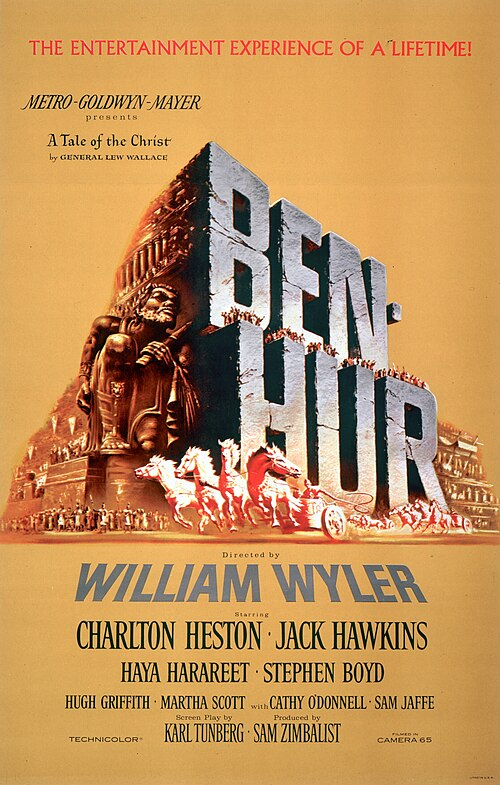
It’s one of those definitions of an Epic – a sprawling story, about the life of the hero and all the trials he has to go through to fulfill his mission. It was directed by William Wyler (hi again, after Roman Holiday), produced by Sam Zimbalist (15 million dollar gamble paying off wonderfully) and starring Charlton Heston in the main role as Judah Ben Hur. It won 11 Academy Awards, the most before Titanic and Lord of the Rings: The Return of the King matched it. I rented it on Apple TV for 3.99 Eur.

One of the big reasons I love movies is the love my parents had for them. We were one of the first families to get a VCR and would drive to the only Video Store in Town. As a small child, it was an easy Sunday activity to go to the theaters and once we got cable, we would often watch movies with my dad from breakfast to 3pm, when we would be hungry for lunch. Yeah, so many movies discovered with my dad. As you know, there was no Video on Demand and they became lazy going to the Video Store, since movie channels showed them 24/7. However, you had to be lucky to sort of stumble into one movie beginning and there was no curations, so there was a lot of crap, often.

Yet, I look fondly at those Sundays, me watching stuff, I probably shouldn’t have. Just recently I was having a debate about The Color of Money being a good movie, actually! Who did I watch it with? My billiard playing dad. Obscure stuff, which I still love, like Moon Over Parador making fun of dictatorships in Latin America, but also cinephile stuff like Cinema Paradiso, which he would endlessly comment over. One Sunday that I still remember fondly is when we watched Spartacus, I immediately rolled my eyes at him, complaining that we shouldn’t watch these old, long movies and asking why we couldn’t watch a comedy. He just said calmly that this is supposed to be good and this is what we were going to watch today, and man, did I love it. I always loved movies I didn’t fully understand as a kid; they gave me room to grow and keep asking questions.

That movie and many Epics like it, are often what we watch them for – taking us to faraway places, times and cultures. And since I loved Spartacus that much, I figured I fill that gap in my filmography and watch another Epic of that time – one that is mostly known for the chariot scene, its long runtime, the many Academy Awards it won and the many extras the movie employed (8000). I did not know it also involved Jesus in a big way, so was a bit surprised my mom told me it’s more of an Easter movie when I told her I was watching it (now I get it).

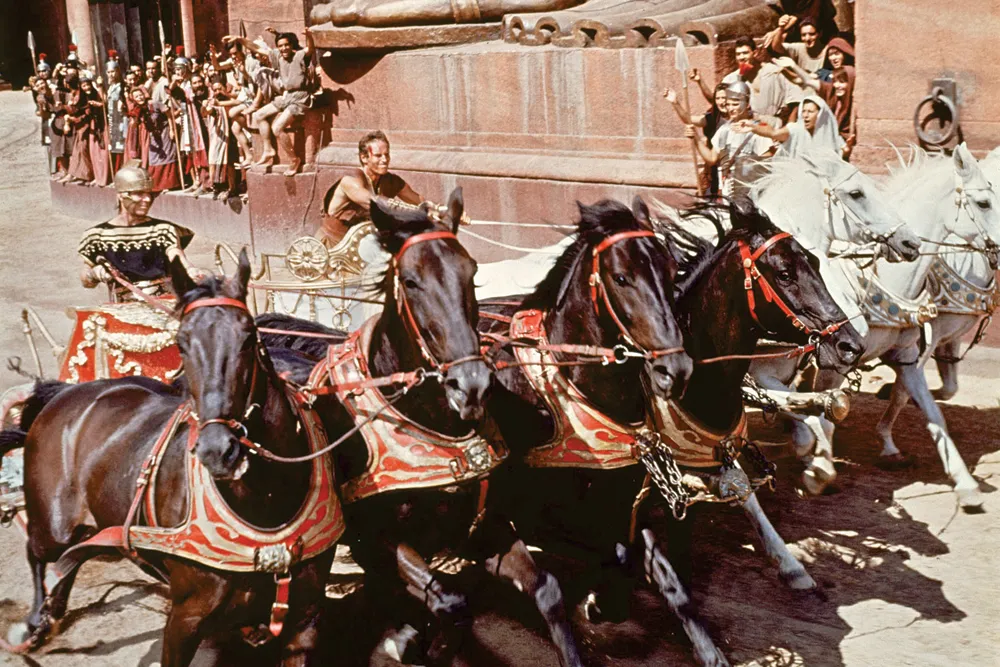
Man, it did not disappoint. The chariot scene was awesome, of course, but more than that, the way he navigates the circumstances, Also impressive the scenery from Jerusalem, to the ships, to Nazareth, to grand Rome. The way the friendship between Messala and Judah deteriorates to hatred – the major gay energy in their first scene together, apparently wanted by the screenwriter Gore Vidal unbeknownst to Charlton Heston. The way leprosy was depicted. And of course, the major theme of how you find peace in yourself after your life has been filled with revenge.

I was afraid of the runtime, of course, and I did have to stop a few times along the way. But that was, because we have guests this weekend and not because the movie was boring. The music was a bit corny (especially that 50s choir style at the end of the movie), well, compared to the similar Gladiator, but when I see how far we have come in comparison to The Adventures of Robin Hood, this is miles above. Some of the costumes look cheap, but that doesn’t distract from the movie (I’m looking at you The Odyssey criticism by just looking at costumes). Charlton Heston was not a savory character, especially with his politics later in life, but here he plays the role he is supposed to superbly. Somebody recently said to me that she can’t really watch movies like Indiana Jones or similar anymore, what with the male hero prancing around and letting everybody know he is the “male hero of the movie.” I disagree; the escapism is exactly the point.

All in all, well deserved of its many Academy Awards and even though it’s not a perfect movie, it’s super entertaining and its mission to transport us away from our modern worries for a few hours is accomplished well!

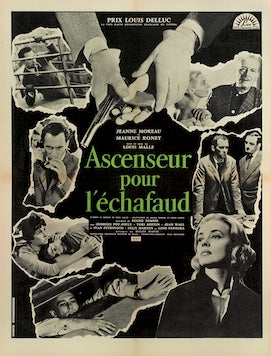
1958 – Elevator to the Gallows (Ascenseur pour l’échafaud)

1958 – Elevator to the Gallows

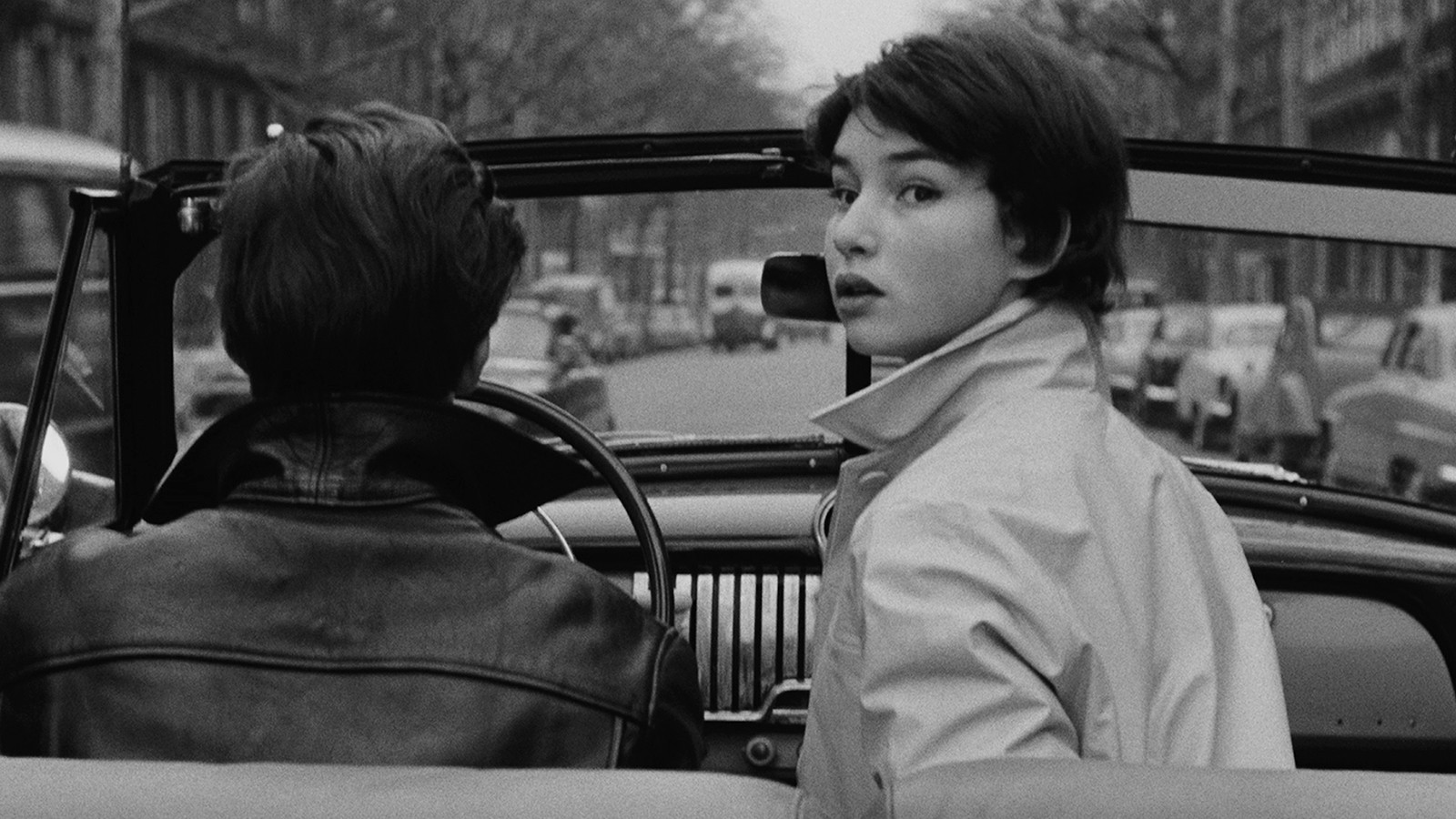
It’s a French crime thriller directed by Louis Malle. Technically, it’s not Nouvelle Vague (French New Wave), which is more rooted in the early 60s, but it lies in this transition, borrowing elements from American movies, like the film noir aspects, but adding in the meandering elements of French cinema, like the amazing soundtrack from Miles Davis (who spent a few years in Paris, and always saw the city as a creative hub for his career). It stars Jeanne Moreau as Florence Carala, the wife of a prominent arms dealer, and Maurice Ronet as Julien Tavernier, her lover and husband’s murderer, whose whole plot unravels when he becomes trapped in an elevator. I rented it on Amazon Video for 3.99 Eur.

There’s an old saying attributed to Bill Gates that says “We overestimate how much things change in 2 years and underestimate how much the change in 10”. When you are living through a decade, you hardly notice the changes, yet when you look back at pictures from yourself in the 90s, it is distinct from pictures in the 2000s or 2010s. Add in to that the music, or even different smells to enhance your memory and suddenly that decade feels so distinct and so separated from your life today, even though it is so familiar and was important in shaping you to what you are today.

The same thing happens to me even in decades where I wasn’t even alive, perhaps even more so, since the elements of style are really the only things that you have to anchor yourself to that time. And so it happens in this movie that through the style elements—the fashion, the smoking, the functional furniture, the changing style of the cars, but most importantly the jazz music score—you feel transported to late 50s, early 60s Paris. I swear, I could smell the stench of those cigarillos they smoke at the motel, or the wood of the pencils being sharpened, even Louis’s leather jacket.

I have been too afraid of tackling French New Wave cinema, apprehensive that I won’t understand its allusions to art, its sensuality, etc. So I thought that I would first watch something that still had enough American influence and a crime mystery to overcome that. Little did I know that the straightforward series of misunderstandings that make up the story is somewhat its weakest part, and the sensual, feeling, artsy stuff was the best (so cool, really so cool).

I also liked how understatedly funny and cynical the movie was at the same time. The jolly German tourist making fun of the adventures the French have gone on since WWII—Algeria, Indochina—acts as a biting commentary against those getting rich off these wars. Or the woman searching for her lover on the streets of Paris; it looks so sensual, so sexy when the rain is falling and you don’t know whether it’s tears or rain running down her face. But then you realize the irony that she is going from a sandwich shop, to a normal bar, to a gambling parlor, and lastly landing in an underground bar—every station a further step down in Parisian society. When she finally arrives arrested at the police station, nobody can quite fathom she is the rich wife of a man of tremendous standing in society.

But of course, the score is what is best about the movie and places it into the pantheon of groundbreaking cinema. I am by no means jazz’s biggest fan, but for this movie it was perfect, making it simply smooth and cool. Funny how that is; sometimes the biggest factors in squarely placing our memories into a specific time and place are not images, but smells and sounds. This movie did that perfectly.