1971 – McCabe and Mrs. Miller

1971 – McCabe and Mrs. Miller

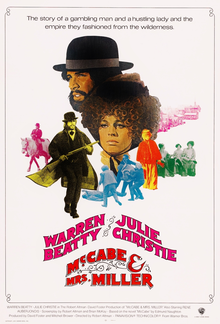
It’s an American Western, but it takes place in the mining mountains of Washington State rather than in the desert Southwest we’re used to. Directed by Robert Altman, it stars Warren Beatty as John McCabe, a gambler trying to make it big in a mining town by building a saloon, and Julie Christie as Constance Miller, a sex worker who goes into business with McCabe, managing both the brothel and the bathhouse. Their lives are upended when a big mining company wants to buy them out. I rented it on Apple TV for 3.99 Eur.
For my 23rd birthday, my boyfriend (now husband), my best friend, and I went to visit Gdańsk, staying in a hotel in the beach town of Sopot. I’m sure Gdańsk is beautiful and everything, but the weather wasn’t very good that long weekend in early November. It was a mixture of rain, hail, and snow, and the streets were pretty much empty.

After stomping through the city center for a bit, we ended up in a cozy café. I remember it was crowded, but we had amazing coffee and cake and ended up spending a few hours there. One reason is that the owners were playing Leonard Cohen on repeat – they must have gotten the newest album back then. It’s such a nice memory. I barely remember the architecture, but I do remember the café, how happy our dog was there, and how I told my friends about listening to Leonard Cohen as a kid. I

That’s exactly the feeling this movie evoked in me: the cold outside as a constant companion, while the people inside find happiness together. Nothing fancy, just a good stew that makes everybody happy, except the big corporate people who say it tastes rancid. And always in the background, there’s Leonard Cohen’s soundtrack. Especially Winter Lady gives one that melancholic, but loving feeling.

It’s a subversive Western: people run away from gunfights, the gambler hero actually loses at poker sometimes, and people say dumb stuff and talk over one another (an Altman signature) instead of delivering noble, perfectly thought-out lines. I ended up liking it much more than most Westerns.
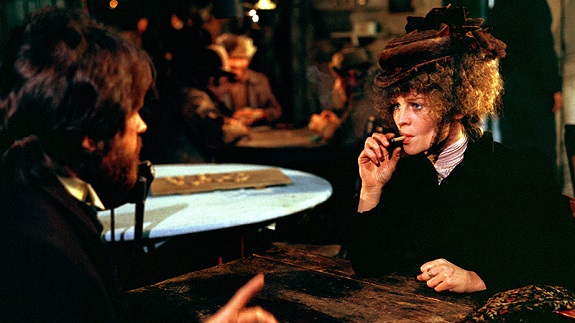
A lot of that comes down to its distinctive setting. The town is like an additional protagonist, and you feel proud watching it grow, both in buildings and population. And yet there’s that constantly oppressive, howling wind and the ever-present mud. The rest comes down to the flawed human beings Altman captures, whom you love nonetheless. At the end, the whole town comes together to save a burning church. As you look into the faces of the people you’ve gotten to know over the course of the movie, you can’t help but feel a great love for them. McCabe and Mrs. Miller finds warmth and community in a cold, unforgiving place and makes you care deeply about the imperfect people who create them.

This wasn’t my first Robert Altman movie, but it’s been a while, and it was nice to recognize his style immediately. It’s a testament to his anti-establishment themes that you immediately side with the blundering gambler and the cunning Mrs. Miller over the big-shot executives, even when the executives offer McCabe a pretty good deal. I think I’ll watch a few more of Altman’s films now!
1952 – Ikiru (To Live)

1952 – Ikiru

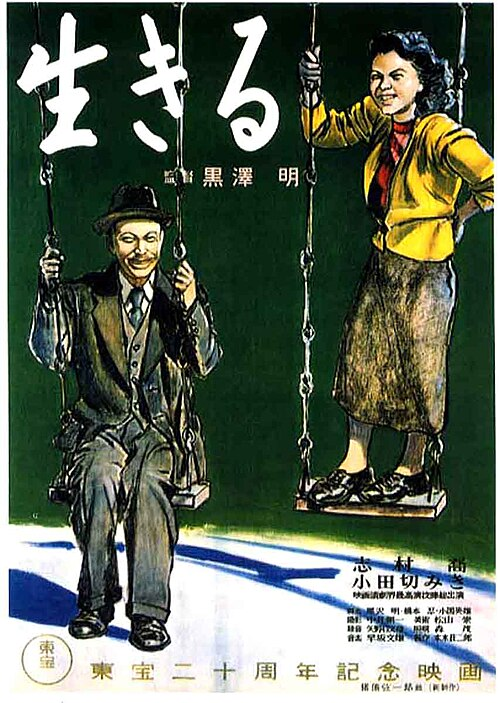
It’s a japanese drama film by the master Akira Kurosawa (only my 2nd after Seven Samurai) from a screenplay by Shinobu Hashimoto and Hideo Oguni. It is said to be inspired by Leo Tolstoy’s 1886 novella “The Death of Ivan Ilyich“. It mainly stars Takashi Shimura as a terminally ill bureaucrat as he examines how his life has been going. I rented it from filmingo for 6 Eur.

It’s nothing new, that there is plenty of nostalgia on social media right now. The newest trend in 2026 is to share your photos from 2016, to romanticize its aesthetic, to reminisce of a time before the pandemic where there was less polarization, less constant crisis. I, on the other hand, went on an even deeper rabbit hole to a nostalgia core corner that says that The Matrix was right, actually: 1999 was peak humanity! And so I stumbled across Baz Luhrman’s Sunscreen video. Huh, I hadn’t seen that since almost 25 years, way before YouTube, probably when visiting New York city after having moved to Northern California, faithfully as the video had said. By the time the video was halfway done, I was a weeping mess. Even though there were few regrets, most of the advice is generic and I had tried to follow a lot to some degree after having received it in a chainmail e-mail back in 1997, it hits differently when looking back. And if this examination of ones life right in the middle of it at 47 hits so hard, would it be even be more of a gut punch were I older or my deathbed?

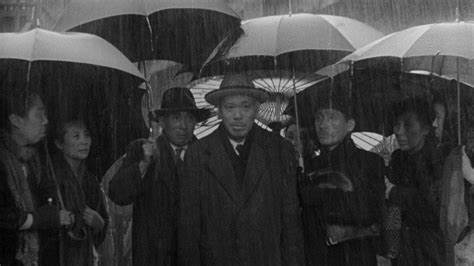
Here the movie Ikiru (roughly translated as “to live” or “living”) comes in. The movie starts on the protagonist Kanji being a zombie bureaucrat – a coworker even gave him the nickname “the mummy”. All the time working, at one time full of ideals and with great hopes for a family until the great ideas were beaten and hollowed out of him and the relationship with his son is superficial at best. These themes are Universal, of course, just think of Cat Stevens’ Cat’s in the Cradle or Arthur Miller’s Death of a Salesman. And then Kanji gets the stomach cancer diagnosis (not officially, he has to tragicomically infer it and the fact that he has less than a year to live).

I love that the movie at first goes all hedonistic. He goes on a drinking spree, gambles at pachinko parlors, dances, stays out all night, first with a poet, then with a disillusioned younger female co-worker. Similar to the song Live Like You Were Dying by Tim McGraw at first he tries to make it so that his life was worth living. But with respect to the movie, The Bucket List, you can’t simply selfishly cross of items on a list to make your life mean something. In the second half is where the movie really cooks and goes beyond the themes in the first and it does it in a wonderful flashback manner. The kind you wish for at your funeral, the realization that you were a good person, when you touched even strangers profoundly. And all with a simple contentment that is often inherent in Japanese life.

It’s quite a feat that the movie managed to touch me. I was on quite a cynical mood the whole day yesterday and seeing the new release of Wuthering Heights just left me cold and eye-rolling (like this is supposed to be steamy?). Well done graphically, but it just missed the emotional mark on me. So this quiet contemplation, very simple even, could have elicited the same reaction, it is a 74 year-old movie, after all.

But in its simple honesty it hit the mark, I googled the emotional centerpiece song Kanji keeps on requesting and singing and translated its lyrics:

“Gondola no Uta” (The Gondola Song)

Life is brief. Fall in love, maidens. Before the crimson bloom fades from your lips, Before the tides of passion cool within you, For those of you who know no tomorrow.

Life is brief. Fall in love, maidens. Before his hands take up his boat, Before the flush of his cheeks fades, For those of you who will never return here.

Life is brief. Fall in love, maidens. Before the boat floats away on the waves, Before the flame in your heart flickers and dies, For those of you who have no today.

And that seems very much like the generic advice from Sunscreen that moved me so deeply when I was 18 years old. And it all came full circle and I have to agree with the world what a wonderful movie this is and that the arc it portrays is deeply moving, especially the joy he has swinging in the snow on the new playground he built.