1944 – Arsenic and Old Lace

1944 – Arsenic and Old Lace

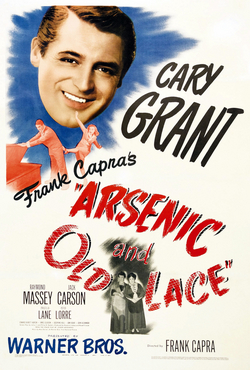
It’s a dark screwball comedy directed by Frank Capra and starring mainly Cary Grant as Mortimer Brewster. It’s based on a play with the same name by Joseph Kesselring, which was very successful, so it was stipulated that the film would not be released until its Broadway run ended. I rented in on YouTube, since both Apple and Amazon only had the German version here for sale.

The leaves have been falling like crazy these last few days here in Berlin. Fall is here and with it pumpkins (soups, pies, lattes, jack-o-lanterns, …), corn mazes (though there aren’t as many as in the past…) and Halloween stuff! Also movies; from marathons the streaming services releasing a bunch of horror movies to the over the air TV channels issuing their Halloween night schedule (apparently it’s actual Halloween marathon this year). So this movie fit right into the season, its whole plot unfolding over Halloween night. Plus, it’s not scary, but a macabre, black comedy.

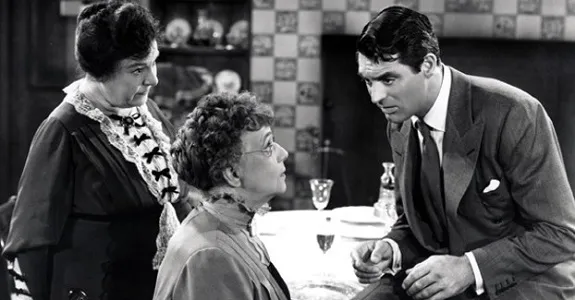
As to what makes it dark – well it’s two extremely sweet, old ladies murdering lonely older gentlemen (they just bagged their 12th victim in the windowsill) out of pity. It’s wrong, but when you look at them, how they prance around the hall with their arsenic infused wine, you can’t help but laugh. They’re pleasant, give toys to the poor, are in good standing with the police and clergy, how can you not love them? And in their sweetness, they don’t feel remorse either. In fact, there’s quite some commentary over how some people do some truly horrible things in the name of pity, going over the heads of the victims, but present themselves as honorable citizens.

But the movie doesn’t linger on this too long. It’s more on the desperation of their nephew to save his aunts from the police by trying to pin it on his delusional younger brother “Teddy”, who things he’s the actual Teddy Roosevelt. Teddy has buried the bodies in the basement (no, that’s not a metaphor) thinking it’s Panama and they were victims of yellow fever. Getting him interned in an insane asylum is a way to bury… ahem… to keep the skeletons in the closet.

But then hilarity ensues when Mortimer’s other estranged brother Jonathan shows up with his sidekick Dr. Einstein (Peter Lorre is really becoming my favorite actor in this blog, he again is a reason why the whole plot doesn’t fall apart). He’s become quite a killer, I mean criminal on his own also claiming a dozen murders on his side of the ledger. Can Mortimer remain sane with all things crashing upon his once very simple world? The murderous aunts, the crazy brothers, one evil, one naive, his new wive, the police, the director of the asylum, the taxi driver in front of his house, etc., etc., Yes, at a certain point it becomes slapstick and the conclusion is also quite rushed, but in the middle it is quite funny, being punctuated by Cary Grant’s excellent over-the-top acting. His “deer in the headlights” look is especially great and we feel for him when he mumbles to himself trying to hatch a scheme to get out of the newest comeuppance driving a dent into the old plan.

It is quite clear that the movie was born out of a play. The whole thing takes place in the main room of the aunts’ house, with some elements on the outside or the stairs, but which can fit the stage quite comfortably. It’s a plus and minus an some points. Plus, because it keeps everything contained and there are no long excursions into a distraction to the main plot, but minus, because it retains too much of the play character. It’s not like filming the play of Hamilton and calling it a movie and there are some cinematic elements (close-ups, the shot from the stairs, the music, …), but overall the movie made me even curiouser about the play. There was even a line where the brother Jonathan grows incensed because the plastic surgery has made him look like Frankenstein’s monster. Everybody says: “He looks like Boris Karloff!”, which makes him angry. Well, in the Broadway play, he was played by the actual Boris Karloff.

So, final verdict. I laughed in quite a few places, so yes, very successful in that, but don’t go around looking for the heart we see just 2 years later in Frank Capra’s It’s a Wonderful Life. It never leaves its screwball roots and as such is a good time and some very good, funny lines, but not much more behind it. Hey, it’s Halloween in 1944, sometimes you just want amusement!

1940 – Ahí está el detalle

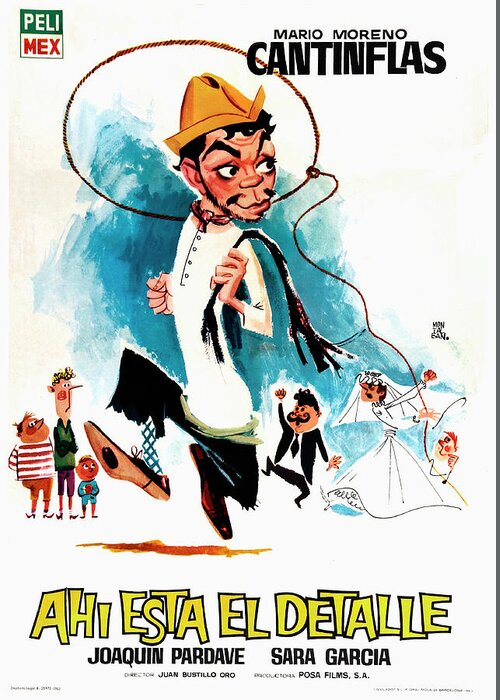
1940 – Ahí está el detalle (You’re missing the point)

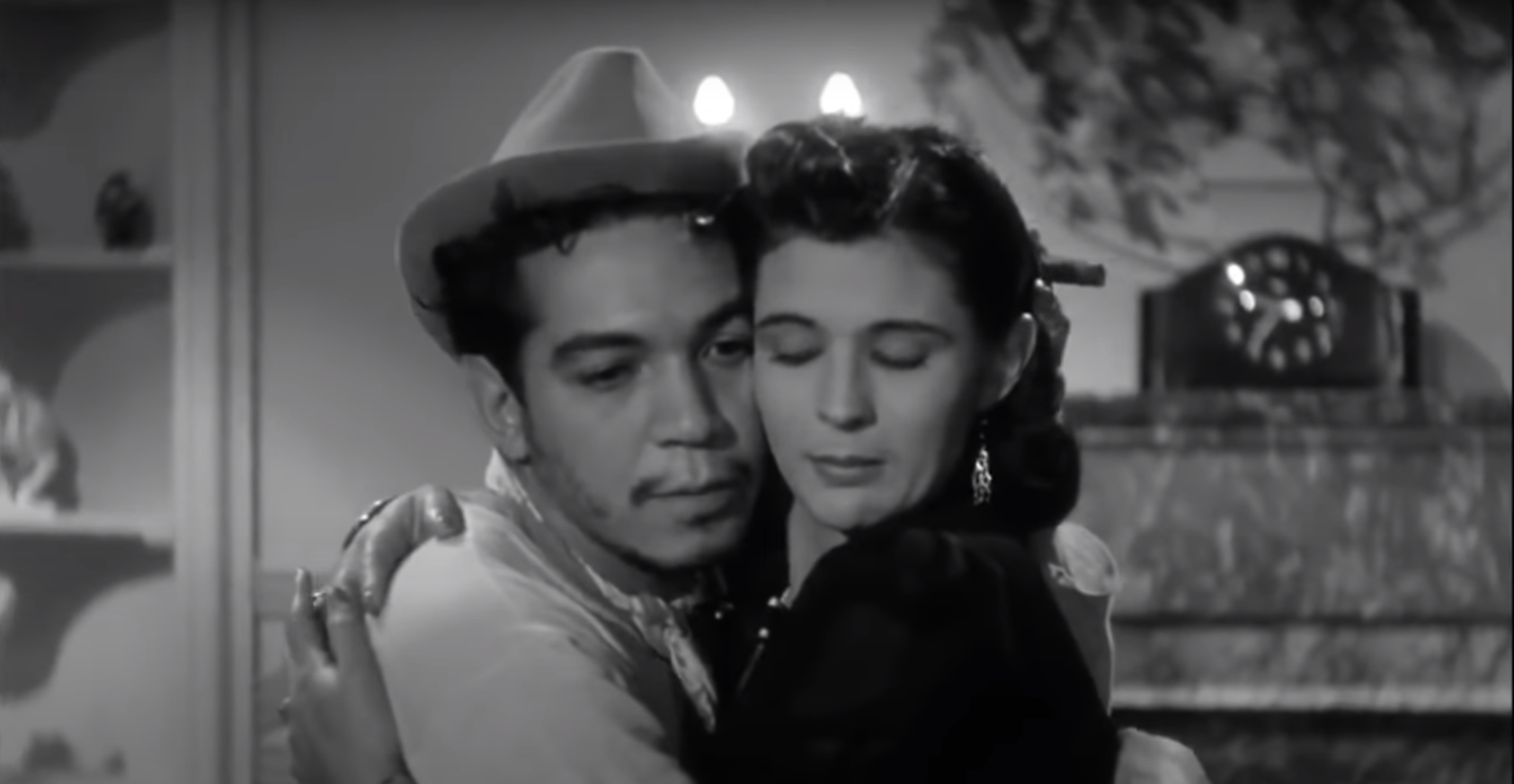
The movie is a mexican comedy, directed by Juan Bustillo Oro. It stars the great “mexican Charlie Chaplin” Cantinflas (Mario Moreno) as himself with a great supporting staff. It is his breakout role, even though he had portrayed this character in many skits and even films before. I saw it on YouTube for free thanks to the restoration of Cineteca of the UNAM from material of Televisa A.C.

The week between Christmas and New Year’s is a black hole for productivity. It’s often a period of lounging from food coma to food coma and boring family visits; kids running around, adults getting out some whiskey with a snicker, everybody trying out their new Christmas presents, whether it is clothes, toys, perfumes, etc. In the background there is some movie playing that always plays during that time and you take it in, sometimes non-consciously, sometimes jumping into the middle or not finishing it.

Even last year, that’s how I spent my week, with my mother in law on her last Christmas (she passed away in April) – watching the original Sissi marveling at the beauty of Romy Schneider or Little Lord Fauntleroy with Alec Guiness, a staple of movies shown that week. I guess in the US, they probably watch It’s a Wonderful Life on Christmas and The Sound of Music over that week.

Well, growing up in Guatemala, back when we didn’t have cable or were visiting relatives that didn’t have cable, it was Cantinflas time. I don’t remember details of what I saw, it’s more like feelings, like watching the one where he gets to become a pilot at my aunt’s place with my dad, while my cousin had fallen asleep next to me. The shtick of Cantinflas movies is always the same – he gets in a situation way above his vagrant status (e.g. becoming an ambassador, a musqueteer, a congressman, an anthlete, a prince, a movie star, a priest, etc.) and hilariousness ensues. Yes, in Guatemala Cantinflas is cult, even if it is a Mexican figure! And growing up even as kids, you copied the mannerisms of him, his affected way of speaking hilariously mocked in the kids program Chiquilladas, which I also saw as a kid by Carlos Espejel’s Carlinflas. I personally like Chespirito much more and he is (sort of) more of my time, but you have got to acknowledge the tremendous influence he had over Mexican cinema and Latin-America as a whole.

So for 1940, I was almost ready to watch The Philadelphia Story (ah, yes, yet another screwball comedy with Cary Grant…), when I saw the Cantinflas movie way down. Hey, I hadn’t seen that one, and it’s the one that made him famous, so off I go into nostalgia territory.

I had a blast! I do understand that this movie is probably not for everybody, especially non-native spanish speakers as so much of the comedy is wordplay (very simple wordplay, but nonetheless). One thing I like, is that Cantinflas is not perfect, in fact, he becomes a quite despicable character when he’s drunk. He takes advantage of people, he’s lazy, always looks out for himself. But in the end, you can’t help to love the doofus. There’s a reason he became so famous and it’s different from the US-American brand, very Latin-American coded, yet he truly makes it his own (even if he apparently became quite insufferable in his opinions in old age, which thankfully I didn’t consciously experience).

But can I recommend this to anybody? Like, if you want to get to know this “Cantinflas” phenomenon? There are probably better, more visual stories from him that don’t rely on the word play comedy as much, so no, not anybody. But this one goes right up among the best old movies I have seen this year and it’s just the combination of situation comedy, wordplay, but good old nostalgia playing a role. For a little while, I was a kid in Guatemala again, just enjoying the simple life of watching an old movie on the basic local channels.

1936 – Modern Times

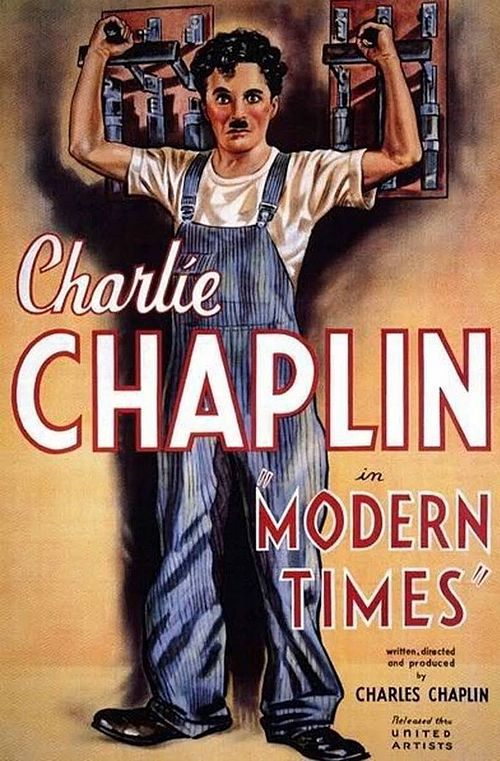
1936 – Modern Times

Part silent, part talkie movie written, directed and starred in by Charlie Chaplin in his last performance as The Tramp. It also starts Paulette Goddard as Gamin, his potential love interest. I saw it for free on YouTube. It is a largely a scathing critique of modern technology in the name of capitalism during the Great Depression, apparently spurred by a conversation he had with Mahatma Ghandi.

Critique of capitalism is “in” these last few years in film – from The Menu, Triangle of Sadness, Glass Onion, Saltburn to the masterpiece that is Parasite, even the recent Mickey 17. And yet, none of these “eat the rich” dramedies did it with so much heart and and had me laughing in stitches like this Charlie Chaplin movie. The Tramp’s character tries and tries to catch a break to start to make a living in a house with his love Gamin among the height of the Great Depression in America. From demeaning work in a factory, literally being reduced to a cog in a machine that needs to function ever faster, to a security guard in a fancy department department store needing to keep his old friends and colleagues out of simply getting a meal. It does says a lot about society, when the main character is happier in prison than out in the workforce.

The Great Depression was no laughing matter. I already alluded to the poverty being ever present in American movies of that time in “It happened one night” and here the desperation is everywhere. Workers showing up in masses when there is a hint of work at a new or re-opened factory, people resorting to stealing food in their desperation, even some clinging to communists ideals and starting marches, strikes and other rebellions to fight back at the capitalists. Within that, the ever optimist figure of The Tramp works perfectly.

It is in this movie that the song Smile, later popularized by Nat King Cole or even bastardized in Joker (Todd Phillips would probably say it was a homage, but I hated that movie) first appears and it is to give us optimism that it will work out somehow – the true essence of The Tramp. Even though he always finds himself in desperate situations, he approaches them with an optimism that somehow it will get better for him. It is this optimism that I always admire in Americans, somehow ingrained in their culture and it shows this culture trait plenty in this movie. And yes, I did turn off the TV at the end of the movie with a smile on my face – it would somehow, someday resolve well for The Tramp, he would be ok!

I do have one point that sat badly with me throughout the whole movie and that is Gamin’s relationship with The Tramp. How old is she supposed to be, anyways? At one point, she runs away from family services that supposedly were shipping her off to an orphanage and in the next few scenes The Tramp services himself as her literal sugar daddy (giving her cake and sweets and later a fancy coat). It’s all played quite fanciful and the music always swells to make you feel ok, but it still gave me the creeps that this young girl attached her future to a much older vagrant, just because he gave her some food and money once. There is an alternative ending in which Gamin takes on vows and The Tramp leaves alone, but Chaplin changed his mind after wanting to make his real life lover and third wife Paulette Goddard famous and give the real her hope that she could succeed.

Ah, well, nonetheless, I do recommend this movie, finally a Charlie Chaplin one in these 100 Movies, the comedy is really strong here and the social critique is also well done. It even has a coherent plot from start to finish, even though you can always show the individual vignettes separately and have a good time (and I even see them some of the now on TikTok).

1934 – It happened one night

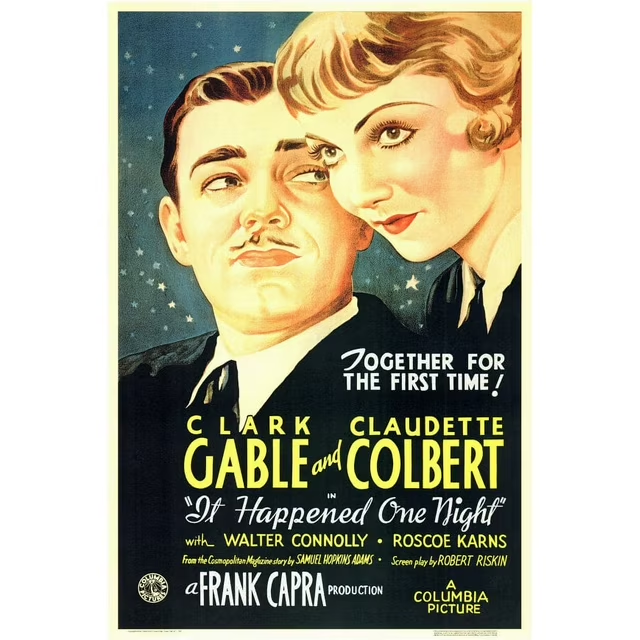
1934 – It happened one night

The movie is the prototypical screwball, romantic comedy, directed and co-produced by Frank Capra. It stars Claudette Colbert as Ellie Andrews and Clark Cable as Peter Warne. It is based on the August 1933 short story “Night Bus” by Samuel Hopkins Adams. I rented it for 3,99 Eur on Apple TV.

I love road trips. In fact, I am on a road trip right now and absolutely enjoying crossing the Rockies by train. In 2009 we took as a 3 week road trip across the US with our 3-year old daughter and had an absolute blast, for a long time we had a blog out there which was quite popular in Germany. But one thing I also keep in a very special place in my mind was the 3.5 day trip I took back – the changing scenery, the different food, the evolving character in people and all sorts of other observation you see on roadtrips. My absolute favorite movie of all time is Thelma and Louise and it is also a road movie. Besides the obvious feminist tones, the whole Americana element in it what makes me nostalgic, the greasy diners next to motels on the road, the radio stations that either play country or religious rock, the stretching of the road into the horizon, as far as the eye can see. You want road trip comedy? I’ll watch Planes, Trains and Automobiles every time it comes on the TV and still laugh at all the predictable parts.

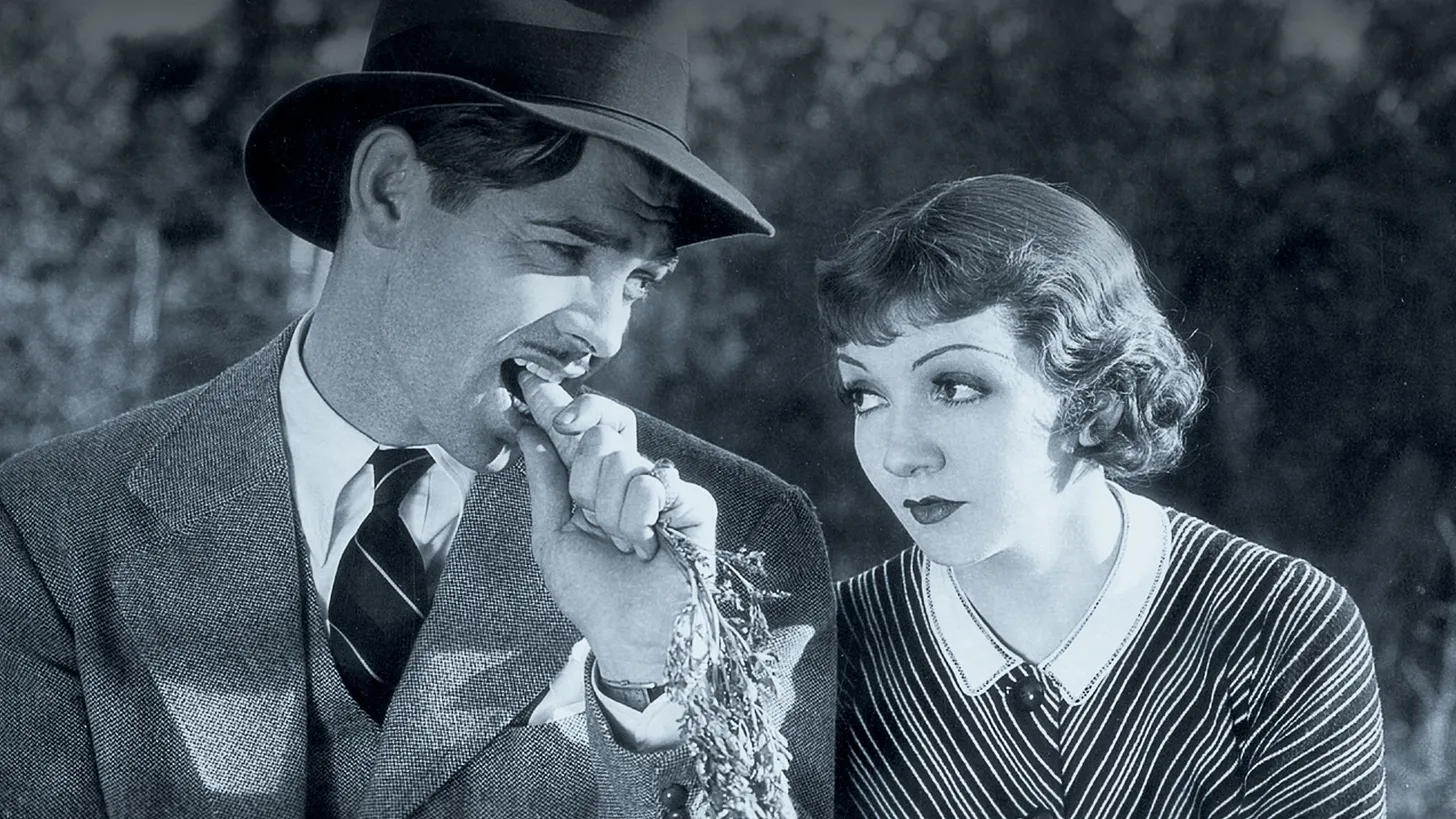
So I was super excited to see this movie, it has been on my watchlist forever, hailed as the prototypical romantic comedy with screwball elements. Yes, many of those elements, especially “foes to lovers” seem cliched, but one has to realize that it was often this very movie that started them. Even the way Peter ate his carrot is supposed to be an inspiration for Bugs Bunny (see image below). Add to that the fact that the movie was shot at the height of the Great Depression and the distortion between the extremely rich heiress and the bulk of the people not knowing where their next meal would come from.

But then it had that whole road trip element in there. People making conversation and even entertaining on the bus, the constant search for shelter and food on the road (especially when you run out of money halfway), even the bickering, because something will go wrong (car trouble, crooks wanting to take your money, etc). Some reviews I saw said that the movie dragged, how long can it take to go from Miami to New York? I didn’t feel it, it needed its time! And it had fun along the way.

And the romance? I bought it! First of all, Clark Cable does have a “je ne sais quoi” that makes him unbelievably attractive and when Ellie confesses her love to him, I got heart pangs, such was the rapport she had built up to him. And the hurt felt by both when they thought the other was indifferent to them, I felt it l too. I saw Before Sunrise yesterday and the way Céline and Jesse are at first guarded, but obviously so attracted to each other, it reminded me of this movie so clearly.

So remember, often the journey itself is the destination. And often the people you live those experiences with, will be in your mind forever, having shared an experience that was away from the day to day. So cherish those trips and don’t see them as a drag!

1926 – Faust

1926Faust

Produced by Ufa, directed by F. W. Murnau. It stars Gösta Ekman as Faust, Emil Jannings as Mephisto and Camilla Horn as Gretchen. I watched it on YouTube here (did not like the horrible colorization there is on other places).

When I was an adolescent, it was typical that in the 13th year of school, you read the “Faust” by Goethe. I got out of it by reading 2 Thomas Mann books and I still regret it to this day. It may have been harder to interpret, but I am sure it would’ve given me more than that depressive German attitude that “Der Untertan” gave me, a good description, but so, so lost. In any case, reading the “Faust” is still on my backlist, but more like a project that “I’ll do someday” (yeah, right…). Everybody knows its main theme: Faust gets visited by Mephisto, an incarnation of the Devil which offers him youth, fame and fortune in exchange for his soul. Will he take that (Faustian) bargain?

So, with everybody discovering Murnau, because of the remake of Nosferatu, it was quite an easy decision to go with the Faust! It was his last German film at Ufa and is believed together with Nosferatu to be the height of German Expressionism in Film. Of course, having studied and having now worked in Potsdam for many years, the history of Ufa is present at all times. You see the imagery when visiting the Film Studios Babelsberg (the rides are horrible, but the studio and the history are great) or the Film Museum, so I went in to watch the movie knowing that.

The plot is as expected, though I did not know much about the Gretchen part of the story, which is Faust’s potential love story and the wringer she is put through in the last part of the movie. Things I liked in the movie were the artistic expression, like a ballet, almost like they were pausing the movie now and then to pose off, so that you could save the frame. The face contortions and mannerisms of Mephisto are purposively over the top, but I liked that very much. The film drags a bit in the middle, because they need to show the huge fall from grace that Gretchen has, so need to show her good, but boring life, but it distracts from the actual Faust story. Interestingly, the title cards in German were a bit hard to read, so sometimes I reverted to the English subtitles, whose translation was quite good.

In any case, the movie is as prescient today as it was in any time. In a week when during the Trump administration inauguration among the invited guests where the billionaires of tech companies, I was reminded of the quote by Lord Acton:

“Power corrupts, and absolute power corrupts absolutely.”

There is no bargain you make with the devil where you will do good in the end, even if that was your intention in the beginning. And that’s really what this techno super-elite has turned into, Faustian doppelgangers making deals with Trump, seeking eternal fountains of youth, telling themselves that they’re doing good in the world by inventing the next social media app. To assuage their guilt and looking for absolution, they donate a few millions, but are always baffled at why the people see them as evil. People, also in the movie, can sniff the wickedness in Faust a mile away. And so I can only recommend people watch the movie, the style may not be for everybody and the end message is cheesy. But just because it’s cheesy, doesn’t mean it isn’t true.