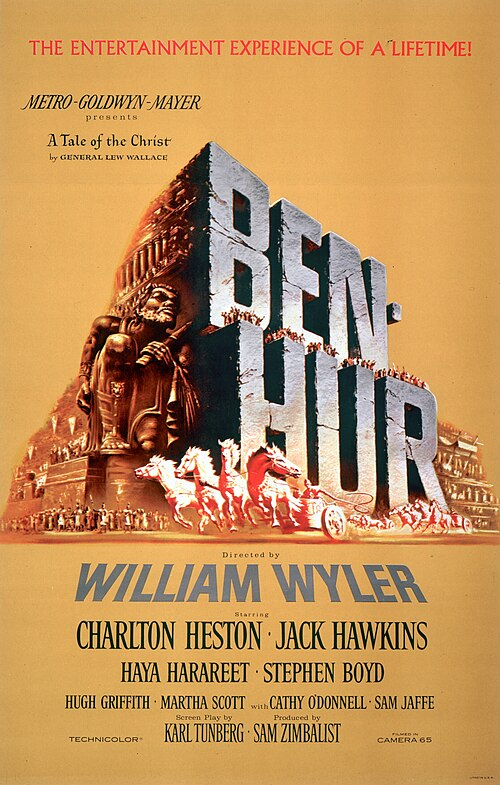
1959 – Ben Hur
It’s one of those definitions of an Epic – a sprawling story, about the life of the hero and all the trials he has to go through to fulfill his mission. It was directed by William Wyler (hi again, after Roman Holiday), produced by Sam Zimbalist (15 million dollar gamble paying off wonderfully) and starring Charlton Heston in the main role as Judah Ben Hur. It won 11 Academy Awards, the most before Titanic and Lord of the Rings: The Return of the King matched it. I rented it on Apple TV for 3.99 Eur.
One of the big reasons I love movies is the love my parents had for them. We were one of the first families to get a VCR and would drive to the only Video Store in Town. As a small child, it was an easy Sunday activity to go to the theaters and once we got cable, we would often watch movies with my dad from breakfast to 3pm, when we would be hungry for lunch. Yeah, so many movies discovered with my dad. As you know, there was no Video on Demand and they became lazy going to the Video Store, since movie channels showed them 24/7. However, you had to be lucky to sort of stumble into one movie beginning and there was no curations, so there was a lot of crap, often.
Yet, I look fondly at those Sundays, me watching stuff, I probably shouldn’t have. Just recently I was having a debate about The Color of Money being a good movie, actually! Who did I watch it with? My billiard playing dad. Obscure stuff, which I still love, like Moon Over Parador making fun of dictatorships in Latin America, but also cinephile stuff like Cinema Paradiso, which he would endlessly comment over. One Sunday that I still remember fondly is when we watched Spartacus, I immediately rolled my eyes at him, complaining that we shouldn’t watch these old, long movies and asking why we couldn’t watch a comedy. He just said calmly that this is supposed to be good and this is what we were going to watch today, and man, did I love it. I always loved movies I didn’t fully understand as a kid; they gave me room to grow and keep asking questions.
That movie and many Epics like it, are often what we watch them for – taking us to faraway places, times and cultures. And since I loved Spartacus that much, I figured I fill that gap in my filmography and watch another Epic of that time – one that is mostly known for the chariot scene, its long runtime, the many Academy Awards it won and the many extras the movie employed (8000). I did not know it also involved Jesus in a big way, so was a bit surprised my mom told me it’s more of an Easter movie when I told her I was watching it (now I get it).
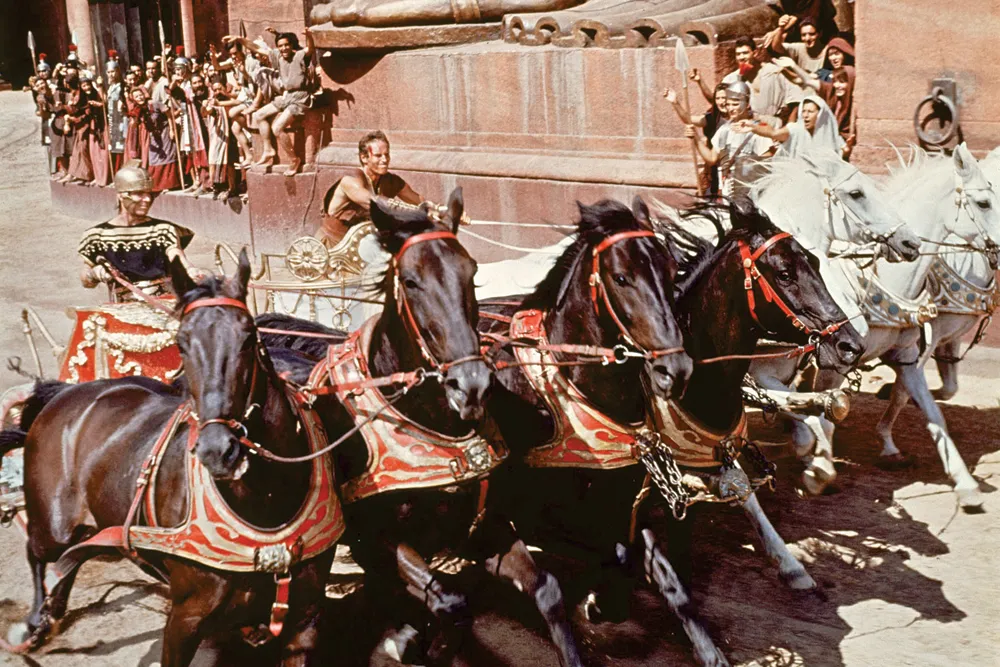
Man, it did not disappoint. The chariot scene was awesome, of course, but more than that, the way he navigates the circumstances, Also impressive the scenery from Jerusalem, to the ships, to Nazareth, to grand Rome. The way the friendship between Messala and Judah deteriorates to hatred – the major gay energy in their first scene together, apparently wanted by the screenwriter Gore Vidal unbeknownst to Charlton Heston. The way leprosy was depicted. And of course, the major theme of how you find peace in yourself after your life has been filled with revenge.
I was afraid of the runtime, of course, and I did have to stop a few times along the way. But that was, because we have guests this weekend and not because the movie was boring. The music was a bit corny (especially that 50s choir style at the end of the movie), well, compared to the similar Gladiator, but when I see how far we have come in comparison to The Adventures of Robin Hood, this is miles above. Some of the costumes look cheap, but that doesn’t distract from the movie (I’m looking at you The Odyssey criticism by just looking at costumes). Charlton Heston was not a savory character, especially with his politics later in life, but here he plays the role he is supposed to superbly. Somebody recently said to me that she can’t really watch movies like Indiana Jones or similar anymore, what with the male hero prancing around and letting everybody know he is the “male hero of the movie.” I disagree; the escapism is exactly the point.
All in all, well deserved of its many Academy Awards and even though it’s not a perfect movie, it’s super entertaining and its mission to transport us away from our modern worries for a few hours is accomplished well!