1962 – Whatever happened to Baby Jane?

1962 – Whatever happened to Baby Jane

It is an American psychological horror thriller directed and produced by Robert Aldrich. It stars real-life rivals Bette Davis as “Baby” Jane Hudson and Joan Crawford as Blanche Hudson as rival aging sisters that were at one point famous in the entertainment scene. The movie is famous for its kicking off the “hagsploitation” or “hag horror” genre in the 60s and for supposed feuds on the set between the two leads, which they later denied. I rented it on Apple TV for 3,99 Eur.

There are a few movies that completely changed my way of watching movies. The earliest one was when I was only 4 years old: E.T., which held my wonder even if I didn’t understand everything and showed me that movies weren’t all easy cartoons. One was 1927s Metropolis, which I watched with fellow students, because we were visiting the film studios where it was shot in Potsdam – how can such an old movie have such a prescient message!?! And one was 1950s All About Eve: Bette Davis was such a diva, such a grand personality, she stole the movie, it made all the supposed modern stars around me seem like children.

I’ve since watched quite a few Bette Davis movies, but was always afraid of this one, since she supposedly really leans into the “jezebel hag” persona. The big feud(s) between the actresses are also exaggerated for this movie, when the body of work of both is so rich – watch Izzy’s video on the 1963 Oscar race, for more info on that and also the movie itself. The feud between the actresses continues to compel the public, however, how else would you explain an entire series with 2 seasons and quite good reviews dedicated to that (Jessica Lange and Susan Sarandon playing those icons? Yes, please).

In any case, the plot of the movie is quite simple. There are two sisters, Jane experienced success early on as a Vaudeville performer, was very bratty, while Blanche stood in the background. During the 30s, Blanche became the more successful actress, while executives made fun of Jane, that she had no talent and destroyed the pictures she was in by drinking too much. A mysterious accident leaves Blanche in a wheelchair; rumors have it that it was Jane that did it. In the present day in the 60s, both have grown old, Jane supposedly taking care of her wheelchair-bound sister. Her resentment explodes during the movie as she tortures her sister, slowly killing her, while she tries to mount a comeback to her old act from 50 years ago. Will her crazy plan succeed?

Does it work? Ironically, Bette Davis immediately saw through the camp that it was and really leaned into the hag persona giving an amazing performance, while Joan Crawford didn’t take the bait, so naturally Davis thoroughly outshines Crawford, even though she is the villain of the movie. It really is a reason, why Davis continued to work for decades after that, while Crawford became a recluse. So, yes, even though the plot is ridiculous, the movie is too long, the whole thing just works due to Davis’ performance. She manages to also rack up the tension in the question whether Blanche survives, as seeing her supposed suffer by spinning around in her wheelchair was quite ridiculous. Davis even gets her Gloria Swanson Sunset Boulevard moment as she crazily dances around on a beach while spectators stare at her in horror.

A little social critique also lingers at what the entertainment industry does with children. The constant performance of Jane of that same ridiculous “Daddy” song, the doll merchandise, the persistent push by the father, it ruined Jane at a young age. And yet, we do not learn: Judy Garland in the 30s, Natalie Wood in the 50s, Brooke Shields in the 70s, plus a whole host of things coming out in the 80s and 90s. I kept thinking about this while watching the movie, Davis making me even empathetic towards her horrifying villain. What a performance!

1946 – Gilda

1946 – Gilda

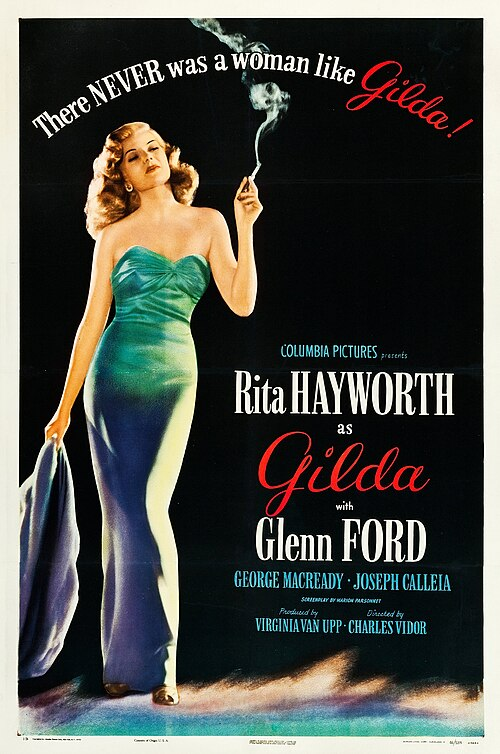
It’s an american noir directed by Charles Vidor. It stars Rita Hayworth as Gilda, Glenn Ford as Johnny Farrell and George Macready as Ballin Mundson in a deliciously elegant antagonist role. It’s the story about a gambler rediscovering his old girlfriend in Argentina, only she’s out for revenge and is married to his new boss. I rented it on Apple TV for 3.99 Eur.
One of the reasons movies are so special to us is they often transport us to a world that is far beyond our reach. Whether it’s a fantasy adventure like Lord of the Rings or a historic epic like Gladiator, heck, even a Western like The Searchers, you are wholly in an unfamiliar setting. What has become less and less prevalent, are movies about far away lands, the exoticism, coupled with opportunity of a clean slate. Even growing up, the movies of the 80s and 90s were often: “I did a crime, I’m going to Mexico!”. 80 years ago, every country outside our own seemed ripe and full of possibilities, because we didn’t know any better. The world of sophisticated and elegant actors, a dream to journey on for riches.

Today, nothing is exotic anymore, every little cafe in the middle of nowhere has a Google review and GPS makes sure you aren’t lost even in the deepest jungle or the most arid landscape. I’ve been fascinated this year reading about Point Nemo or the adventures of wandering to Bir Tawil, the last truly unknown places. It seems I am not alone with this feeling, one of my favorite YouTubers expressed as much for the way we travel, in that it somehow lost its magic.

So it was nice to travel back in time with this movie, to a place where you could Tabula Rasa your way in – Buenos Aires, Argentina (and also Montevideo later) seemed exotic enough. The war had just ended, the world full of possibilities for gamblers and sinners to start anew.

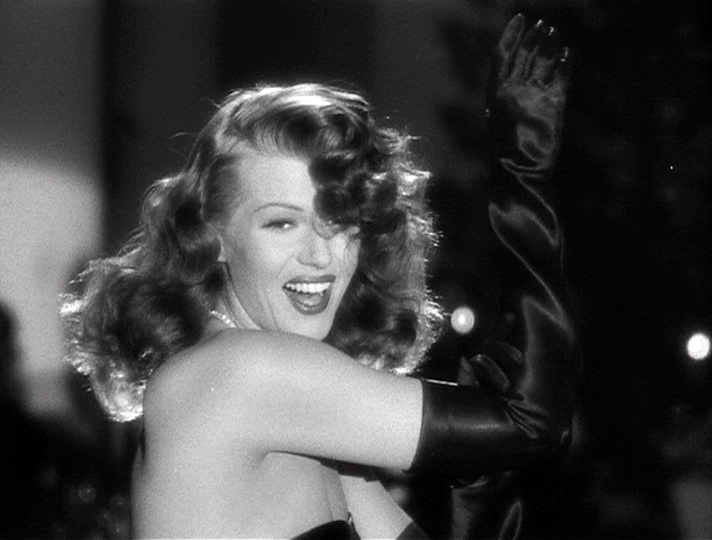
And boy does this movie look great. It’s not for nothing that Andy Dupree was stricken by Rita Hayworth and put her up on that wall in The Shawshank Redemption, that flick with the hair inmortailized. The hip action in her songs – what amazing rendition of Put the Blame on Mame dubbed in by Anita Ellis. And even old Johnny chap is very nice on the eyes. I only ever knew him for being Pa Kent in Superman, but that smirk and the way he leans… swoon. And the electricity between them is crackling, apparently it was real and they become “on again, off again” lovers during the filming of the movie.

But the plot is a convoluted mess, haha. As I said, go for the exotics, the elegance, the worldliness, but not for the story. Of course the villain is somehow involved with the Germans. Of course the elegant local policeman will be the one handing out sage advice. Of course our hero is a plucky american, a little rough on the edges, but with a little gamble in him, he’ll get what he want. At least the ending didn’t quite adhere to noir tropes. So an entertaining movie all around and a great escape to a time when you could just “escape” to Argentina – just don’t try looking for logic and please overlook the millions of plot holes.

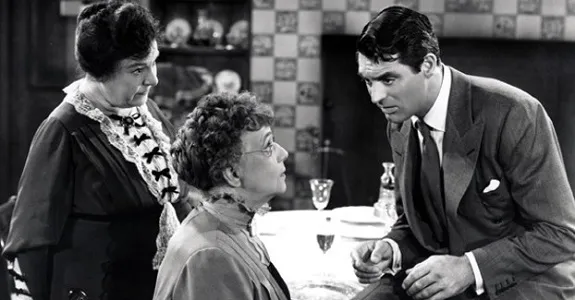
1944 – Arsenic and Old Lace

1944 – Arsenic and Old Lace

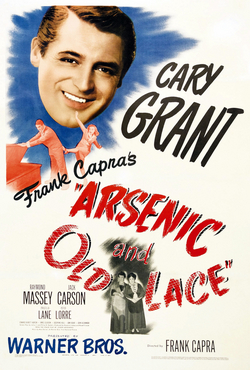
It’s a dark screwball comedy directed by Frank Capra and starring mainly Cary Grant as Mortimer Brewster. It’s based on a play with the same name by Joseph Kesselring, which was very successful, so it was stipulated that the film would not be released until its Broadway run ended. I rented in on YouTube, since both Apple and Amazon only had the German version here for sale.

The leaves have been falling like crazy these last few days here in Berlin. Fall is here and with it pumpkins (soups, pies, lattes, jack-o-lanterns, …), corn mazes (though there aren’t as many as in the past…) and Halloween stuff! Also movies; from marathons the streaming services releasing a bunch of horror movies to the over the air TV channels issuing their Halloween night schedule (apparently it’s actual Halloween marathon this year). So this movie fit right into the season, its whole plot unfolding over Halloween night. Plus, it’s not scary, but a macabre, black comedy.

As to what makes it dark – well it’s two extremely sweet, old ladies murdering lonely older gentlemen (they just bagged their 12th victim in the windowsill) out of pity. It’s wrong, but when you look at them, how they prance around the hall with their arsenic infused wine, you can’t help but laugh. They’re pleasant, give toys to the poor, are in good standing with the police and clergy, how can you not love them? And in their sweetness, they don’t feel remorse either. In fact, there’s quite some commentary over how some people do some truly horrible things in the name of pity, going over the heads of the victims, but present themselves as honorable citizens.

But the movie doesn’t linger on this too long. It’s more on the desperation of their nephew to save his aunts from the police by trying to pin it on his delusional younger brother “Teddy”, who things he’s the actual Teddy Roosevelt. Teddy has buried the bodies in the basement (no, that’s not a metaphor) thinking it’s Panama and they were victims of yellow fever. Getting him interned in an insane asylum is a way to bury… ahem… to keep the skeletons in the closet.

But then hilarity ensues when Mortimer’s other estranged brother Jonathan shows up with his sidekick Dr. Einstein (Peter Lorre is really becoming my favorite actor in this blog, he again is a reason why the whole plot doesn’t fall apart). He’s become quite a killer, I mean criminal on his own also claiming a dozen murders on his side of the ledger. Can Mortimer remain sane with all things crashing upon his once very simple world? The murderous aunts, the crazy brothers, one evil, one naive, his new wive, the police, the director of the asylum, the taxi driver in front of his house, etc., etc., Yes, at a certain point it becomes slapstick and the conclusion is also quite rushed, but in the middle it is quite funny, being punctuated by Cary Grant’s excellent over-the-top acting. His “deer in the headlights” look is especially great and we feel for him when he mumbles to himself trying to hatch a scheme to get out of the newest comeuppance driving a dent into the old plan.

It is quite clear that the movie was born out of a play. The whole thing takes place in the main room of the aunts’ house, with some elements on the outside or the stairs, but which can fit the stage quite comfortably. It’s a plus and minus an some points. Plus, because it keeps everything contained and there are no long excursions into a distraction to the main plot, but minus, because it retains too much of the play character. It’s not like filming the play of Hamilton and calling it a movie and there are some cinematic elements (close-ups, the shot from the stairs, the music, …), but overall the movie made me even curiouser about the play. There was even a line where the brother Jonathan grows incensed because the plastic surgery has made him look like Frankenstein’s monster. Everybody says: “He looks like Boris Karloff!”, which makes him angry. Well, in the Broadway play, he was played by the actual Boris Karloff.

So, final verdict. I laughed in quite a few places, so yes, very successful in that, but don’t go around looking for the heart we see just 2 years later in Frank Capra’s It’s a Wonderful Life. It never leaves its screwball roots and as such is a good time and some very good, funny lines, but not much more behind it. Hey, it’s Halloween in 1944, sometimes you just want amusement!