1960 – Psycho

1960 – Psycho

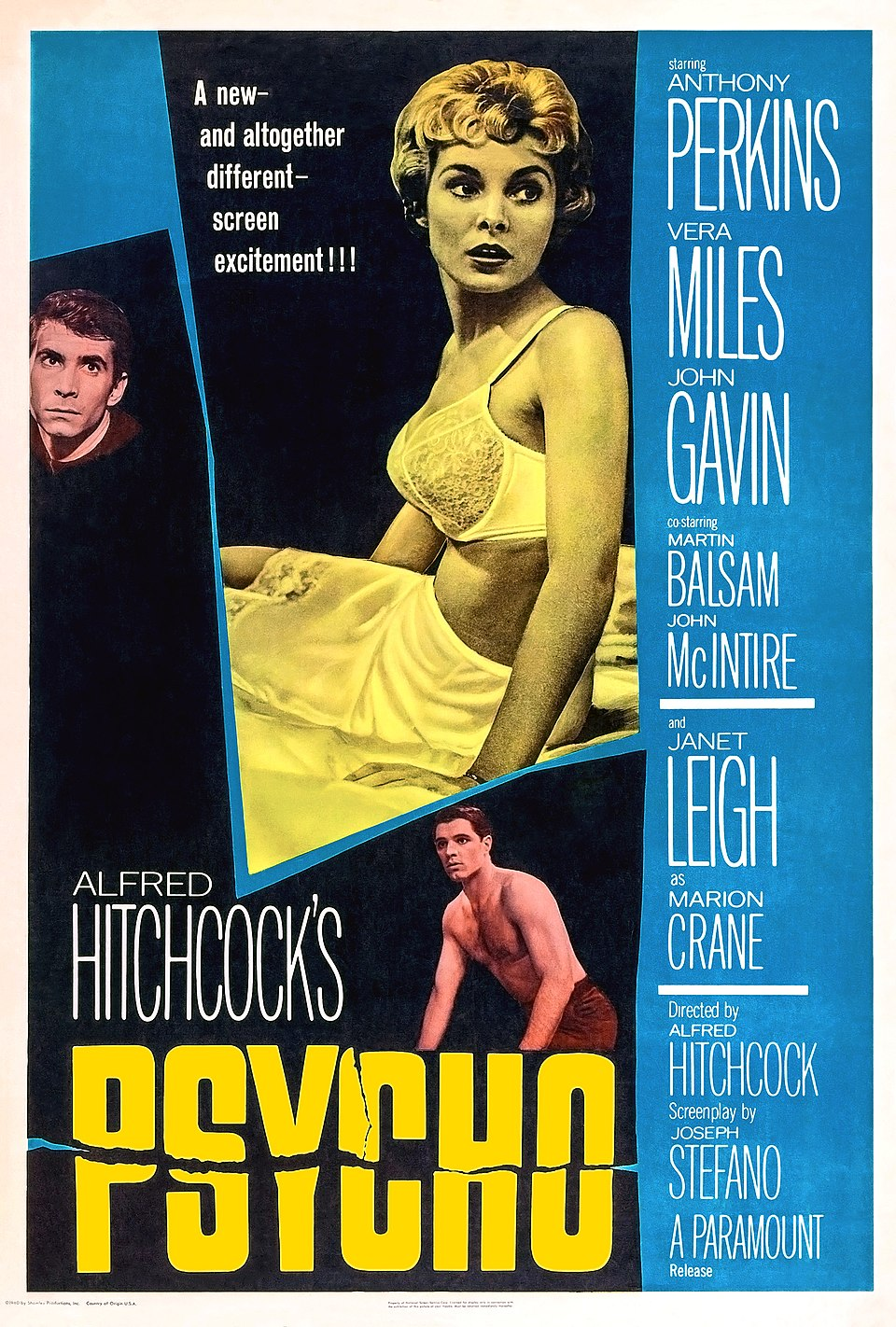
It’s an American horror film produced and directed by Alfred Hitchcock, with a screenplay by Joseph Stefano based on a novel by Robert Bloch. It stars Anthony Perkins as Norman Bates and Janet Leigh as Marion Crane, a woman on the run who stops by the Bates Motel. It’s considered one of the most influential horror movies of all time. I rented it on Apple TV for 3.99 Eur.
The 60s! We’ve arrived at a new decade where in the beginning there will be huge movie productions: sandal epics like Ben-Hur or big production musicals, but then a slump will hit by the end of the decade, be it because of the decline of the studio system, because of the rise of TV at home or because of a general disillusionment of the Boomer generation. No matter, the 70s will give us gritty, realistic cinema, so I am quite ready for the ride from glamour to rawness.

Heh, we’ve arrived at yet another one of my big gaps in my filmography, one of the most famous horror movies ever and considered a true masterpiece by Alfred Hitchcock. I did try to see it once, when I was like 12 or so and found it boring, because it wasn’t about somebody being stabbed at all, it was about this boring secretary – did I get the right movie? Watchingw it live on some movie channel in 1991, I couldn’t just stop and check and quickly switched to something else. Now, in 2026, I have been thoroughly spoiled, on both the famous scene (the one I was looking for) and the resolution. I did still want to see it, though, and make up my own mind whether it was good.

Look, horror isn’t my favorite genre. I was fascinated by the forbidden fruit of it, staying up late to watch the Nightmare on Elm Street or Friday the 13th movies and other horror movies when I was way too young. Just recently, I was recalling a particularly gruesome scene from Puppetmaster with the Leech Woman – I was not supposed to watch this so young. Needless to say, more than 35 years later, it still is in my mind, yeech. But by the time most people enjoy horror movies, I was way grown out of it. I still enjoyed Scream in high school (mostly for the hot actors), but just laughed at people being scared by The Blair Witch Project. It seems horror is having a small renaissance currently with Obsession and Backrooms conquering the box office way over other fare like the Star Wars Mandalorian movie, so let’s go with the vibe of horror 2026 and complete my filmography in the process – Psycho it is.
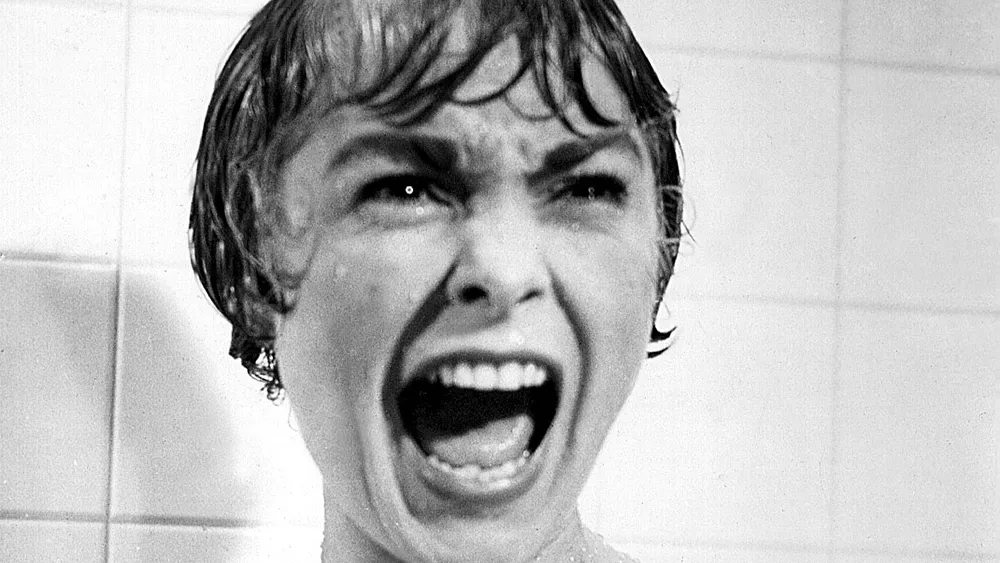
What can one say about such a famous movie that hasn’t been said before? Well, it is a bit dated on the horror front. There is maybe one sequence where I would’ve been on the edge of my seat, had I not been spoiled. So, even though it created a lot of the horror tropes, those forbidden horror movies from the 80s have desensitized me so much that some suspense from a 1960 movie sequence elicits only a small raised eyebrow from me. Psycho supposedly is based on Ed Gein, the butcher of Plainfield, a local hermit who stole bodies from graveyards and kept bones and other body parts as keepsakes in addition to murdering two women. So I think just 3 years after the discovery of his disturbing home, it would’ve been more horrific in people’s minds, especially before other notorious serial killers from the 1970s.

What really stands out, however, are the technical details. Already in Vertigo, the fall from the tower was dizzying, but here I felt even more disoriented by a fall from the stairs. The music score is classic, yet hits perfectly. The shadow play on Norman Bates’ face is just perfect – makes one totally uncomfortable; I really like that he went back to black and white for this one as it emphasized the feeling of confinement very well. And Anthony Perkins really puts on a great performance, the whole transformation from “oh, that poor boy, he really seems quite nice” to “oh my god, psycho…” is masterfully executed. Happy to have really seen it and not just parts of it. It was an enjoyable time, albeit not going to be on my top movies of the year – I was just too spoiled for it.
1935 – The 39 steps

1935 – The 39 steps

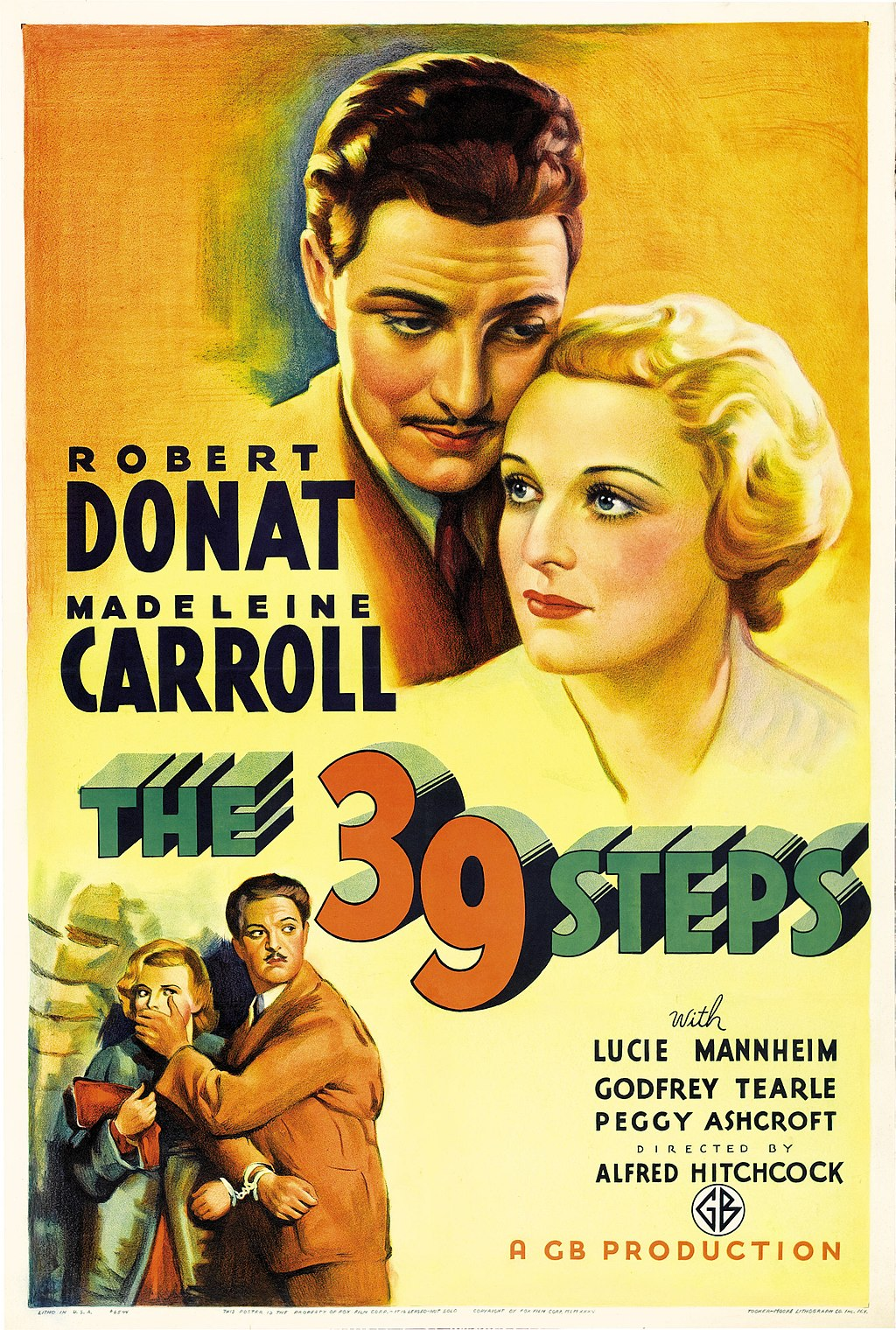
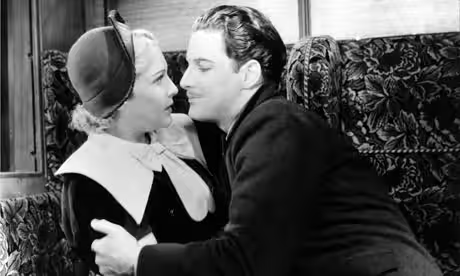
It is a British thriller spy film directed by Alfred Hitchcock. It stars Robert Donat as Richard Hannay and Madeleine Carroll as Pamela, the antagonist he ends up being handcuffed to in the middle of the movie. It is loosely based on the novel The Thirty-Nine Steps by John Buchan. I saw it on Amazon Prime where it is free to watch in the US. It was probably a lazy choice, because I had both seen an Alfred Hitchcock movie (1930) and a “enemies to lovers” (1934) movies in this blog before.

I love “premise movies”, these sort of movies in which the premise can be explained in a sentence or in an elevator pitch, but you still want to see the theme play out. This one is pretty well known. Just like last movie, in which sort of antagonists have to work together, here the main character ends up being handcuffed to the woman trying to turn him in for a murder he didn’t commit. Surrounding that is a pretty intriguing spy plot in Scotland with apparently some famous scenery along the way.

This handcuffing has been repeated many times along the way, most of the movies I only remember vaguely from The Defiant Ones (social commentary) to Midnight Run (much funnier). Even my favorite series as a teenager, My So-Called Life had a “Handcuff” Episode. But as far as I know, this is the prototype, so I wanted to check it out.

I was not disappointed, it was pretty great and the ways Hannay has to escape throughout the film is quite ingenious. I was thoroughly entertained and the movie even had some laugh out loud moments, for example when the woman owner of an inn winks at them when they “confess” that they’re runaway lovers. Even unwanted hilariousness, like the way people die in these movies, had me laughing.

One thing to prepare for, however, is that the movie moves at a breakneck speed. There are also some scenes or sequences, which defy credibility – just go with it and let yourself be entertained. Unfortunately that will also be probably be the reason why I won’t remember this movie much in a few years. Yeah, something about handcuffs and spies, totally fine for the Sunday morning I spent in my PJs, still on travel for work, watching this, but not to always remember.

N.B.: I forgot to add, that I read that Benedict Cumberbatch is to revive “The 39 Steps” in a modern Netflix 6 episode adaptation, though all the news have been from 2021 / 2022. Would be interesting to see him play Richard Hannay.

1930 – Murder!

1930 – Murder!

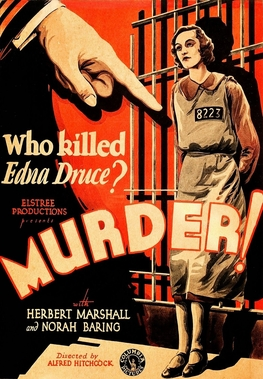
A British mystery movie, directed by a young Alfred Hitchcock. It was written by him and his wife Alma Reville and Walter Mycroft. It stats Herbert Marshall as Sir John Menier, Norah Baring as Diana Baring and Edward Chapman as Ted Markham. It’s based on the 1928 novel Enter Sir John by Clemence Dane and Helen de Guerry Simpson. A watched it with ads for free on Plex.

Finding a movie for 1930 turned out to be difficult. I had already seen All Quiet on the Western Front and The Blue Angel, so those easy pickings were gone. I tried very hard to find Morocco, but couldn’t lest I shelled out 16 Euros for a DVD (nah!). I had no desire for yet another F.W. Murnau movie in City Girl about living on the farm in Minnesota. Sigh…

And then I saw the BKR video about Alfred Hitchcock’s Hair Obsession, which I really liked. But what I liked most, is the accompanying podcast No Noise podcast which was about Alma Reville, Hitchcock’s wife and a tremendous influence on him and especially his early movies when he was still in Britain. Highly recommend it, and this one is free for everybody, though supporting Izzy is always a good idea! In the podcast Dr. Josephine Botting, Curator at the BFI National Archive goes into the history how Alma started as a cutter (editor basically), meeting Hitchcock and then sort of becoming the person that would tidy up his films, mostly through writing. This went on for a long time right up until and including Rebecca, after which she focussed mostly on the children. So I got curious, how do British Hitchcock movies look like, how did this woman influence the weird genius that this man would become? So many successes and fortunes of men in the 20th century were heavily carried and influenced by their wives (often willingly in the shadows), I wanted to honor that.

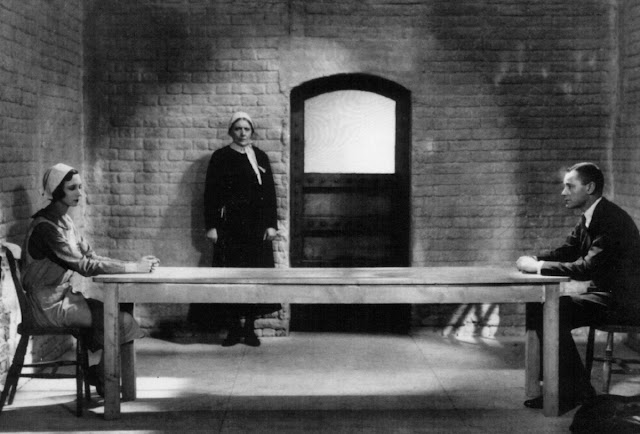
The plot of “Murder!” is about an theater actress Diana Baring being accused of the murder of a fellow actress with a poker. In the jury there is Sir John (who happens to have hired Diana into his theater company – uh, conflict of interest?), who has doubts about Diana’s guilt, but is persuaded by the rest of the jury to convict. Later, haunted by his conscience, he goes on to investigate whether Diana was really guilty – playing detective with help of his stage manager Ted Markham.

This is my first talkie movie and ooooh boy, it is bad in that sense. It was supposedly first filmed as a silent film and later half talked over, half filmed again. And then there are scenes where nothing of this sort is done – it’s just… silent, no ambient sound, nothing. Similarly, the cuts are jarring, the film quality is horrendous at times. And don’t get me started on the editing, a 2 second close up on a clock, then 2 seconds on some meal, then the scene starts. One notices how filmmakers still had to learn to not use the cue cards to narrate a story. Sometimes it’s that janky shots quickly one to the other, sometimes a huge exposition dump. Add in to that the unevenness of the sound editing; there’s a radio programme at full blast when Sir John is talking to his butler about his motives for investigating this murder, or a baby screaming at full volume when he immerses himself into the lives of the actors.

But worst of all, is that it drags. Pity, because there are some real hidden gems in there, like the shadow play or a trapezium scene that is at the core of suspense. Or even some forced things, which are typical Hitchcock style over story, but which work so well — like the improbable, but very funny interrogation scene during a theater play. It could’ve been so great, had it had a competent editor. And so this week I was left disappointed, both that greats do really need to grow into greatness sometimes, but also that even if there was any of Alma’s influence in this movie, it sadly probably wasn’t very good. Still, I am glad I saw this movie, yet another style from the Russian, German, American and French that I have reviewed so far and one that I recognize in British films even many years later.