1952 – Ikiru (To Live)

1952 – Ikiru

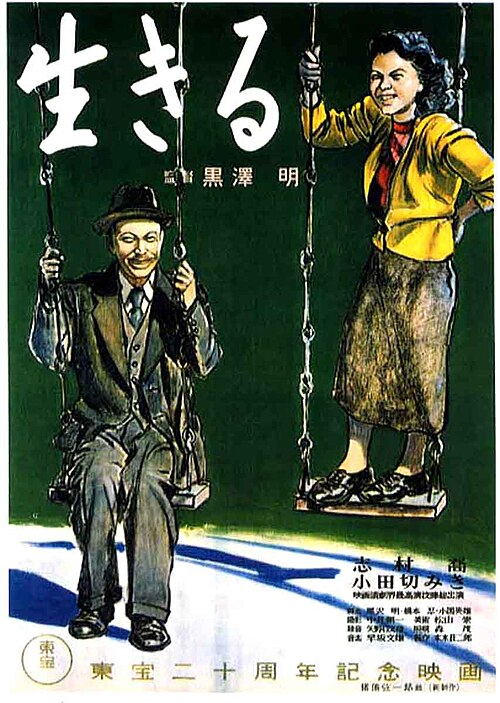
It’s a japanese drama film by the master Akira Kurosawa (only my 2nd after Seven Samurai) from a screenplay by Shinobu Hashimoto and Hideo Oguni. It is said to be inspired by Leo Tolstoy’s 1886 novella “The Death of Ivan Ilyich“. It mainly stars Takashi Shimura as a terminally ill bureaucrat as he examines how his life has been going. I rented it from filmingo for 6 Eur.

It’s nothing new, that there is plenty of nostalgia on social media right now. The newest trend in 2026 is to share your photos from 2016, to romanticize its aesthetic, to reminisce of a time before the pandemic where there was less polarization, less constant crisis. I, on the other hand, went on an even deeper rabbit hole to a nostalgia core corner that says that The Matrix was right, actually: 1999 was peak humanity! And so I stumbled across Baz Luhrman’s Sunscreen video. Huh, I hadn’t seen that since almost 25 years, way before YouTube, probably when visiting New York city after having moved to Northern California, faithfully as the video had said. By the time the video was halfway done, I was a weeping mess. Even though there were few regrets, most of the advice is generic and I had tried to follow a lot to some degree after having received it in a chainmail e-mail back in 1997, it hits differently when looking back. And if this examination of ones life right in the middle of it at 47 hits so hard, would it be even be more of a gut punch were I older or my deathbed?

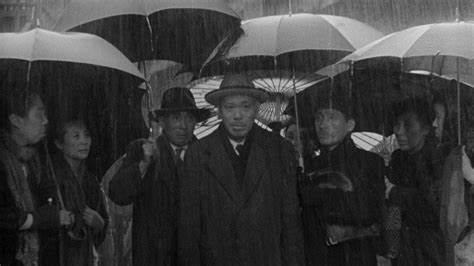
Here the movie Ikiru (roughly translated as “to live” or “living”) comes in. The movie starts on the protagonist Kanji being a zombie bureaucrat – a coworker even gave him the nickname “the mummy”. All the time working, at one time full of ideals and with great hopes for a family until the great ideas were beaten and hollowed out of him and the relationship with his son is superficial at best. These themes are Universal, of course, just think of Cat Stevens’ Cat’s in the Cradle or Arthur Miller’s Death of a Salesman. And then Kanji gets the stomach cancer diagnosis (not officially, he has to tragicomically infer it and the fact that he has less than a year to live).

I love that the movie at first goes all hedonistic. He goes on a drinking spree, gambles at pachinko parlors, dances, stays out all night, first with a poet, then with a disillusioned younger female co-worker. Similar to the song Live Like You Were Dying by Tim McGraw at first he tries to make it so that his life was worth living. But with respect to the movie, The Bucket List, you can’t simply selfishly cross of items on a list to make your life mean something. In the second half is where the movie really cooks and goes beyond the themes in the first and it does it in a wonderful flashback manner. The kind you wish for at your funeral, the realization that you were a good person, when you touched even strangers profoundly. And all with a simple contentment that is often inherent in Japanese life.

It’s quite a feat that the movie managed to touch me. I was on quite a cynical mood the whole day yesterday and seeing the new release of Wuthering Heights just left me cold and eye-rolling (like this is supposed to be steamy?). Well done graphically, but it just missed the emotional mark on me. So this quiet contemplation, very simple even, could have elicited the same reaction, it is a 74 year-old movie, after all.

But in its simple honesty it hit the mark, I googled the emotional centerpiece song Kanji keeps on requesting and singing and translated its lyrics:

“Gondola no Uta” (The Gondola Song)

Life is brief. Fall in love, maidens. Before the crimson bloom fades from your lips, Before the tides of passion cool within you, For those of you who know no tomorrow.

Life is brief. Fall in love, maidens. Before his hands take up his boat, Before the flush of his cheeks fades, For those of you who will never return here.

Life is brief. Fall in love, maidens. Before the boat floats away on the waves, Before the flame in your heart flickers and dies, For those of you who have no today.

And that seems very much like the generic advice from Sunscreen that moved me so deeply when I was 18 years old. And it all came full circle and I have to agree with the world what a wonderful movie this is and that the arc it portrays is deeply moving, especially the joy he has swinging in the snow on the new playground he built.

1951 – A Streetcar Named Desire

1951 – A Streetcar Named Desire

It’s a Southern Goth dramatic film directed by Elia Kazan. It is based on the famous, Pulitzer winning play by Tennesee Williams. In fact, all main actors, but Vivien Leigh also played in the original play (in the play it was Jessica Tandy in a role that made her famous). It stars Marlon Brando as Stanley, Vivien Leigh as Blanche, Kim Hunter as Stella and Karl Malden as Mitch. I rented it on Apple TV for 3.99 Eur.

For the longest time, I hated costume dramas, it was always just who marries who and the intrigue, gossip and “behind the scenes” of it all. But in the last few years, I’ve come around some of the movies, mainly because I can finally imagine how high stakes it was that you end up with the right man. It was the choice between leading a coddled life and being destitute. I now appreciate how intelligent and a bit conniving the Winona Ryder character had to be in The Age of Innocence to hold on to her man, but seeming aloof at the same time. No wonder Marty choose to direct that movie right along the gangster movies, those societal rules are as strict as Mafia code.

In that sense, this movie intrigued me right from the start. Will Blanche make it so that Mitch might rescue her in marriage or will her brute brother in law Stanley screw everything up? The psychological game between these two was also very intriguing, how far can you show the disdain for the other person without mucking it up with the person in the middle – Stella, the wife and the sister?

And in a very poignant scene on the docks along the water it also becomes clear how Blanche suffered because she made the wrong choice. Fell in love with a gay young man, married him and suffered until one night all that frustration just blurted out and he killed himself in desperation. A very impactful monologue on a wrong choice made, even if she loved him.

A STREETCAR NAMED DESIRE, Vivien Leigh, Marlon Brando, 1951

Unfortunately that’s as far as it goes. Stanley is just too brutish. Even though Brando is good looking, the second he hits his wife, which surprisingly is very early in the movie, I loathed every scene he was in. Exposing Blanche is cruel and driving her to insanity implied sexual assault is just icing on the “eww, this guy really is an asshole” cake.

But Vivien Leigh is not a sympathetic character either. She is to represent the fall of the South, where tradition goes to die in the hands of a Polish immigrant. Where all the antics are forgiven as long as you have property (Belle Reve), but you are a fallen woman when not, slowly going insane.

So in that sense, great performances, great allure. But the stuff that really interested me – whether she could somehow make it work with Mitch – never really got going. And the stuff that didn’t interest me – the psychological torture these two submitted the other to – got so melodramatic and bitter that the final, though sad, just left me cold. These people deserve to wither.

1950 – Born Yesterday

1950 – Born Yesterday

It’s a romantic comedy directed by George Cukor. It’s based on the 1946 play by Garson Kanin of the same name. Since Cukor apparently disliked Kanin, he did not share credit with him or the playwright Albert Mannheimer. It stars Judy Holliday as Billie Dawn (in her Oscar winning role), Broderick Crawford as Harry Brock and William Holden as Paul Verrall. I rented it on YouTube for 3.99 Eur.

Happy New Year, everybody. I never did write that summary of my first year of “100 years of movies”. Ah, never mind; it wasn’t going to be that interesting anyway. The theme is mainly that working on scratching out a list let’s you in on so many amazing movies (like “M” or “To Be or Not To Be”), but also some real clunkers (I am still stewing on how unlikable the protagonist of “Bicycle Thieves” is). You need the patience to go through it, so that the discovery of gems is even more rewarding. In summary, I am really happy, I undertook this project and I am really interested what I will discover in the 3rd year (movies from the 80s and 90s are my most-watched decades). Anyway, my essays in 2026 will cover the movie years 1950-1974, a period of significant change in cinema. It starts with Hollywood still being in a high, but very soon will be attacked by HUAC and people having TVs in their homes. But it will come out of the slump at the end of the 60s with a whole of individual auteurs, away from the rigid studio system into a more gritty, realistic cinema. I am really interested in the journey. Let’s begin.

One of my favorite TV shows is Better Call Saul. I could go wax poetic about it, especially now that Rhea Seehorn is finally getting awards recognition for Pluribus, but a major standout is the cinematography. Colors, shapes, angles and costumes all have meaning. The references within the show are also superb, from the books characters read and the songs they listen to, down to the food consumed. And, of course, the movies. In the climax of the final season, the midpoint of the season and the real breaking point of the whole series is Plan and Execution (just look at that IMDB score 9.9!). Before the shocking final act, Jimmy and Kim are just relaxing, celebrating, having some wine and watching a movie. Which movie? Well “Born Yesterday”, of course – the scene where Billie goes “the proper study of mankind is man (’cause that includes women, too)”. In the next episode the movie comically goes on playing, but I won’t give anything away. In any case, the choice of that movie and that quote made me curious about it.

I had seen the middling remake with Melanie Griffith before. Look, I do have a soft spot for Melanie Griffith, I don’t know why, but I can hardly recall anything about the movie, only that she wanders to the dictionary time and time again – so it’s forgettable, but not as bad as many people say. But what finally put this movie on my big watchlist was BKR’s 1950s Oscar race video essay. All About Eve is without a doubt the movie that turned me towards old movies, how good they could be. Bette Davis was just so fascinating to watch, so magnetic. It was unfathomable how anybody else could’ve won the race. But then, that 1950s race supposedly was legendary, because it also included Gloria Swanson for Sunset Boulevard, which was also amazing (though I am still on the Bette Davis train). What could’ve surpassed those performances?!?!? Judy Holiday’s performance apparently – so I had to watch it.

And yes, all three lead performances are amazing. Judy Holliday does have a natural charisma, and slips into the role very comfortably. At first I thought that voice would be grating on me, but she manages to change it ever so slightly over the course of starting to become a bit more educated that at the end you wanted to hear what she was going to say for herself, it had a touch of assuredness. Her “ditzy, dumb blond” performance is so iconic, she played it just a year later in front of the Pat McCarran’s Senate Internal Security Committee for apparently sympathizing with communists – no idea whether the Senate bought her performance or whether she didn’t really have any connections with communists, but she never suffered any consequences in her acting career from that subpoena. In any case, also also Broderick Crawford’s performance was amazing. I immediately bought his unlikable, but powerful dumb oaf performance. The scene where Harry and Billie are playing cards is mesmerizing: her for winning every hand and having a weird system in shuffling the cards; him, for wanting to assert power, but still yearning for those minutes with her, the way he slams the deck, but then looks at her. Fascinating! And William Holden? He is okay, but let’s face it, he is mainly eye candy. Haha.

Ok, so how about the themes of the movie? They are quite simplistic. The movie implies that Billie had her awakening through the study of politics in just a few weeks. That’s not how it works, of course, education takes time. In that sense, the process is presented almost childishly, packaged with sexism and derision and an odd Americana tinge (glorifying the architecture of Washington DC). But the lines the movie delivers are powerful. The way they equate selfishness to fascism immediately makes one think of the current president of the United States. The way Billie tells the senator that money shouldn’t put any person above his constituents immediately brings up images of Elon Musk. Her journey of self-discovery is fascinating to watch, even if it is not realistic.

In that sense, the delivery of the message is a little too plump. Harry is a convenient villain – loud and couth. The audience from the first scene knows he’s the bad guy, the way he treats the hotel staff and splashes around with his money. Of course, the breaking moment is when he hits Billie, of course he gets his comeuppance through his greed in the end (that is the mildest of spoilers, come on, you know the moral center will win).

So the theme of the movie seems to be that “knowledge is power,” yadda yadda, very liberal values, which is why the movie is often loved in liberal circles. Yet the movie conveniently forgets about the silent villain in the back, the knowledgeable lawyer Jim. He knows which politicians to buy and exactly how far to go with the law without getting into trouble. He could have been Assistant Attorney General, yet he willingly lets himself get lured to the dark, but very lucrative, side. Conveniently, the movie ties the main story up too neatly with a bow and just scratches the surface of the matter. If it is an invitation to further educate oneself, it is very superficially delivered; if it is a warning to stand for your principles no matter the lure of riches, it’s not very successful. I am probably being too harsh on the movie in this last paragraph, but that’s how I felt about the delivery of the message. But it is an entertaining romp, so I should not dissuade you to watch it from that viewpoint.

1948 – Bicycle Thieves

1948 – Bicycle Thieves – (Ladri di biciclette)

It’s an Italian neorealist drama film directed by Vittorio De Sica. It stars totally unknown actors Lamberto Maggiorani as the father (Antonio) and Enzo Staiola as the son (Bruno), who are looking for a stolen bike in poverty stricken post-WWII Italy. I saw it on YouTube, thanks to this amazing list I found on there. I chose it because it was at one time (1952) rated number 1 in Sight an Sound’s Greatest Movie of all time.

As a kid, I loved my bike. Rode it up and down our little neighborhood in the afternoons, down dirt paths, trying to get amazing jumps in. On the weekend my dad would take me to the BMX park and I would dive into the bowl with joy and try (and fail) some jumps on the half pipe. I even dreamt of my bike, that I could fly over the big cliff near our house, that I would win some bike race. I wasn’t even super good at it; I just loved the bike. Not for nothing, at one point I could recite you the lines of Pee-wee’s Big Adventure, by heart. Poor Peewee’s beautiful red bike (mine was red, too) gets stolen and he has to track it down all over America, what’s not to like?

I was also captivated by the two staples of Italian cinema when I was young: Cinema Paradiso and Life is Beautiful. Both are centered around the relationship between a boy and his father figure and both boys are so cute to look at. The pictures I had seen of Bruno in this movie seemed enough to convince me to watch this movie.

But then… I kinda hated this movie. First of all, the bleakness – yes, of course, post war Italy is bleak. People are fighting for survival, there aren’t any jobs around. But that’s just it, everybody is miserable, everybody is suffering, of course some people are going to resort to stealing. I could just simply no warm up to the main character. So self righteous, as if he deserved special treatment, as if he is the only one to be believed by the police. He gets all indignant and impatient when his wife goes to see a fortune-teller and nags at her, but then he goes to see her himself and whines that his wife nags at him. But the worst is his treatment of his son, he constantly yells at him when all he’s trying to do is to help his father. Poor kid falls and gets scraped in the rain, gets beaten by his old man and in the end is berated for having such a dead beat dad.

And the movie drags, too. It gets boring after a while to go from street to street of Antonio accusing yet another person of stealing his damn bike. There are some scenes, which are cute, for example Bruno eating his mozzarella sandwich (yum!), but I had to stop the movie at several points, because I was bored. Sorry, but I will just go back to Pee-Wee and let Antonio wallow in his misery.

This is my second-to-last entry for this year and I don’t want to end my last entry on a sour note, so before I leave, I want to wish you, some happy holidays and merry Christmas! Thanks for reading the blog!

1947 – The Lady from Shanghai

1947 – The Lady from Shanghai

It’s an american film noir produced and directed by Orson Welles and also stars him along Rita Hayworth as the two main characters. Welles’s screenplay is based on the novel “If I Die Before I Wake” by Sherwood King. It’s about a drifter sailor and how he gets caught up between a corrupt lawyer and his mysterious wife. I rented in on Apple TV for 3.99 Eur

You know what I like having grown up in a different country than I live now? Even though, I fully understand the culture and I can adapt fully, I know of different ways something can be looked at or done. It often leaves a smirk on my face when somebody is enraged that they’re being questioned about the way “they have always done it” or the unwillingness to adapt to new circumstances. I see that in other kids that grew up as citizens of the world and not married to one country, they have a sort of pragmatism about the world without succumbing to cynicism.

So it is here that I chose to have a second movie in a row with Rita Hayworth, because she plays this woman that grew up in China and calls herself a gambler of the world – it just seemed so interesting. Her way of talking, her familiarity about the Chinese culture in the far too few scenes in San Francisco, were fully intriguing. And it left me wondering, she was clearly a very knowledgable person of the world – what was her backstory?

Unfortunately, the film itself has many, many shortcomings. Allegedly, the film is about 60 minutes longer, but Welles was forced to cut a lot out by the studio. It shows. The story is quite abrupt in some places. In my review I had said, the movie needed a good editor, but perhaps when you have to cut that much, well then it doesn’t matter, it’s always going to be janky. As said above, I so would’ve loved to hear more about Elsa’s backstory. No, instead we get weird courtroom scenes, where Mr. Bannister plays the fool on purpose.

In my review, I had also said that the movie went style over substance, but perhaps too much of the substance was cut away in post. But boy, it is stylish; we’re in beautiful locations at sea and in Mexico, where everybody is sweaty and boozed up. The scenes in San Francisco are more muted, but much more elegant, even Chinatown looks enticing, like a whole other world. These scenes were both filmed on location and it ballooned the cost of the movie, but it does look amazing (like you can see the beach of Acapulco in the background and people walking on it, so it’s not a set). And the ending is what sells it to a lot of people, the hall of mirrors giving us a dizzying, disorientating feeling. Even that, was 20 minutes, cut down to just 3, a shame. Rita Hayworth, of course, steals the show as the femme fatale and even Orson Welles would’ve been charismatic and great if not for that very, very strange Irish accent he’s trying to sell (and sometimes forgets to enact).

And lastly, the melodrama. Nah, this time it was ratcheted up to 11 with the violin in the background trying to tug at your feelings. I just wasn’t sold on it. That’s the thing with melodramas, it’s very hard to argue when people get sold on them, sometimes they work and sometimes they just leave people cold. A lot of people like this B-movie noir (I did also seek it out for its quite good, but not excellent reviews), so it is a personal taste, it just didn’t appeal to me.