1936 – Modern Times

1936 – Modern Times

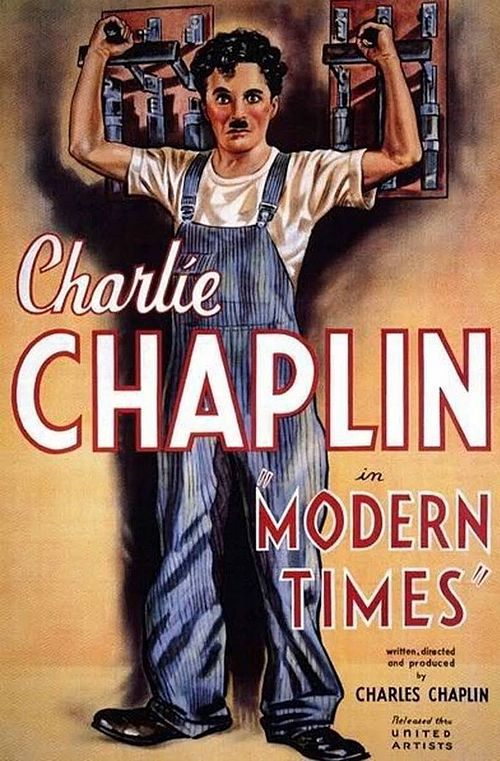
Part silent, part talkie movie written, directed and starred in by Charlie Chaplin in his last performance as The Tramp. It also starts Paulette Goddard as Gamin, his potential love interest. I saw it for free on YouTube. It is a largely a scathing critique of modern technology in the name of capitalism during the Great Depression, apparently spurred by a conversation he had with Mahatma Ghandi.

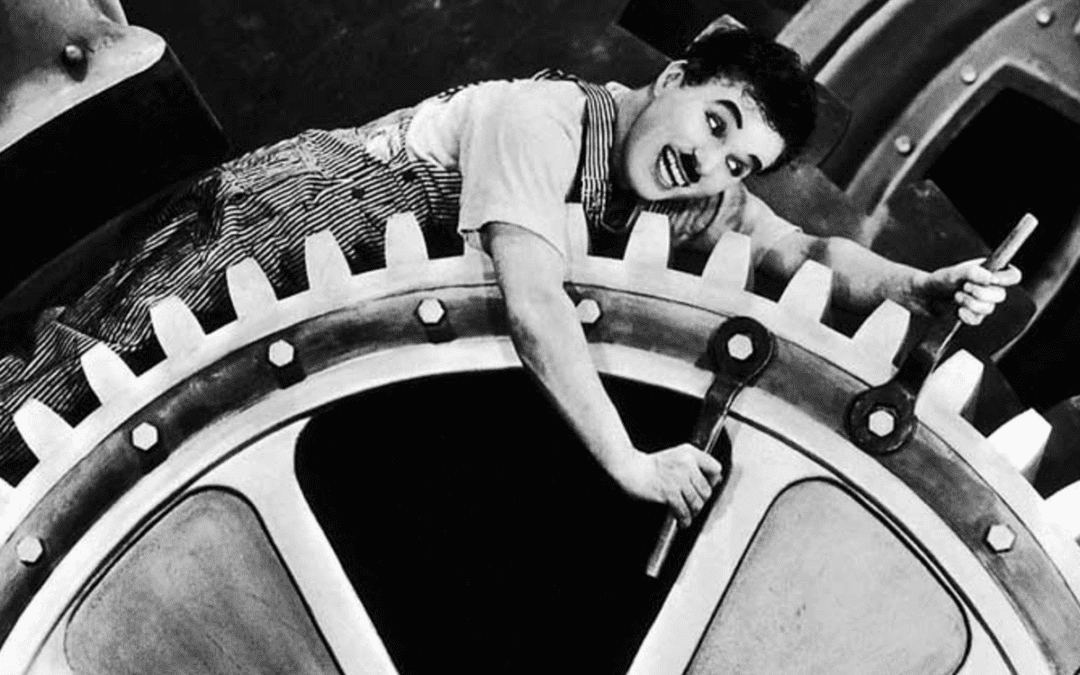
Critique of capitalism is “in” these last few years in film – from The Menu, Triangle of Sadness, Glass Onion, Saltburn to the masterpiece that is Parasite, even the recent Mickey 17. And yet, none of these “eat the rich” dramedies did it with so much heart and and had me laughing in stitches like this Charlie Chaplin movie. The Tramp’s character tries and tries to catch a break to start to make a living in a house with his love Gamin among the height of the Great Depression in America. From demeaning work in a factory, literally being reduced to a cog in a machine that needs to function ever faster, to a security guard in a fancy department department store needing to keep his old friends and colleagues out of simply getting a meal. It does says a lot about society, when the main character is happier in prison than out in the workforce.

The Great Depression was no laughing matter. I already alluded to the poverty being ever present in American movies of that time in “It happened one night” and here the desperation is everywhere. Workers showing up in masses when there is a hint of work at a new or re-opened factory, people resorting to stealing food in their desperation, even some clinging to communists ideals and starting marches, strikes and other rebellions to fight back at the capitalists. Within that, the ever optimist figure of The Tramp works perfectly.

It is in this movie that the song Smile, later popularized by Nat King Cole or even bastardized in Joker (Todd Phillips would probably say it was a homage, but I hated that movie) first appears and it is to give us optimism that it will work out somehow – the true essence of The Tramp. Even though he always finds himself in desperate situations, he approaches them with an optimism that somehow it will get better for him. It is this optimism that I always admire in Americans, somehow ingrained in their culture and it shows this culture trait plenty in this movie. And yes, I did turn off the TV at the end of the movie with a smile on my face – it would somehow, someday resolve well for The Tramp, he would be ok!

I do have one point that sat badly with me throughout the whole movie and that is Gamin’s relationship with The Tramp. How old is she supposed to be, anyways? At one point, she runs away from family services that supposedly were shipping her off to an orphanage and in the next few scenes The Tramp services himself as her literal sugar daddy (giving her cake and sweets and later a fancy coat). It’s all played quite fanciful and the music always swells to make you feel ok, but it still gave me the creeps that this young girl attached her future to a much older vagrant, just because he gave her some food and money once. There is an alternative ending in which Gamin takes on vows and The Tramp leaves alone, but Chaplin changed his mind after wanting to make his real life lover and third wife Paulette Goddard famous and give the real her hope that she could succeed.

Ah, well, nonetheless, I do recommend this movie, finally a Charlie Chaplin one in these 100 Movies, the comedy is really strong here and the social critique is also well done. It even has a coherent plot from start to finish, even though you can always show the individual vignettes separately and have a good time (and I even see them some of the now on TikTok).

1935 – The 39 steps

1935 – The 39 steps

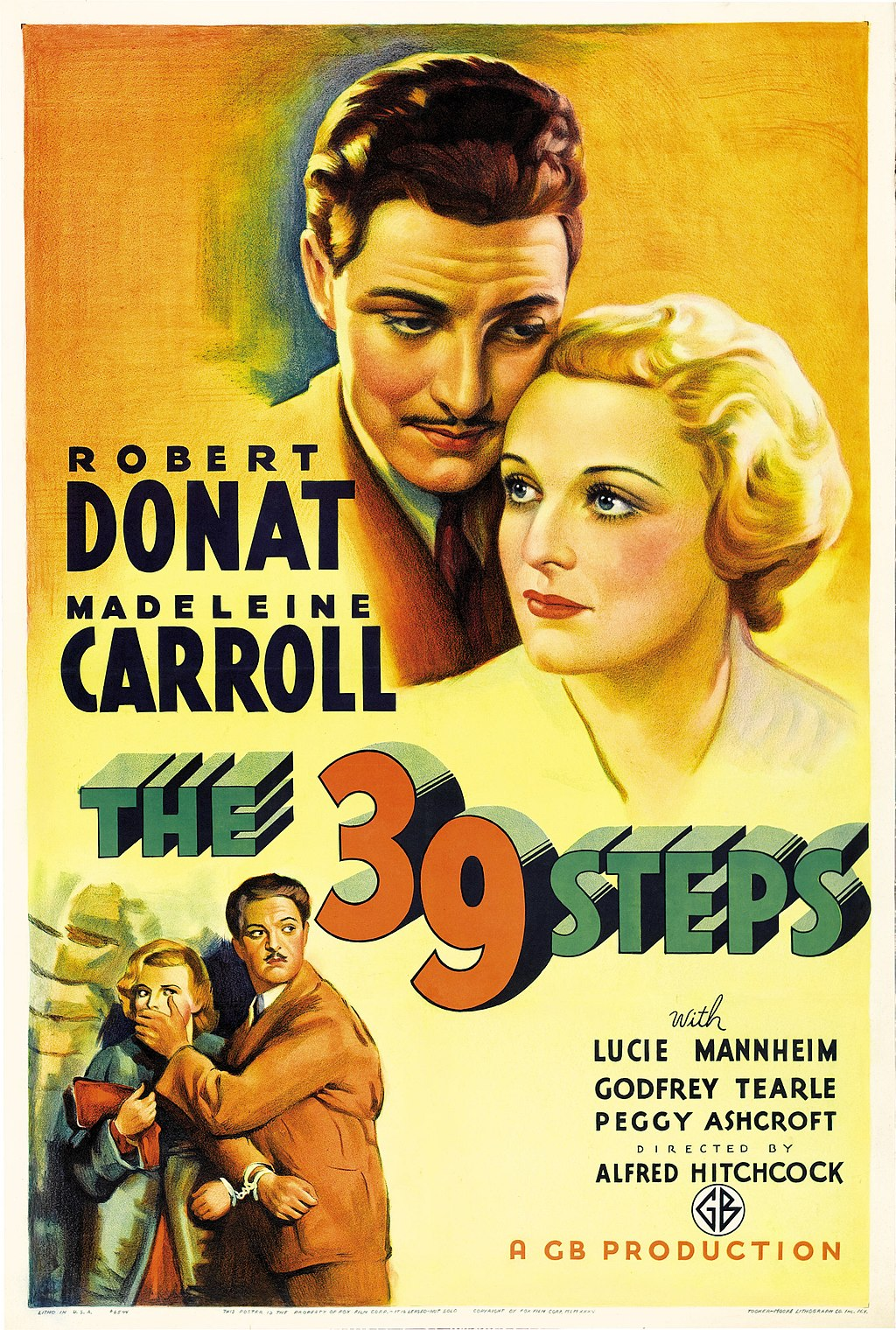
It is a British thriller spy film directed by Alfred Hitchcock. It stars Robert Donat as Richard Hannay and Madeleine Carroll as Pamela, the antagonist he ends up being handcuffed to in the middle of the movie. It is loosely based on the novel The Thirty-Nine Steps by John Buchan. I saw it on Amazon Prime where it is free to watch in the US. It was probably a lazy choice, because I had both seen an Alfred Hitchcock movie (1930) and a “enemies to lovers” (1934) movies in this blog before.

I love “premise movies”, these sort of movies in which the premise can be explained in a sentence or in an elevator pitch, but you still want to see the theme play out. This one is pretty well known. Just like last movie, in which sort of antagonists have to work together, here the main character ends up being handcuffed to the woman trying to turn him in for a murder he didn’t commit. Surrounding that is a pretty intriguing spy plot in Scotland with apparently some famous scenery along the way.

This handcuffing has been repeated many times along the way, most of the movies I only remember vaguely from The Defiant Ones (social commentary) to Midnight Run (much funnier). Even my favorite series as a teenager, My So-Called Life had a “Handcuff” Episode. But as far as I know, this is the prototype, so I wanted to check it out.

I was not disappointed, it was pretty great and the ways Hannay has to escape throughout the film is quite ingenious. I was thoroughly entertained and the movie even had some laugh out loud moments, for example when the woman owner of an inn winks at them when they “confess” that they’re runaway lovers. Even unwanted hilariousness, like the way people die in these movies, had me laughing.

One thing to prepare for, however, is that the movie moves at a breakneck speed. There are also some scenes or sequences, which defy credibility – just go with it and let yourself be entertained. Unfortunately that will also be probably be the reason why I won’t remember this movie much in a few years. Yeah, something about handcuffs and spies, totally fine for the Sunday morning I spent in my PJs, still on travel for work, watching this, but not to always remember.

N.B.: I forgot to add, that I read that Benedict Cumberbatch is to revive “The 39 Steps” in a modern Netflix 6 episode adaptation, though all the news have been from 2021 / 2022. Would be interesting to see him play Richard Hannay.

1934 – It happened one night

1934 – It happened one night

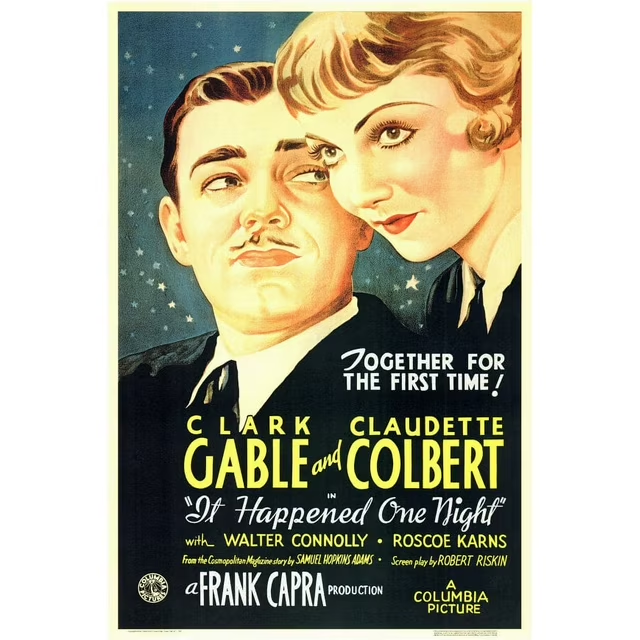
The movie is the prototypical screwball, romantic comedy, directed and co-produced by Frank Capra. It stars Claudette Colbert as Ellie Andrews and Clark Cable as Peter Warne. It is based on the August 1933 short story “Night Bus” by Samuel Hopkins Adams. I rented it for 3,99 Eur on Apple TV.

I love road trips. In fact, I am on a road trip right now and absolutely enjoying crossing the Rockies by train. In 2009 we took as a 3 week road trip across the US with our 3-year old daughter and had an absolute blast, for a long time we had a blog out there which was quite popular in Germany. But one thing I also keep in a very special place in my mind was the 3.5 day trip I took back – the changing scenery, the different food, the evolving character in people and all sorts of other observation you see on roadtrips. My absolute favorite movie of all time is Thelma and Louise and it is also a road movie. Besides the obvious feminist tones, the whole Americana element in it what makes me nostalgic, the greasy diners next to motels on the road, the radio stations that either play country or religious rock, the stretching of the road into the horizon, as far as the eye can see. You want road trip comedy? I’ll watch Planes, Trains and Automobiles every time it comes on the TV and still laugh at all the predictable parts.

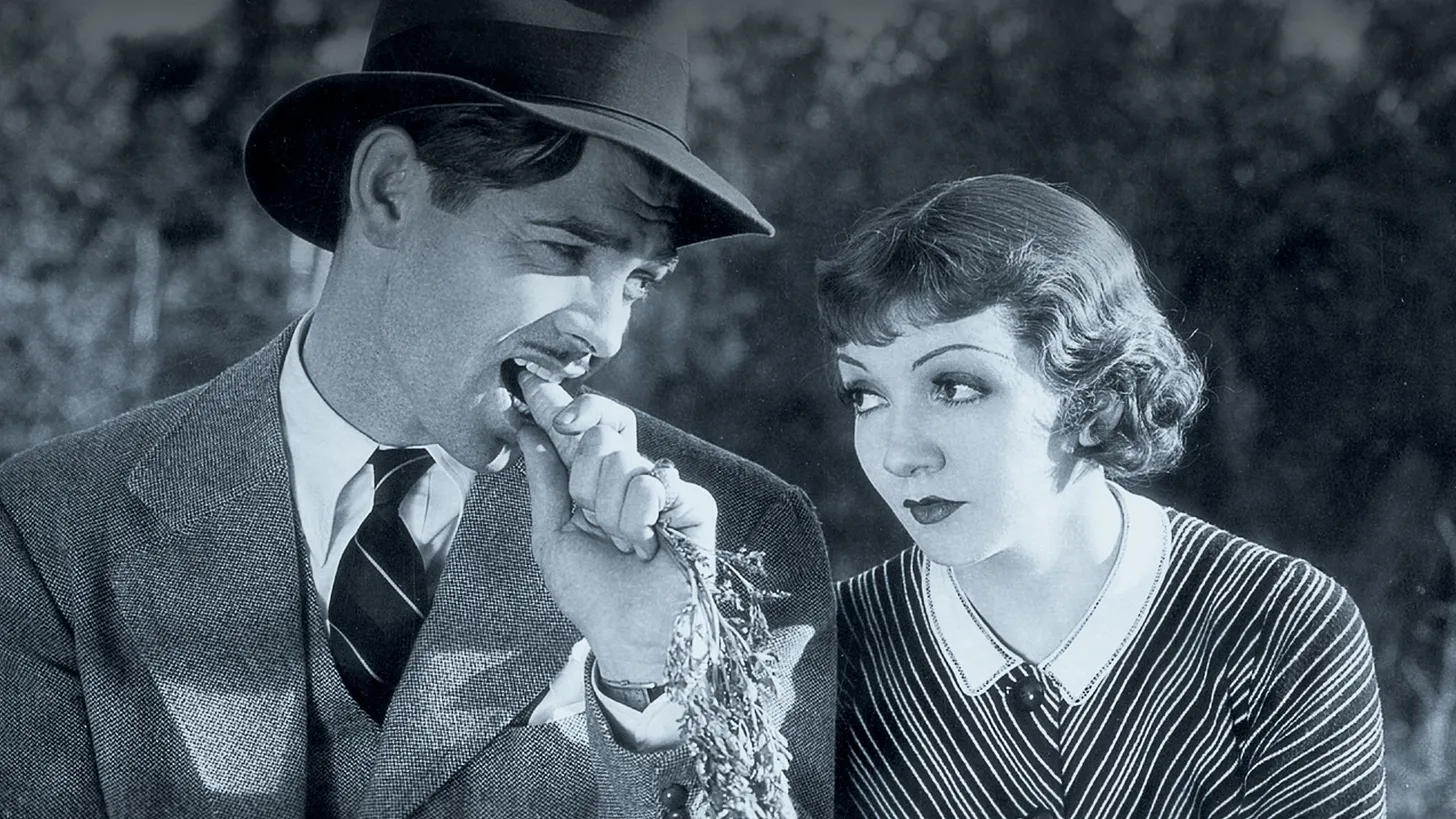
So I was super excited to see this movie, it has been on my watchlist forever, hailed as the prototypical romantic comedy with screwball elements. Yes, many of those elements, especially “foes to lovers” seem cliched, but one has to realize that it was often this very movie that started them. Even the way Peter ate his carrot is supposed to be an inspiration for Bugs Bunny (see image below). Add to that the fact that the movie was shot at the height of the Great Depression and the distortion between the extremely rich heiress and the bulk of the people not knowing where their next meal would come from.

But then it had that whole road trip element in there. People making conversation and even entertaining on the bus, the constant search for shelter and food on the road (especially when you run out of money halfway), even the bickering, because something will go wrong (car trouble, crooks wanting to take your money, etc). Some reviews I saw said that the movie dragged, how long can it take to go from Miami to New York? I didn’t feel it, it needed its time! And it had fun along the way.

And the romance? I bought it! First of all, Clark Cable does have a “je ne sais quoi” that makes him unbelievably attractive and when Ellie confesses her love to him, I got heart pangs, such was the rapport she had built up to him. And the hurt felt by both when they thought the other was indifferent to them, I felt it l too. I saw Before Sunrise yesterday and the way Céline and Jesse are at first guarded, but obviously so attracted to each other, it reminded me of this movie so clearly.

So remember, often the journey itself is the destination. And often the people you live those experiences with, will be in your mind forever, having shared an experience that was away from the day to day. So cherish those trips and don’t see them as a drag!

1933 – Duck Soup

1933 – Duck Soup

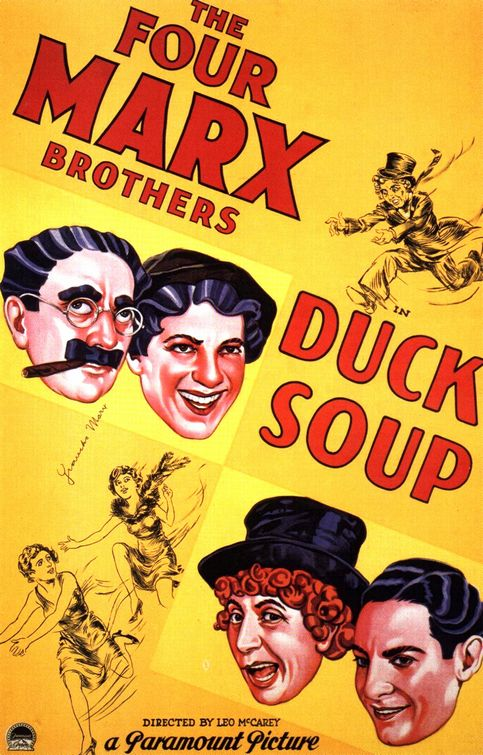
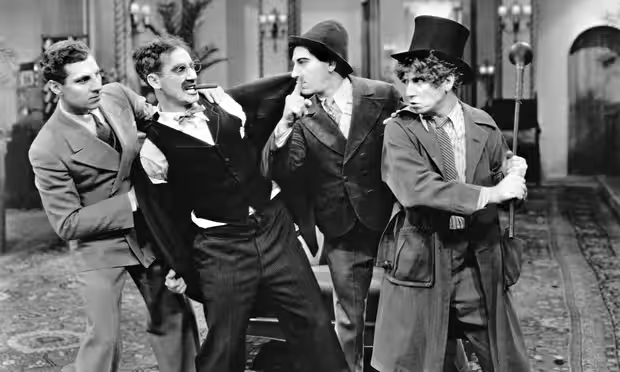
It is a musical comedy starring four of the Marx Brothers (Groucho, Harpo, Chico and Zeppo) in their final movie for Paramount and the final movie for Zeppo. It also features Marx Brothers’ regular Margaret Dumont as Mrs. Teasdale and Louis Calhern as ambassador Trentino and the antagonist. Since I was traveling this week, I downloaded it from the Internet Archive Marx Brothers Collection, which lists their 15 feature length films.

Growing up, like my earliest memories until we got cable when I was 6, I watched a lot of 20s-40s comedy. I think, Guatemalan TV got those shows on the cheap, so lots of Harold Lloyd, The Three Stooges, even some Chaplin. I think they also dubbed them on the super cheap if at all, so that must have been the reason why the Marx Brothers didn’t make it, since their comedy is quite filled with word play also. I look back fondly at those evening watching those shows, so I thought, hey, let’s fill a cultural hole, in that I have never watched a Marx Brothers movie ever. 1933’s Duck Soup is probably their most famous one – that mirror scene being one of the most transcendental situational comedy scene in movie history.

I was also traveling this week and quite busy the week before, so I didn’t have much time, so watching this on the train back from my trip was perfect – a comedy that barely spans 66 minutes, that’s about all I could take this week.

Perhaps, I was not in the right mood… because I didn’t like it. Yes, I can see it’s a clear attempt at making fun at what was happening in Europe in 1933. Benito Mussolini outright banned the film, it is not that complicated why – Freedonia vs. Sylvania, haha. The Americans lending money only on the condition of installing a dumb beloved doofus as the head of state and it leading straight into war after countless of opportunities of avoiding that war. Yes, the political satire is strong, but for me it was just outdated. And I don’t know if it was the style or the time or both.

Probably the style, because for all the wistfulness I had at watching “The Three Stooges” as a kid, it is quite horrible programming, I saw maybe 2 minutes of an episode somewhere and immediately switched away – “how did I ever like this?”. The same here, I still don’t get the thing with Harpo; he just cuts things and honks away and people found this hilarious? Was that like a known thing? And the first time you hear as a kid Groucho yelling “tanks!” when in war and them answering “you’re welcome!”, it is probably funny, but it got an eyeroll from me, sigh. I am doubly saddened, because I am a fan of Eyebrow Cinema, he just put out his 100 favorite movies, because he passed 100k on YouTube (yay!) and he had it at 83, so I was really looking forward to it.

1932 – Scarface

1932 – Scarface (The Shame of a Nation)

It is a 1932 pre Hays code movie directed by Howard Hawks and co-produced by Howard Hughes. Its screenplay by Ben Hecht is loosely based on the novel of the same name by Armitage Trail (a pseudonym) and by the real life Al Capone and re-imagines some real events. It stars Paul Muni as Antonio “Tony” Camonte and some supporting cast includes George Raft and Boris Karloff. I rented it for 3,99 Eur on Apple TV.

I’ve been watching with horror on how in the last few weeks the office of president Trump has wilfully ignored court orders left and right and has deported or is in the process of deporting people that did not deserve to be deported (from expressing their opinion, to mistakes, to inconveniences, and so on…); not for nothing it’s being called a constitutional crisis. The office of the president, most notable led by Stephen Miller is employing draconian measures and cramming out weird laws to justify their actions. One is reminded of the Japanese internment camps during WWII in which American citizens of Japanese heritage were simply stripped of their rights via presidential Executive Order and Roosevelt was widely celebrated for it. Surely that could not happen today? Of course it can, our timeline is nothing special. People are easily persuaded to strip people of their rights in the name of security!

I did not expect to encounter those conundrums in this movie. It was supposed to be a gangster movie. I like those, escape into a world you know nothing about, where the ruthless rules of organized crime are as suspenseful as any relationship drama (“who’s going to betray who? is the oath of loyalty sworn going to hold?”). And hey, the gangster movie has a long tradition in America, so I wanted to know how it got its start.

With some jarring effect, Scarface doesn’t simply start after the opening credits; there are some title cards quite moralistically preaching the following: “This picture is an indictment of gang rule in America and of the callous indifference of the government to this constantly increasing menace to our safety and liberty. Every incident in this picture is a reproduction of an actual occurrence, and the purpose of this picture is to demand of the government: ‘What are you going to do about it?’. The government is your government. What are YOU going to do about it?”. At first I thought that they had to do this for a pre-Hays code film, sort of preemtive message saying “no, don’t glorify this guy!”. And sure, the movie is quite alluring showing all the riches Toni has at the height of his power, but I never saw it as glorifications, especially because you know he’s going to fall at some point. It still was banned in many states and cities.

But in the middle of the movie, it repeats that message and much clearer and much scarier. The newspaper editor and a politician argue that ordinary citizens are powerless against these gangsters unless the government does something. They keep on arguing that most of these thugs aren’t even citizens and that all of them should be rounded up and fast-tracked deported! And who if not us, the proper citizens to ask for laws to be changed in the name of security and liberty. Chilling how this could’ve been said in 2025!

As for the rest of the movie… I felt it was quite entertaining, it’s a crisp 93 minutes and a fun watch, often unintentionally funny. The car chases were cool and the movie’s depiction of the St. Valentine’s Day Massacre was quite ingenious play with shadows. But then… it was only that – entertaining. The acting is quite stiff in some places, the flow of one scene to the next somewhat abrupt.

It is probably a product of its time, Toni must have been much cooler in 1932, perhaps like Michael Corleone in 1972 or Jordan Belfort in 2013 – we all know those men are deeply flawed and criminal, but for a second you ask yourself, what would it be like to live in those shoes for a few days? Interestingly, I found the tragic character of Rinaldo, the quiet, loyal, but deadly associate much more alluring than the loudmouth Toni. So the end did not grip me as much, I was not invested in Toni’s faith, how they finally got him, how he went out, misled by a blinking advertisement that kept telling him “the world was his”! Ah well, predictable, even pre-code!