1941 – The Maltese Falcon

1941 – The Maltese Falcon

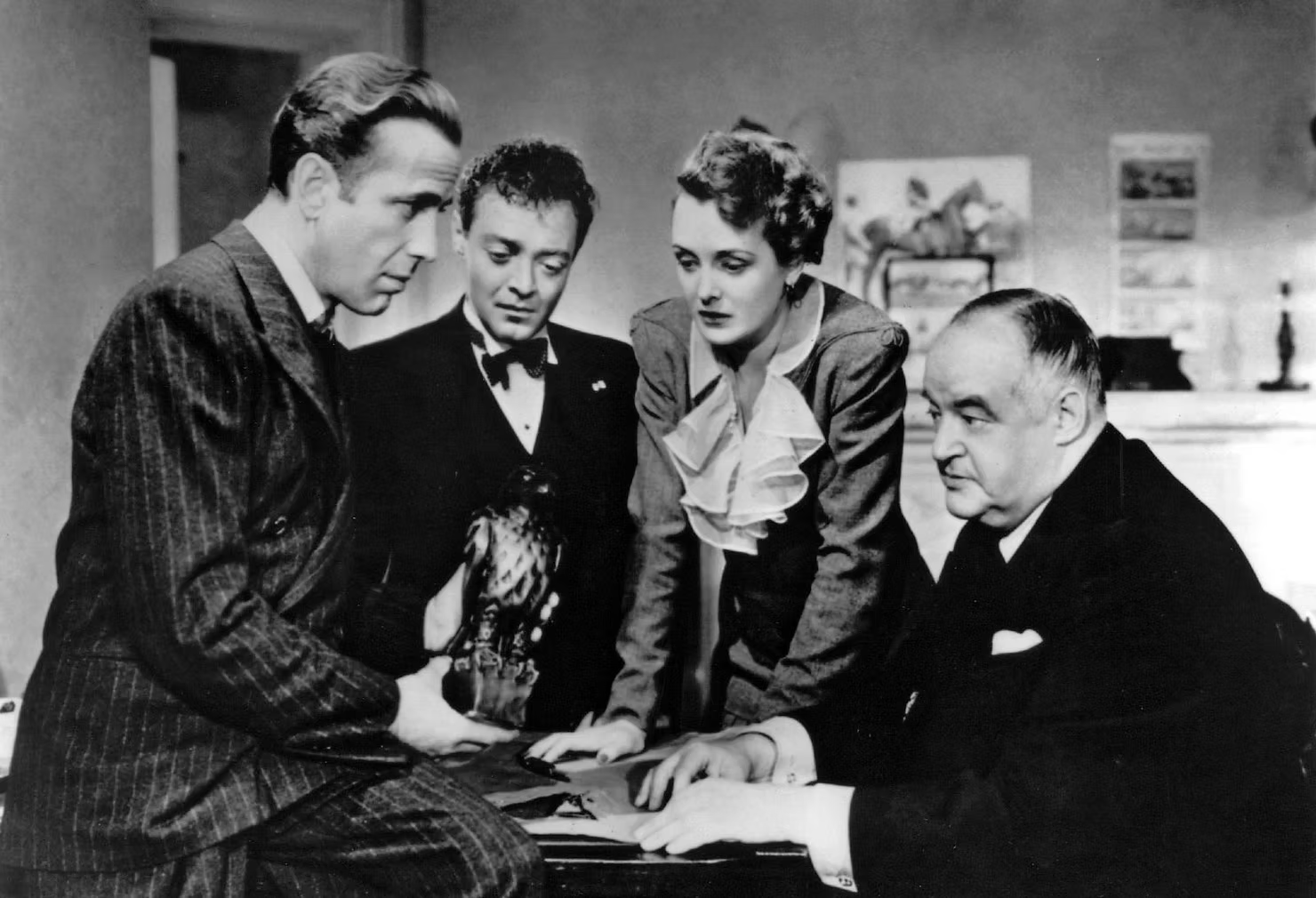
It’s an American film noir movie written and directed by John Huston in his directorial debut. It stars Humphrey Bogart as private investigator Sam Spade, Mary Astor as his femme fatale client and the great Peter Lorre as one of the villains. It is based on a 1930 novel by Dashiell Hammett and is actually a remake of a 1931 movie. I rented it on AppleTV for 3.99 Eur.

Tell me if you’ve heard this one: a bombshell of a woman walks into a private eye agency. In there, she meets a drizzled, cynical detective. He is sceptical of the woman’s story, but agrees to take on the case. In it ensues a fantastical, intriguing story, along with a romantic subplot with the knockout femme fatale of a woman. The weary and sardonic hero escapes all sort of tight situations with his cool, almost aloof demeanor, but in the end he must choose between a life with the tragic woman or righteousness. Of course he chooses the latter leading to the demise of the doomed woman. Yes, that is the plot of many hard-boiled film noirs and it is for this one, too. The actual Maltese Falcon is just a plot device to get the story going.

What makes this one special then? For one, it launched both Humphrey Bogart as a leading man and a blue-ribbon John Huston as a director into the stratosphere of greatness. It would be just the next year that Bogart would play the lead it Casablanca, I don’t think this would’ve happened without this movie. I am not a big fan of Bogey – he sure does have a big head on a small body and his weary face just signifies that, not wisdom.

“The Maltese Falcon” also is one of the pioneers of this style of hard-boiled story. There were detective stories before, but this look that I described in the first paragraph, is premiered by this one, especially the weird fast-talking way of the protagonist. I swear, like half an hour after seeing this movie, I kept describing things in my head in the same manner that Sam Spade did. A sort of “look, honey, we all know what’s going on here, but let’s call this dinner sandwich for what it is, nothing more, nothing less. some ham in the middle, little bit of butter, i’ve always liked it this way, perhaps today with a pickle on the side…” when having dinner.

It also features the decisive film noir low angles and lightning that make the genre so distinctive – just pay attention to that lamp in Sam’s apartment, it’s like an additional protagonist. Several movies after that emulated that style – some I have seen are Double Indemnity and The Third Man, the last one being my favorite with a plot of someone making a fortune by selling fake penicillin.

And yes, that’s just the crux – it was more style over story. It was all well and good, but the story of this black bird is way less interesting than the question that drives someone to doom hundreds of people by selling them fake medicine. Or the water politics of Los Angeles in another hard-boiled, femme fatale story in Chinatown with its devastating reveal. Here, the assured Spade just calmly solves everything, avoiding not just three antagonists, but also the police. The only thing that saves the movie and the characters as a whole is Peter Lorre as Joel Cairo. His weird elegant, but somehow false style is so funny and intriguing at the same time. That little man already made left me with his mouth open as the villain in M and here he was also the spice that made this movie bearable.

I am glad I watched this movie for this “100 movies” project of mine. At one point, before I became a mother and Netflix was still sending DVDs, I was going through AFI’s Top 100 movies and this had been on the back burner and I am happy to cross it off so many lists. But I don’t think I will visit this one any time soon – it may have kicked of the genre, but since then, there have been many more and better examples of the genre generated.

1940 – Ahí está el detalle

1940 – Ahí está el detalle (You’re missing the point)

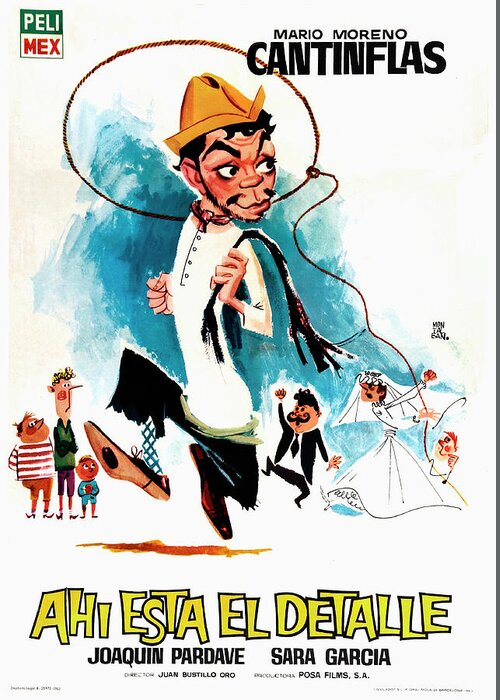
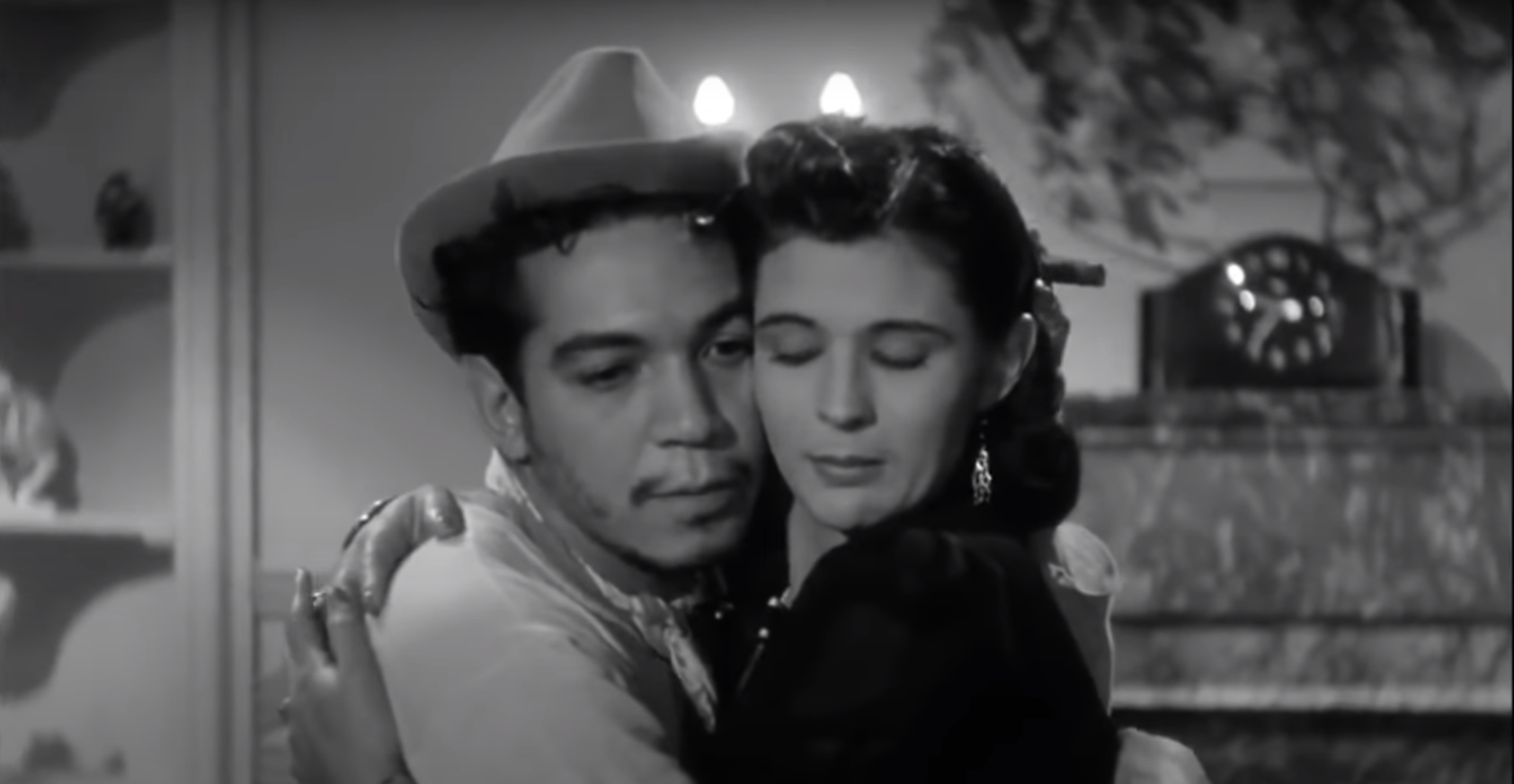
The movie is a mexican comedy, directed by Juan Bustillo Oro. It stars the great “mexican Charlie Chaplin” Cantinflas (Mario Moreno) as himself with a great supporting staff. It is his breakout role, even though he had portrayed this character in many skits and even films before. I saw it on YouTube for free thanks to the restoration of Cineteca of the UNAM from material of Televisa A.C.

The week between Christmas and New Year’s is a black hole for productivity. It’s often a period of lounging from food coma to food coma and boring family visits; kids running around, adults getting out some whiskey with a snicker, everybody trying out their new Christmas presents, whether it is clothes, toys, perfumes, etc. In the background there is some movie playing that always plays during that time and you take it in, sometimes non-consciously, sometimes jumping into the middle or not finishing it.

Even last year, that’s how I spent my week, with my mother in law on her last Christmas (she passed away in April) – watching the original Sissi marveling at the beauty of Romy Schneider or Little Lord Fauntleroy with Alec Guiness, a staple of movies shown that week. I guess in the US, they probably watch It’s a Wonderful Life on Christmas and The Sound of Music over that week.

Well, growing up in Guatemala, back when we didn’t have cable or were visiting relatives that didn’t have cable, it was Cantinflas time. I don’t remember details of what I saw, it’s more like feelings, like watching the one where he gets to become a pilot at my aunt’s place with my dad, while my cousin had fallen asleep next to me. The shtick of Cantinflas movies is always the same – he gets in a situation way above his vagrant status (e.g. becoming an ambassador, a musqueteer, a congressman, an anthlete, a prince, a movie star, a priest, etc.) and hilariousness ensues. Yes, in Guatemala Cantinflas is cult, even if it is a Mexican figure! And growing up even as kids, you copied the mannerisms of him, his affected way of speaking hilariously mocked in the kids program Chiquilladas, which I also saw as a kid by Carlos Espejel’s Carlinflas. I personally like Chespirito much more and he is (sort of) more of my time, but you have got to acknowledge the tremendous influence he had over Mexican cinema and Latin-America as a whole.

So for 1940, I was almost ready to watch The Philadelphia Story (ah, yes, yet another screwball comedy with Cary Grant…), when I saw the Cantinflas movie way down. Hey, I hadn’t seen that one, and it’s the one that made him famous, so off I go into nostalgia territory.

I had a blast! I do understand that this movie is probably not for everybody, especially non-native spanish speakers as so much of the comedy is wordplay (very simple wordplay, but nonetheless). One thing I like, is that Cantinflas is not perfect, in fact, he becomes a quite despicable character when he’s drunk. He takes advantage of people, he’s lazy, always looks out for himself. But in the end, you can’t help to love the doofus. There’s a reason he became so famous and it’s different from the US-American brand, very Latin-American coded, yet he truly makes it his own (even if he apparently became quite insufferable in his opinions in old age, which thankfully I didn’t consciously experience).

But can I recommend this to anybody? Like, if you want to get to know this “Cantinflas” phenomenon? There are probably better, more visual stories from him that don’t rely on the word play comedy as much, so no, not anybody. But this one goes right up among the best old movies I have seen this year and it’s just the combination of situation comedy, wordplay, but good old nostalgia playing a role. For a little while, I was a kid in Guatemala again, just enjoying the simple life of watching an old movie on the basic local channels.

1939 – The Wizard of Oz

1939 – The Wizard of Oz

It’s an american fantasy musical produced by Metro-Goldwyn Mayer. The movie is based on 1900 kids book “The Wonderful Wizard of Oz” by Frank Baum with illustrations by W.W. Denslow. It was “mainly” produced by Victor Fleming and stars Judy Garland in her breakout and most famous role as Dorothy. I rented it on Apple for 3,99 Eur.

Some movies are so influential that you tend to know them by osmosis. I have watched exactly one half Avengers movie (the 2012 one, did not finish, don’t like Marvel movies), yet I know of Thanos and the snap. I have not and don’t plan to watch any of the Avatar movies, yet I know it’s blue Pocahontas. And so we come to 1939, where I am embarrassed to say that I haven’t seen the two most famous movies of that year: Gone with the Wind and The Wizard of Oz. Or at least not consciously – I have seen hundreds of clips of both movies, know of the controversies, the significance of both. I have read the Margaret Mitchell’s really well written book of the former (and the unrealistic, kitchy, but very entertaining sequel Scarlett) when I was like 13-14, it opened this whole new world for me – surviving as a woman in the 19th century. So with the Wicked and Wicked: For Good movies being in the conversation, I thought I should go with the latter of the two movies.

Boy, I wasn’t wrong about the osmosis. And it’s not the “Yellow Brick Road” or “Somewhere over the Rainbow”, those I could understand. It’s knowing the lyrics to “Ding Dong, the Witch is Dead”, even though I didn’t know the context of the song. It’s knowing “I’m melting, oh what a world” from Who Framed Roger Rabbit and realizing I never questioned its origin. It’s my friend from high school often saying: “Are you a good bitch or a bad bitch?” and now getting she was quoting Glinda (with “w” and “b” changed). And I do think, I have seen this movie running in the background when I was a kid at my best friend’s place, but I think I never made it to the Emerald City, I stopped at the lion joining the gang. Or maybe I am confusing it with Alice in Wonderland, which I also saw at her place (guys, I was like 6 or 7)?

So, how can I rate this? I mean, if I see it with kids eyes, just like 2 weeks ago Robin Hood, then the transition from the black and white Kansas to the bright Technicolor Fantasyland of Oz, must have been absolutely breathtaking (I found it almost blindingly so). The musical was not as entrenched as it would become one or two decades later and having musical numbers for kids must have been quite something. I saw that movie somewhat tired before falling into bed and I had quite psychedelic dreams that night trying to escape Oz, so the movie stays with you, heh!

The story is easy to understand and the movie has an easy to grasp message: “There is no place like home!”, a comfort after the devastating years of the Great Depression and the World War looming over the horizon. Even though the poverty is clear in Aunt Em’s farm in Kansas, it’s family that we long to get back to.

But that message? I don’t like it very much – it’s not quite the meanness that comes out in this article from The Guardian, in that Americans fall for a charlatan like Oz. It’s more that every journey away from home changes you and Dorothy has not resolved one single of her problems at home. For example, Toto will still be impounded (unless perhaps Miss Gulch really was killed in the tornado?). In 2001, Hayao Miyazaki released Spirited Away in which Chihiro undergoes her own journey in a fantasy world. Even though in principle she returns to her normal life with her parents, she is a changed girl, has matured immensely and us with her, through her work in the washhouse and especially that train ride. And it’s exactly those moments of calm that stand in contrast to the frenzy of hopping from one thing to the next in the Wizard of Oz. It’s relentless and never stops and in the end it turned out to be a hoax, all she had to do was to tap her heels.

But I have spent already so much thinking about this movie, its message and its impact, that I do understand it to be one of the “great movies”. One can understand the cultural value of something, even though it’s not your value. Sometimes, it’s better the movie evokes a reaction of anger out of you instead of indifference. I am glad I saw this.

P.S.: I know, I just glossed over the troubled production this movie had, the everlasting bad effects it had on its cast, chief among them Judy Garland being propped up by a cocktail of drugs (amphetamines, barbiturates and other diet pills) which eventually resulted in her death. I can only recommend Be Kind Rewind’s video on the making of the movie.

1938 – The Adventures of Robin Hood

1938 – The Adventures of Robin Hood

An American swashbuckling epic directed by Michael Curtiz and Willian Keighley. It stars Errol Flynn in the titular Robin Hood role and Olivia de Havilland as Maid Marian. It’s the first Technicolor picture on my movie list. This, plus the extensive settings, fight scenes, costumes, etc. made for a budget well over $2 million; it was Warner Brother’s most expensive picture made at that time, but made it back comfortably as one of the highest grossing movies of that year. I rented it at Apple+ for $3.99 Eur.

Adventure movies are quite difficult to describe, discuss and rate; especially the old ones. For one, it’s the exact reason you go to the movies for: have a good time, watch the good guys win, with a little excitement, some fighting, some escaping dangerous situations. For me growing up, it was the Indiana Jones movies, with The Last Crusade being my favorite one. But come on, when you think about it, some of it is a bit dumb (like the X in the library – haha), it is only the genius that is Steven Spielberg that lets you turn off your brain, enjoy the movie and even get your heart rate going. Today’s adventure movies are Comic Book movies, something I never got into, but there were probably a lot of people that didn’t get the 80s adventure craze either.

Another adventure movie that was quite big when I was growing up was Kevin Costner’s Robin Hood: Prince of Thieves. Nowadays, it’s widely panned, perhaps even being the worst ones of the bunch, but then little 12 year old me was smitten by everything the Hollywood machinery conjured: the cheesy soundtrack (fun trivia fact, the original 1991 music video seems to have disappeared), the constant bombardment of merchandising (I distinctly remember how I prized my Christian Slater – Will Scarlet sticker), the perfect villain (long before Snape, Alan Rickman was an amazing Sheriff of Nottingham). But yes, I see now how flawed that movie was, even though I loved it as a tween.

And so with a 1938 hat on, the Adventures of Robin Hood has got to be amazing. Well choreographed stunts and battles, a heartthrob leading man with his real-life “on again off again” partner, an epic incorporation of the score, a story that captured the spirit of the times and a studio that was willing to put a lot of money behind this adventure. That one single man could get away from so many enemies and do it with a smile on his face was totally new. And the final boss battle with Sir Guy of Gisbourne packed some real stakes and even worry that Robin wasn’t going to be able to overcome him. It’s a perfect encapsulation of what made the ballads of the medieval times great, the legend being larger than what probably happened.

But when you look at it from a 2025 lens on, then the movie suffers. it starts at the ridiculous costumes, so aptly made fun of in Robin Hood: Men in Tights – I now understand even more references of that parody movie, heh! It goes on with clunky dialogue and fights (yes, great for 1938, but it looks wooden and so staged for 2025). Even the scenery trying to get every drop of color to showcase the marvel that was Technicolor back in 1938, just underscores the fakeness of it all. It’s probably good for the Disney version (super underrated, highly recommend to watch it with your kids!), but not for the real life one. And don’t get me started on that ridiculous laugh and hairdo that Robin Hood sports, I laughed at it myself.

In short – adventure movies are amazing – but see them in the period that were made. Spend some amazing hours forgetting the world around you. Revisit them for nostalgia, if you are revisiting your childhood. But don’t expect them to hold up to modern scrutiny. It’s nice that I saw this as a piece of lore in Hollywood, but there are way better adventure movies nowadays.

1936 – Modern Times

1936 – Modern Times

Part silent, part talkie movie written, directed and starred in by Charlie Chaplin in his last performance as The Tramp. It also starts Paulette Goddard as Gamin, his potential love interest. I saw it for free on YouTube. It is a largely a scathing critique of modern technology in the name of capitalism during the Great Depression, apparently spurred by a conversation he had with Mahatma Ghandi.

Critique of capitalism is “in” these last few years in film – from The Menu, Triangle of Sadness, Glass Onion, Saltburn to the masterpiece that is Parasite, even the recent Mickey 17. And yet, none of these “eat the rich” dramedies did it with so much heart and and had me laughing in stitches like this Charlie Chaplin movie. The Tramp’s character tries and tries to catch a break to start to make a living in a house with his love Gamin among the height of the Great Depression in America. From demeaning work in a factory, literally being reduced to a cog in a machine that needs to function ever faster, to a security guard in a fancy department department store needing to keep his old friends and colleagues out of simply getting a meal. It does says a lot about society, when the main character is happier in prison than out in the workforce.

The Great Depression was no laughing matter. I already alluded to the poverty being ever present in American movies of that time in “It happened one night” and here the desperation is everywhere. Workers showing up in masses when there is a hint of work at a new or re-opened factory, people resorting to stealing food in their desperation, even some clinging to communists ideals and starting marches, strikes and other rebellions to fight back at the capitalists. Within that, the ever optimist figure of The Tramp works perfectly.

It is in this movie that the song Smile, later popularized by Nat King Cole or even bastardized in Joker (Todd Phillips would probably say it was a homage, but I hated that movie) first appears and it is to give us optimism that it will work out somehow – the true essence of The Tramp. Even though he always finds himself in desperate situations, he approaches them with an optimism that somehow it will get better for him. It is this optimism that I always admire in Americans, somehow ingrained in their culture and it shows this culture trait plenty in this movie. And yes, I did turn off the TV at the end of the movie with a smile on my face – it would somehow, someday resolve well for The Tramp, he would be ok!

I do have one point that sat badly with me throughout the whole movie and that is Gamin’s relationship with The Tramp. How old is she supposed to be, anyways? At one point, she runs away from family services that supposedly were shipping her off to an orphanage and in the next few scenes The Tramp services himself as her literal sugar daddy (giving her cake and sweets and later a fancy coat). It’s all played quite fanciful and the music always swells to make you feel ok, but it still gave me the creeps that this young girl attached her future to a much older vagrant, just because he gave her some food and money once. There is an alternative ending in which Gamin takes on vows and The Tramp leaves alone, but Chaplin changed his mind after wanting to make his real life lover and third wife Paulette Goddard famous and give the real her hope that she could succeed.

Ah, well, nonetheless, I do recommend this movie, finally a Charlie Chaplin one in these 100 Movies, the comedy is really strong here and the social critique is also well done. It even has a coherent plot from start to finish, even though you can always show the individual vignettes separately and have a good time (and I even see them some of the now on TikTok).