1945 – Brief Encounter

1945 – Brief Encounter

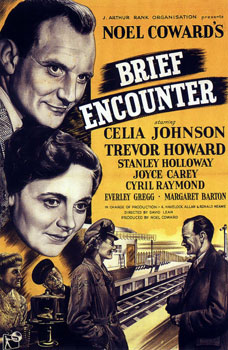
It is a British romantic tragedy directed by David Lean from a screenplay by Noel Coward based on a 1936 one-act play Still Life. It stars Celia Johnson as Laura and Trevor Howard as Alec. I saw it on YouTube thanks to the wonderful restoration by the British Film Institute, the David Lean Foundation and Digital restoration by CineImage
I feel like my life has settled into a comfortable routine nowadays. It’s great, I get to travel the world and do amazing science and get to meet super interesting people. And then I get to go home to a kind and loving family. I have no money troubles, no illnesses, no major burdens. But one thing, I do try to do every so often, is to realize the uniqueness that lives in that routine, the small things you know. It occurred to me when I heard yet another person complaining about air travel, how we have forgotten how magical it is that we get into a metal flying tube and are at our destinations so quickly it was unimaginable just 120 years ago. It’s a bit like being in love sometimes, grateful for it, your senses are more tuned to the world around you and you see the good in everything.

I think that is what I take from this movie the most. It’s about a love story between two married people, that was so brief, it didn’t even fully get off the ground. It was so powerful for them, it makes it seem so powerful to us, too. Yet life around them goes on as normal, I like the little “will they, won’t they” routine the train conductor has with the refreshment room lady or how the kids are petulant, but nice. When they’re in love, suddenly everything, even a lady playing the base weirdly is wildly funny or an excursion to an old stone bridge meaningful.

Did I buy into the romance? Yes, I did. Celia Johnson plays the part marvelously, strikes just the correct balance (for that time acting, at least) to make us see and believe what she is going through. Her change in face when she is lying to her friend on the phone asking her to cover for her to when she hangs up, is well portrayed to us. And Trevor Howard makes it very easy for us, the audience, to fall for him, too. I also like the realism on how it won’t last – like what are they supposed to run away together? It takes me back to one of the final scenes in “The Bridges of Madison County“, how she is clinging to the door handle, but doesn’t act on it.
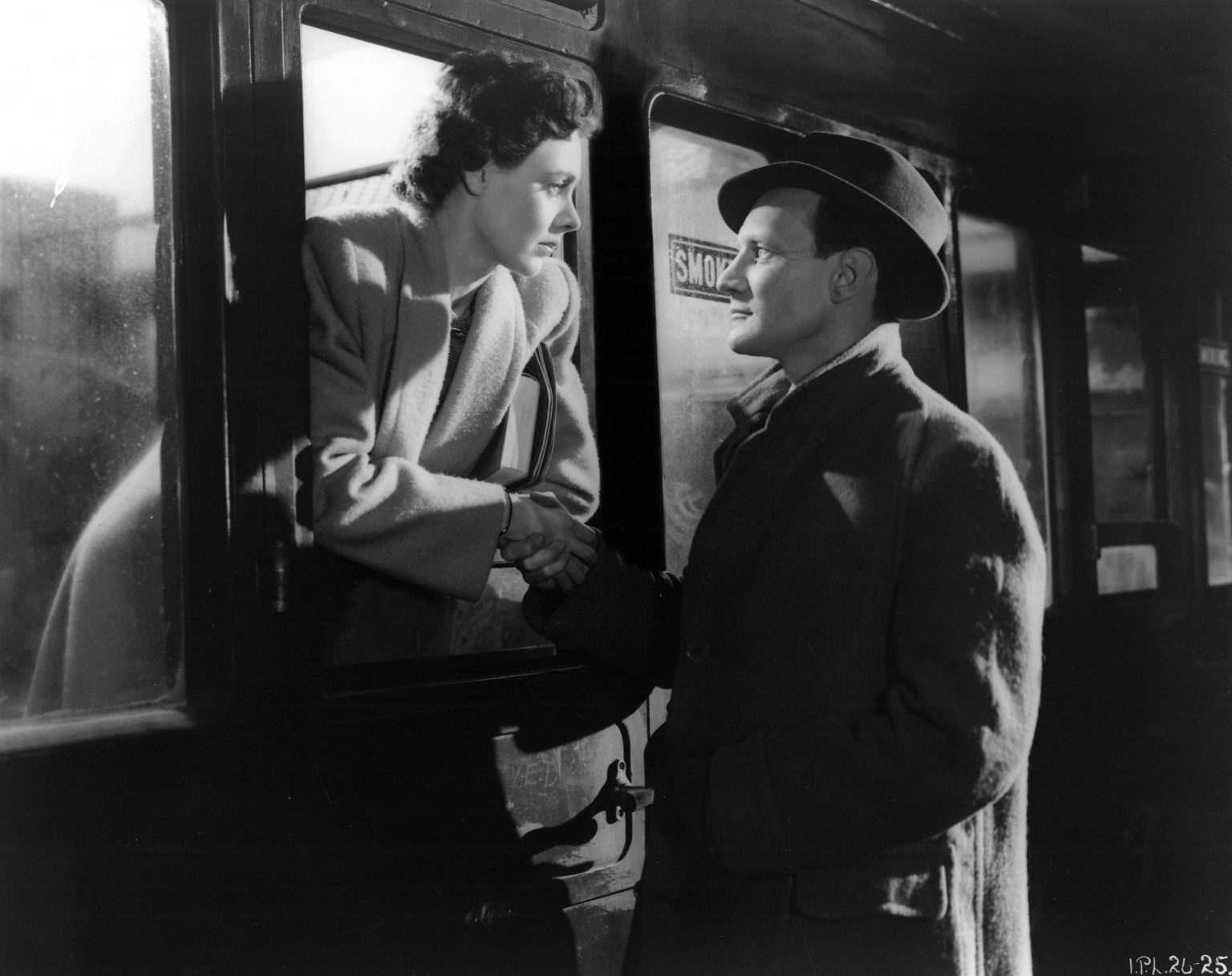
The movies this is most compared to, is the “Before-Trilogy” by Richard Linklater, the giddiness of the first encounter on the train, the played upon non-chalance in the second movie and the setting in of the realism in the third movie. It’s not just me, one of the top comments on Letterboxd is a misquote from Before Sunset (my favorite one of the three): “Baby, you’re going to miss your train!” (she says plane in the movie) and it’s all we can think of, that Laura (of Brief Encounter now) should give in to her feelings. Sadly, I do give the slight edge to the “Before Trilogy” in that sense, “Brief Encounter” is just a tad too melodramatic.

The final interesting aspect, which I didn’t know, was the music. In the background it kept playing the second movement of Sergei Rachmaninoff’s Piano Concerto No. 2, but we do now know it by the name “All by myself” made mostly famous by Celine Dion. If you don’t know the story of that note, how it gives you chills how she sang it after he husband died, I fully recommend this YouTube video David Neely made of the song. Anyway, I kept thinking about the sadness of the song as I watched the movie and it fit so perfectly. Well done, David Lean! I am now a bit more melancholic and romanic, but tuned to what is happening around me, thankful for what it has given me.
1943 – The life and death of Colonel Blimp

1943 – The life and death of Colonel Blimp

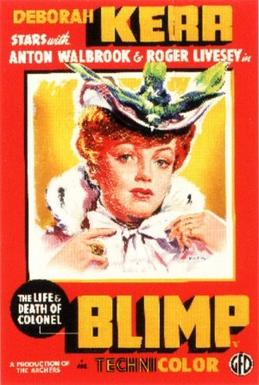
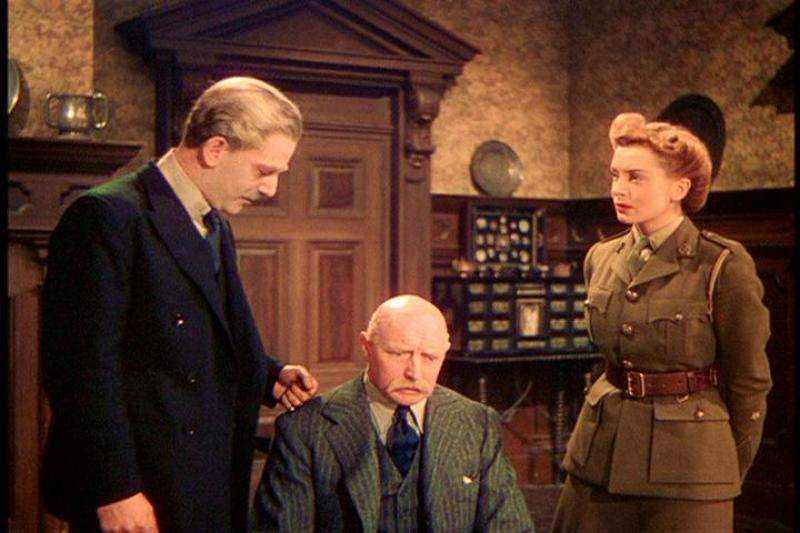
It’s an english epic biography of an english soldier, with elements of war, romance and friendship. It was produced by Michael Powell and Emeric Pressburger. It stars Roger Livesey as Clive Candy, Anton Walbrook as Theo Kretschmar-Schuldorff and a very young Deborah Kerr in 3 pivotal roles in Candy’s life. This movie also, thankfully was on YouTube.

We have now reached 1943 and while on the outside World War II is raging, also the number of movies being produced are certainly going down; there were only a third of many movies being made that year than in 1939. Also the themes are changing to include the raging war, but just as last year’s movie, one has to be careful not to fall into outright propaganda movies.

So, this one fit the bill, which was a quite critical of the English mindset of the beginning of the 20th century, with its colonialism, its supposed noblesse oblige, but all through the eyes of a quite naive English soldier stuck in the 19th century with allusions to honor and a carefully smoothed over history (for example, making light of the Boer concentration camps). One aspect I liked, is that that the movie didn’t tell you about it, you’re like two thirds of the way in and it dawns on you, “oh, that’s why it doesn’t sit right, it’s a critique of the old chap, not a celebration!”.

The way his obsession for a woman is manifested in him falling for the same type over and over again – heh, Deborah Kerr playing three roles in three important phases of Clive’s life. Creepy, but sweet at the same time. Thankfully, they’re all three quite independent women, the one in the middle marrying him to go off to see the world.

Another eye-rolling aspect is the “wall of trophies” he has in his own and which serves as a plot device to mark the passage of time. It is quite ridiculous how he accumulates these taxidermy mounts, the most cringe worthy being a whole elephant head. He even puts up a picture of his dead wife prominently in that room. We feel the uncomfortableness that Theo displays when he is shown the room.

But the most poignant point of the movie comes in the form of a speech comes right at the end. Clive is still steeped in his old ways of fighting right until the start of the Second World War. It reminded me of some aspects of Hillary Clinton’s campaign: Michelle Obama’s “When they go low, we go high” or her bringing up the dead Syrian toddler on the beach breaking he heart. It was a dirty fight and to a dirty fight you don’t bring appeals to honor or dignity. The movie explicitly has a speech about it from Theo:

“i don’t think you won it. we lost it — but you lost something, too. you forgot to learn the moral. because victory was yours, you failed to learn your lesson twenty years ago: this is not a gentleman’s war. this time you’re fighting for your very existence against the most devilish idea ever created by a human brain: nazism. and if you lose, there won’t be a return match next year… perhaps not even for a hundred years.”

And he’s like that the whole movie, surprised that the Germans would torture the English to get the location of a bridge, while his own soldiers do the same as soon as he leaves. When he greets Theo in a sea of Germans in the English POW camp like he was running into a friend at the movie theater and is surprised that his counterpart is quiet and reserved.

It’s Theo that ends up being the most fascinating protagonist of the movie. Even when he doesn’t appear through large parts of the movie, his presence is there on Clive throughout. And when he does come back to plead to be accepted by the English we learn how his whole world (view) has been slowly, but surely been destroyed. The sadness of eyes, when he says he lost his two sons… they’re now good Nazis.

I saw “One Battle After Another” last weekend, excellent movie, highly recommend it! And it told the themes of fighting for justice, how sometimes you have to fight dirty or perhaps to go against “the rules” to do right, precisely because the rules are often done by evil people. Also here, in the end, the Colonel sees the need to fight for what’s right, not for the ceremonial rules.

Lastly, some more technical aspects that need to be mentioned, but I’d rather let Scorsese introduce them for me. For a movie about someone’s life, the movie is actually very sparse in telling the most traditional aspects of it – battles won, marriages, deaths – they all get hinted at in newspaper clippings, but never shown. Rather, it is more a collections of meetings which at first don’t seem to mean much, but will define him for the rest of his life. Even the significant duel between Theo and Clive has a ceremonial and ritualistic preparation aspect that goes on for many, many minutes, but when the duel starts, the camera cuts away to the snow. It isn’t important, the build-up is, because it tells us about the type of battle and consequences that it will have.

The other aspect, is the behind the scenes stuff. Clive was supposed to be played by Laurence Olivier, but this was opposed to by Winston Churchill. Roger Livesey brings an amazing performance – this typical english speech, where they don’t even unclench their jaw – so authentic, but so jarring it made me like the movie less. The movie in general was opposed by the war department for the sympathetic depiction of a German soldier and its English critiques detailed above. In a recollection from Powell, he says that he had an interview with the war minister and he had to bluntly ask him if they were going to forbid them outright to make the film. He said something like: “Oh my dear fellow, we can’t possibly forbid you. That wouldn’t do at all. But don’t make it or you’ll never get a knighthood.” So they made it and Powell never got his supposed knighthood. Very on the nose, that one. Ha!