1928 – The Passion of Joan of Arc
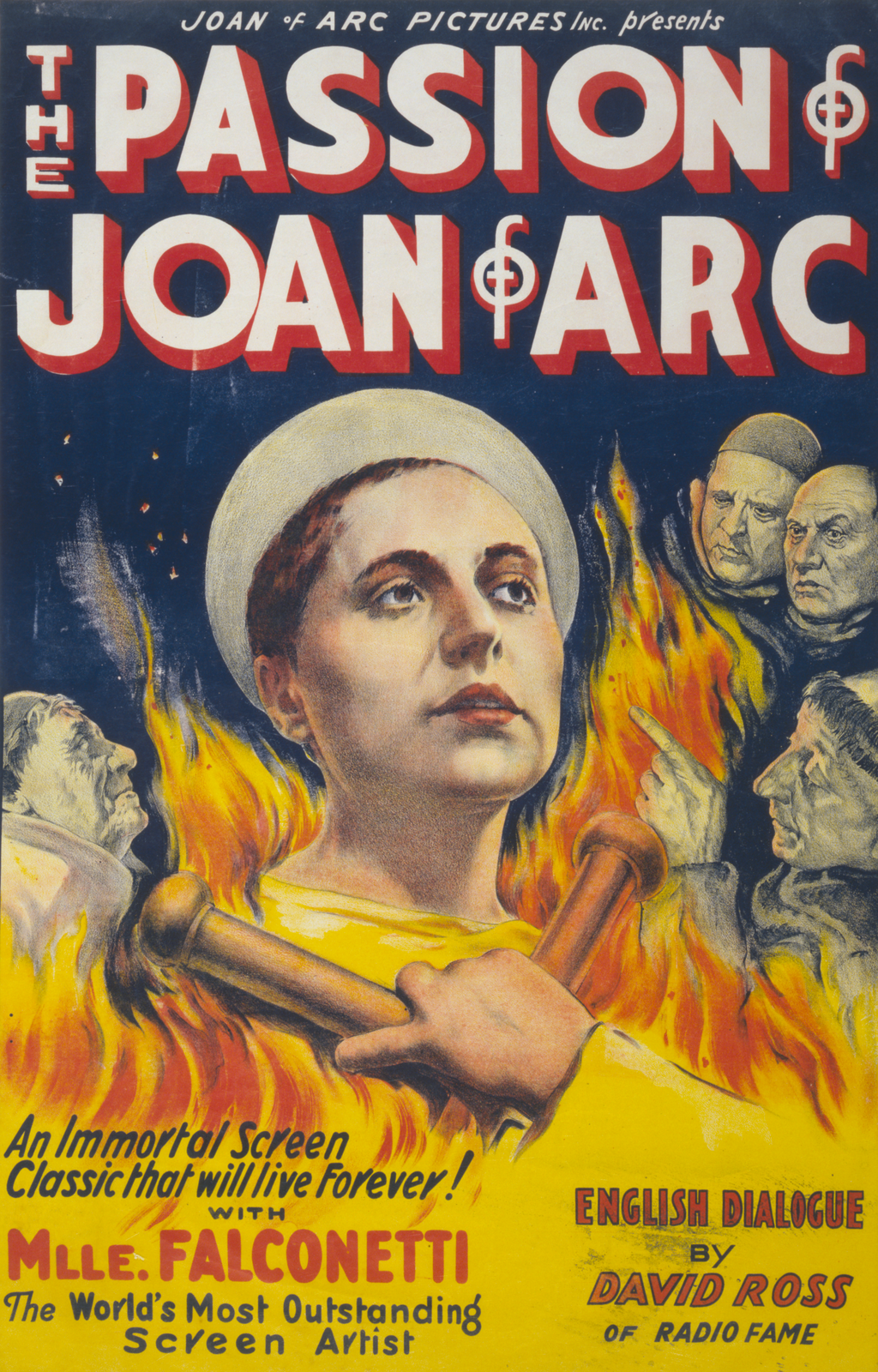
Produced by Société Générale des Films, directed by Carl Theodor Dreyer, is a 1928. It stars Renée Jeanne Falconetti as Joan. It is a French film based on the trial record fro Joan of Arc. I watched it on JustWatch here kindly remastered and made public by the Open Archive.
Because of David Lynch’s recent passing, I saw Mulholland Drive for the first time a few weeks ago. I had always been scared to watch it, that I would probably not understand it. So glad I did, because I absolutely loved it, especially the performance by Naomi Watts. However, I don’t know, if I liked it so much, because I understood a lot of callbacks, e.g. the “Kim Novak, Vertigo” dress that Betty wears at some point in the movie. I kept asking myself, if I would’ve understood it as much 24 years ago, when it came out, me not being mature enough or would the chills that I had throughout the movie been enough? I think the same applies for this movie, The Passion of Joan of Arc. I’ve always archived it to “probably need to see this at some point in my life, but I am still too scared that I won’t get it”. I have been disappointed before – unimpressed by Citizen Kane, bored by Lawrence of Arabia, confused by The Last Picture Show, so it’s not a given that my fears will be for nothing.
Well, I am glad to say that “I got it” for this movie. The main theme being the feeling of dread, discomfort and desperation from the oppressing close-ups in this movie. It is quite experimental, but simple at the same time. The mantra in movies usually is “show, don’t tell” – that’s what the moving pictures are for! But then you get something that turns it on its head – think 12 Angry Men, which plays out only in the juror’s room – it’s such a fine line, because a lot of the showing is only in the desperation of the faces, while the telling is often the classic expository dialogue. And the same happens in this movie – it basically has no plot, it’s the final days of Joan of Arc and her trial before her burning at the stake. It’s all the oppression she felt, but her quiet defiance in the face of torture and death.
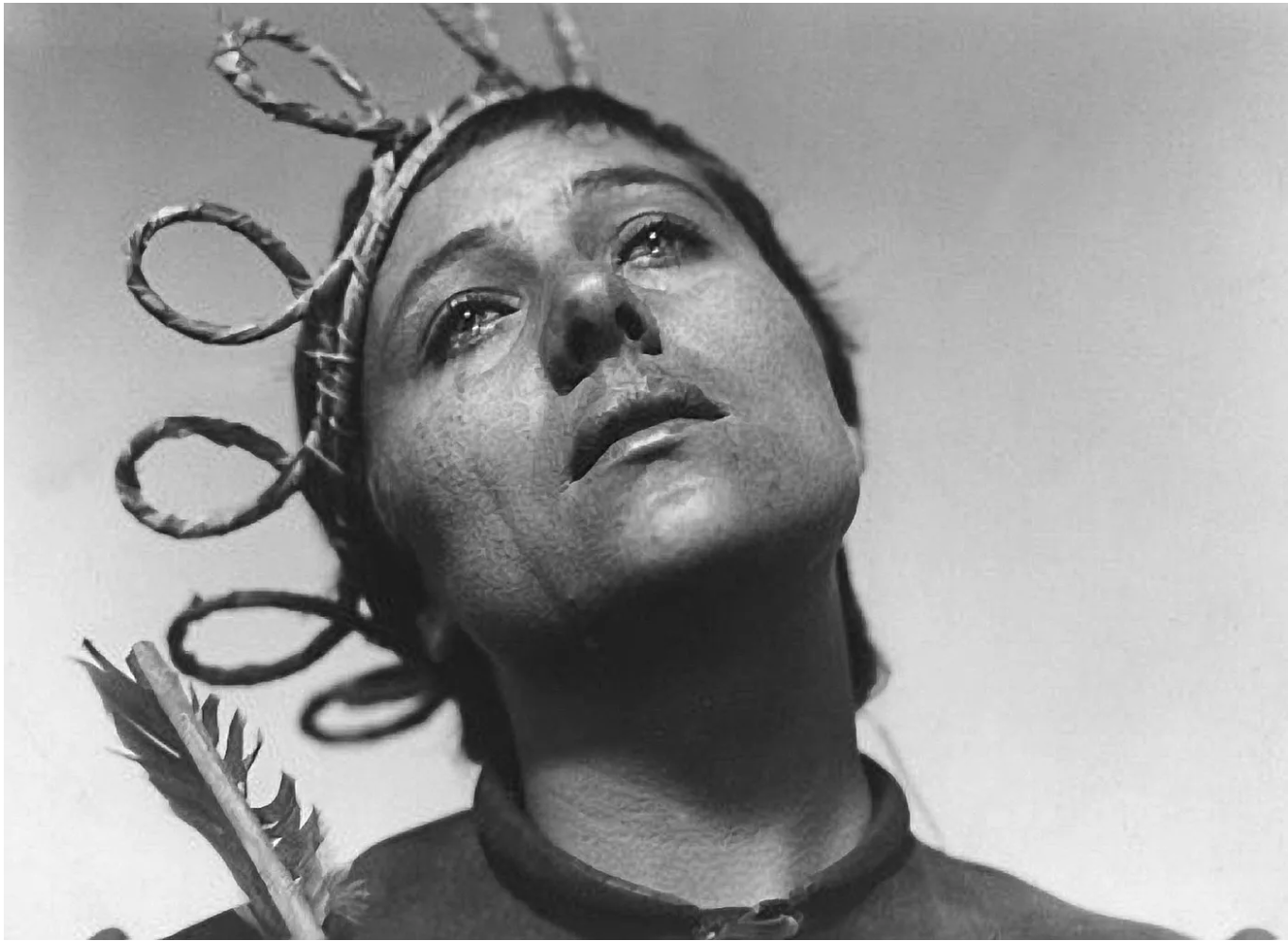
Just like Joan of Arc itself, I also liked the quiet defiance it took to get this film made. She had just been canonized as a saint 8 years before, so fervors in France were strong to honor one of their heroes. It was quite controversial that (a) the plot was just about her final 10 days, not the amazing battles that inspired France’s last push in the 100 years war against the English (b) the movie was directed by a Dane and not a Frenchman and (c) they tried to make it as original as possible, largely reproducing word for word the original transcripts from the 15th century – condensing them into one trial, which did not sit well with the Archishop of Paris at the time and we final restoration only coming to us in 2015 after the final cut was found in a mental institution in 1981.
And then of course, there is the feminism, quite remarkable also for 1928. How the subtleties in the faces doing the horror belong to men and the faces distorting in horror at what its happening, belong to the women (with a few unhelpful exceptions such as the priest sprinkled in). Quiet, defiant competence gets women so far and Joan of Arc, but also here Maria Falconetti’s performance underscored that! Very strange to juxtapose it to the so-called feminism depicted in Lessons in Chemistry that I just finished a few days ago (blergh!). The brilliance in so many women role models for me was how they could inspire anybody to fight, work, protest, vote with them, not simply preach! This movie, while simple, also does that!
 Tanya's Astro Blog