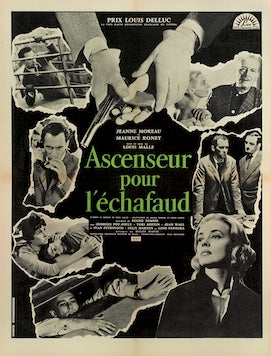
1958 – Elevator to the Gallows
It’s a French crime thriller directed by Louis Malle. Technically, it’s not Nouvelle Vague (French New Wave), which is more rooted in the early 60s, but it lies in this transition, borrowing elements from American movies, like the film noir aspects, but adding in the meandering elements of French cinema, like the amazing soundtrack from Miles Davis (who spent a few years in Paris, and always saw the city as a creative hub for his career). It stars Jeanne Moreau as Florence Carala, the wife of a prominent arms dealer, and Maurice Ronet as Julien Tavernier, her lover and husband’s murderer, whose whole plot unravels when he becomes trapped in an elevator. I rented it on Amazon Video for 3.99 Eur.
There’s an old saying attributed to Bill Gates that says “We overestimate how much things change in 2 years and underestimate how much the change in 10”. When you are living through a decade, you hardly notice the changes, yet when you look back at pictures from yourself in the 90s, it is distinct from pictures in the 2000s or 2010s. Add in to that the music, or even different smells to enhance your memory and suddenly that decade feels so distinct and so separated from your life today, even though it is so familiar and was important in shaping you to what you are today.
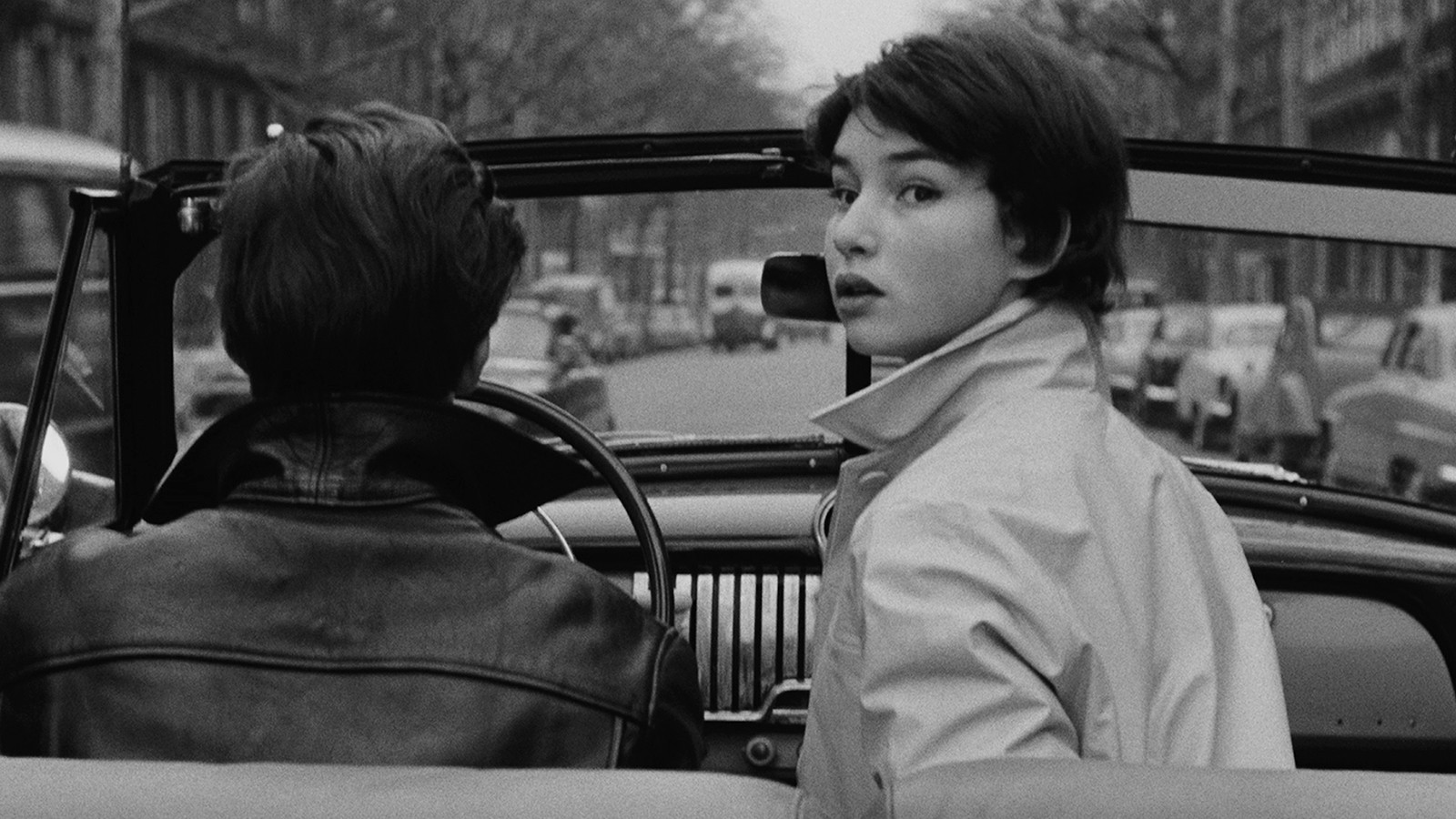
The same thing happens to me even in decades where I wasn’t even alive, perhaps even more so, since the elements of style are really the only things that you have to anchor yourself to that time. And so it happens in this movie that through the style elements—the fashion, the smoking, the functional furniture, the changing style of the cars, but most importantly the jazz music score—you feel transported to late 50s, early 60s Paris. I swear, I could smell the stench of those cigarillos they smoke at the motel, or the wood of the pencils being sharpened, even Louis’s leather jacket.
I have been too afraid of tackling French New Wave cinema, apprehensive that I won’t understand its allusions to art, its sensuality, etc. So I thought that I would first watch something that still had enough American influence and a crime mystery to overcome that. Little did I know that the straightforward series of misunderstandings that make up the story is somewhat its weakest part, and the sensual, feeling, artsy stuff was the best (so cool, really so cool).
I also liked how understatedly funny and cynical the movie was at the same time. The jolly German tourist making fun of the adventures the French have gone on since WWII—Algeria, Indochina—acts as a biting commentary against those getting rich off these wars. Or the woman searching for her lover on the streets of Paris; it looks so sensual, so sexy when the rain is falling and you don’t know whether it’s tears or rain running down her face. But then you realize the irony that she is going from a sandwich shop, to a normal bar, to a gambling parlor, and lastly landing in an underground bar—every station a further step down in Parisian society. When she finally arrives arrested at the police station, nobody can quite fathom she is the rich wife of a man of tremendous standing in society.
But of course, the score is what is best about the movie and places it into the pantheon of groundbreaking cinema. I am by no means jazz’s biggest fan, but for this movie it was perfect, making it simply smooth and cool. Funny how that is; sometimes the biggest factors in squarely placing our memories into a specific time and place are not images, but smells and sounds. This movie did that perfectly.
 Tanya's Astro Blog