1947 – The Lady from Shanghai

1947 – The Lady from Shanghai

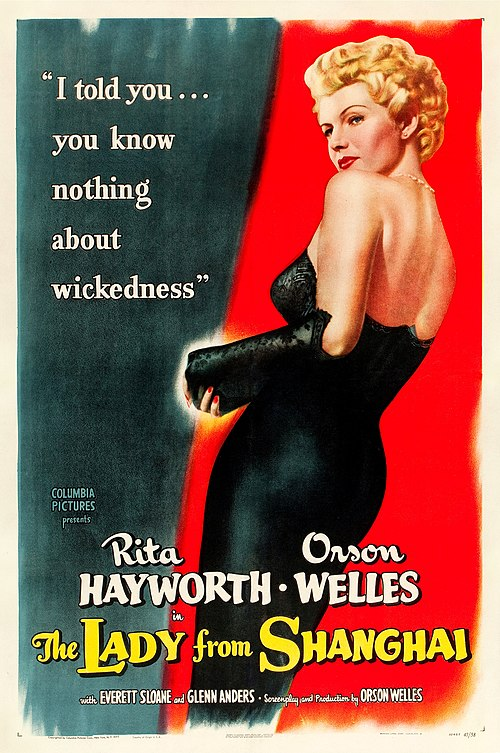
It’s an american film noir produced and directed by Orson Welles and also stars him along Rita Hayworth as the two main characters. Welles’s screenplay is based on the novel “If I Die Before I Wake” by Sherwood King. It’s about a drifter sailor and how he gets caught up between a corrupt lawyer and his mysterious wife. I rented in on Apple TV for 3.99 Eur
You know what I like having grown up in a different country than I live now? Even though, I fully understand the culture and I can adapt fully, I know of different ways something can be looked at or done. It often leaves a smirk on my face when somebody is enraged that they’re being questioned about the way “they have always done it” or the unwillingness to adapt to new circumstances. I see that in other kids that grew up as citizens of the world and not married to one country, they have a sort of pragmatism about the world without succumbing to cynicism.

So it is here that I chose to have a second movie in a row with Rita Hayworth, because she plays this woman that grew up in China and calls herself a gambler of the world – it just seemed so interesting. Her way of talking, her familiarity about the Chinese culture in the far too few scenes in San Francisco, were fully intriguing. And it left me wondering, she was clearly a very knowledgable person of the world – what was her backstory?
Unfortunately, the film itself has many, many shortcomings. Allegedly, the film is about 60 minutes longer, but Welles was forced to cut a lot out by the studio. It shows. The story is quite abrupt in some places. In my review I had said, the movie needed a good editor, but perhaps when you have to cut that much, well then it doesn’t matter, it’s always going to be janky. As said above, I so would’ve loved to hear more about Elsa’s backstory. No, instead we get weird courtroom scenes, where Mr. Bannister plays the fool on purpose.

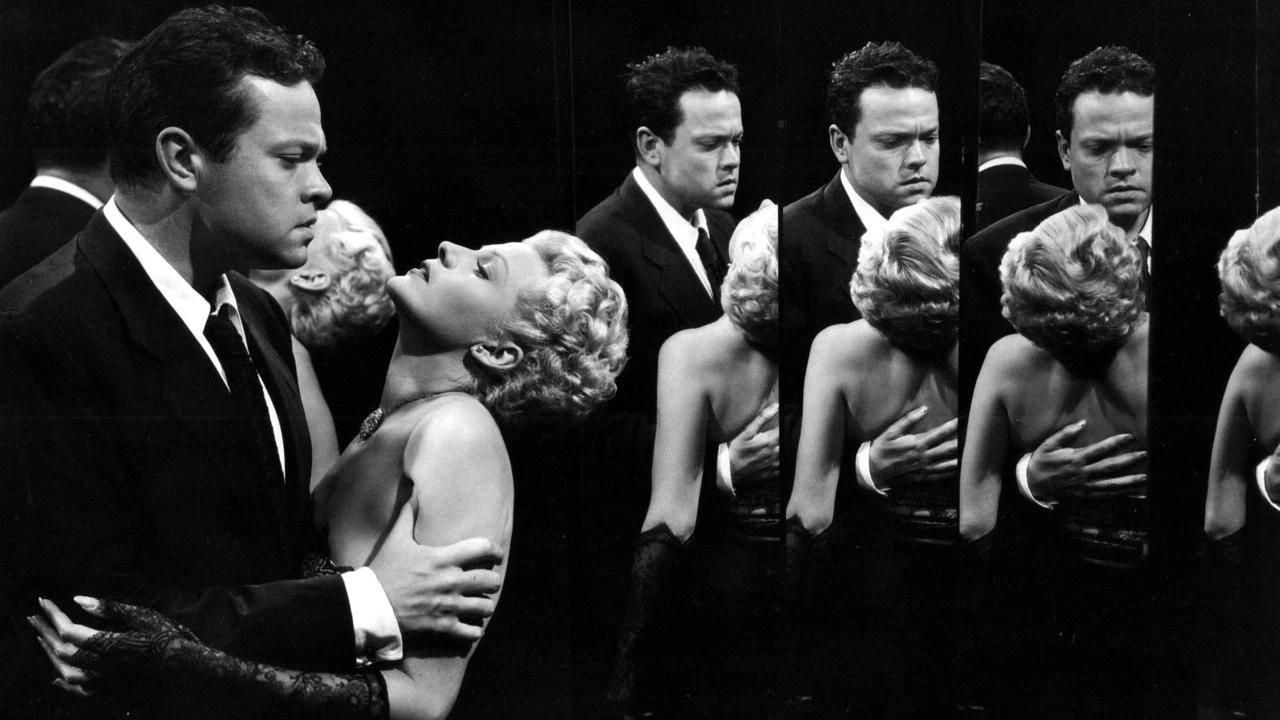
In my review, I had also said that the movie went style over substance, but perhaps too much of the substance was cut away in post. But boy, it is stylish; we’re in beautiful locations at sea and in Mexico, where everybody is sweaty and boozed up. The scenes in San Francisco are more muted, but much more elegant, even Chinatown looks enticing, like a whole other world. These scenes were both filmed on location and it ballooned the cost of the movie, but it does look amazing (like you can see the beach of Acapulco in the background and people walking on it, so it’s not a set). And the ending is what sells it to a lot of people, the hall of mirrors giving us a dizzying, disorientating feeling. Even that, was 20 minutes, cut down to just 3, a shame. Rita Hayworth, of course, steals the show as the femme fatale and even Orson Welles would’ve been charismatic and great if not for that very, very strange Irish accent he’s trying to sell (and sometimes forgets to enact).

And lastly, the melodrama. Nah, this time it was ratcheted up to 11 with the violin in the background trying to tug at your feelings. I just wasn’t sold on it. That’s the thing with melodramas, it’s very hard to argue when people get sold on them, sometimes they work and sometimes they just leave people cold. A lot of people like this B-movie noir (I did also seek it out for its quite good, but not excellent reviews), so it is a personal taste, it just didn’t appeal to me.

1941 – The Maltese Falcon

1941 – The Maltese Falcon

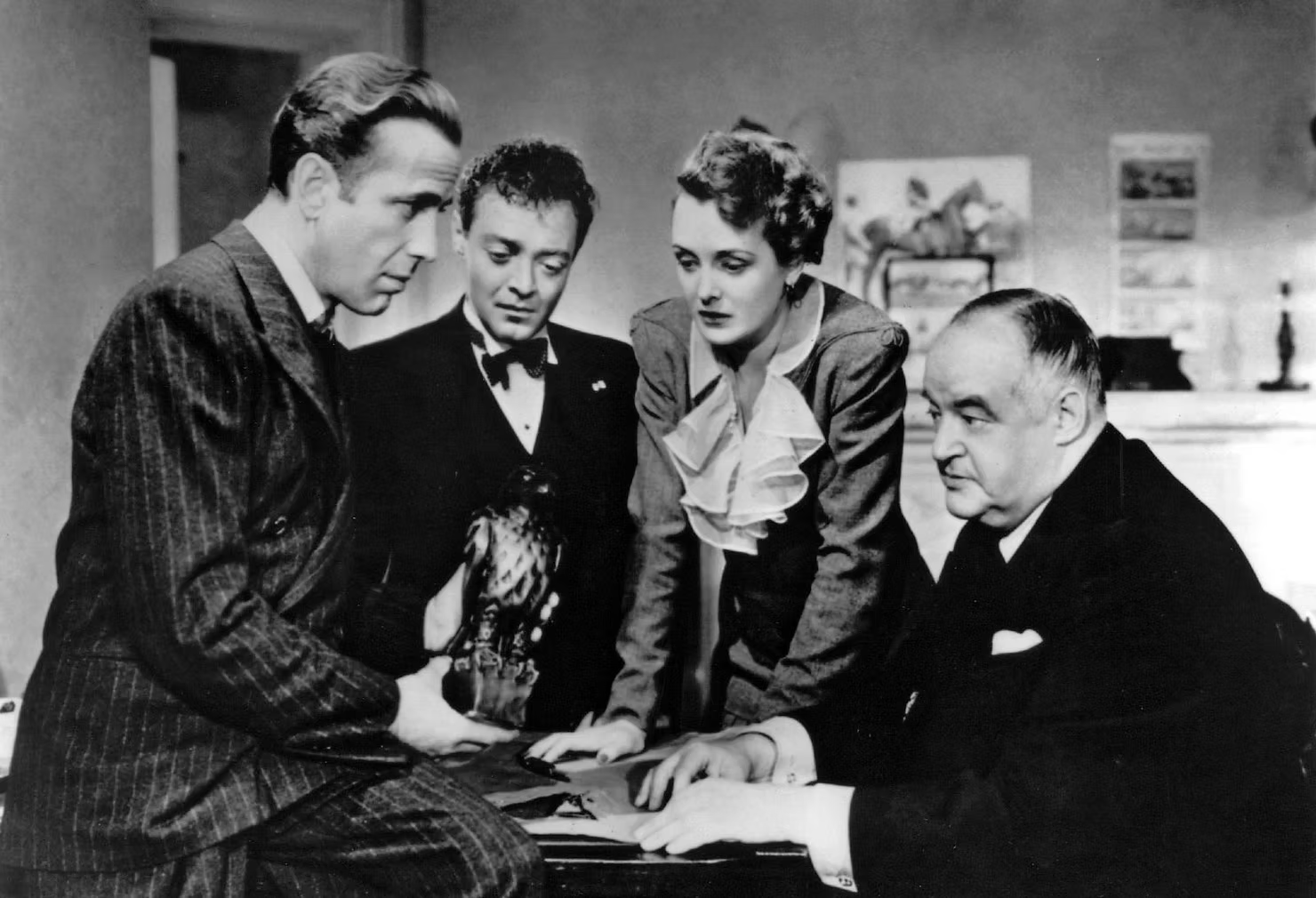
It’s an American film noir movie written and directed by John Huston in his directorial debut. It stars Humphrey Bogart as private investigator Sam Spade, Mary Astor as his femme fatale client and the great Peter Lorre as one of the villains. It is based on a 1930 novel by Dashiell Hammett and is actually a remake of a 1931 movie. I rented it on AppleTV for 3.99 Eur.

Tell me if you’ve heard this one: a bombshell of a woman walks into a private eye agency. In there, she meets a drizzled, cynical detective. He is sceptical of the woman’s story, but agrees to take on the case. In it ensues a fantastical, intriguing story, along with a romantic subplot with the knockout femme fatale of a woman. The weary and sardonic hero escapes all sort of tight situations with his cool, almost aloof demeanor, but in the end he must choose between a life with the tragic woman or righteousness. Of course he chooses the latter leading to the demise of the doomed woman. Yes, that is the plot of many hard-boiled film noirs and it is for this one, too. The actual Maltese Falcon is just a plot device to get the story going.

What makes this one special then? For one, it launched both Humphrey Bogart as a leading man and a blue-ribbon John Huston as a director into the stratosphere of greatness. It would be just the next year that Bogart would play the lead it Casablanca, I don’t think this would’ve happened without this movie. I am not a big fan of Bogey – he sure does have a big head on a small body and his weary face just signifies that, not wisdom.

“The Maltese Falcon” also is one of the pioneers of this style of hard-boiled story. There were detective stories before, but this look that I described in the first paragraph, is premiered by this one, especially the weird fast-talking way of the protagonist. I swear, like half an hour after seeing this movie, I kept describing things in my head in the same manner that Sam Spade did. A sort of “look, honey, we all know what’s going on here, but let’s call this dinner sandwich for what it is, nothing more, nothing less. some ham in the middle, little bit of butter, i’ve always liked it this way, perhaps today with a pickle on the side…” when having dinner.

It also features the decisive film noir low angles and lightning that make the genre so distinctive – just pay attention to that lamp in Sam’s apartment, it’s like an additional protagonist. Several movies after that emulated that style – some I have seen are Double Indemnity and The Third Man, the last one being my favorite with a plot of someone making a fortune by selling fake penicillin.

And yes, that’s just the crux – it was more style over story. It was all well and good, but the story of this black bird is way less interesting than the question that drives someone to doom hundreds of people by selling them fake medicine. Or the water politics of Los Angeles in another hard-boiled, femme fatale story in Chinatown with its devastating reveal. Here, the assured Spade just calmly solves everything, avoiding not just three antagonists, but also the police. The only thing that saves the movie and the characters as a whole is Peter Lorre as Joel Cairo. His weird elegant, but somehow false style is so funny and intriguing at the same time. That little man already made left me with his mouth open as the villain in M and here he was also the spice that made this movie bearable.

I am glad I watched this movie for this “100 movies” project of mine. At one point, before I became a mother and Netflix was still sending DVDs, I was going through AFI’s Top 100 movies and this had been on the back burner and I am happy to cross it off so many lists. But I don’t think I will visit this one any time soon – it may have kicked of the genre, but since then, there have been many more and better examples of the genre generated.