1942 – To Be or Not to Be

1942 – To Be or Not to Be

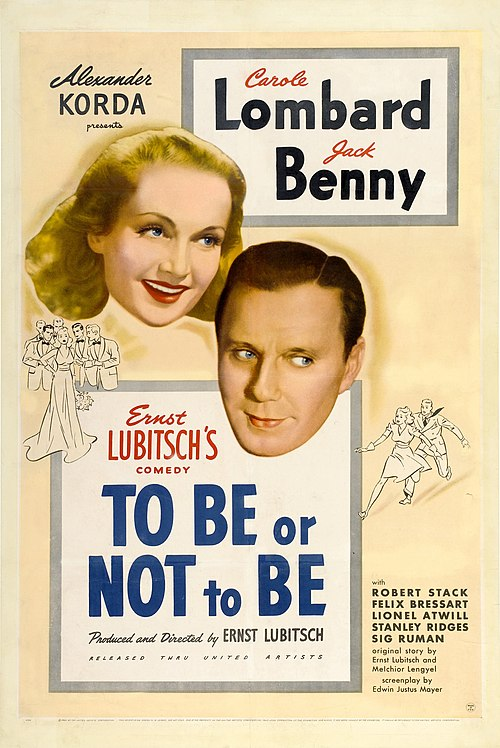
It’s an american black comedy directed by Ernst Lubitsch. It stars Carole Lombard and Jack Benny as Maria and Joseph Tura in a biting satire of the Nazi invasion of Poland and a theater troupe’s rebellion against them. I am happy, I found it on YouTube. Incidentally it was Carol Lombard’s last film, her crashing on an airplane during the movie’s post-production. There is even a rumor that some dialogue of the movie was edited to remove the line “”What can happen on a plane?” out of respect for the circumstances surrounding her death, but that has never been confirmed. Clark Gable never recovered from her death, all quite tragic. I recommend this episode of Star Wars season from the “You Must Remember This” podcast for the whole story.
Jimmy Kimmel was summarily fired this week after saying that the “MAGA gang” was “desperately trying to characterise this kid who murdered Charlie Kirk as anything other than one of them” and of trying to “score political points from it”. I don’t know how this is going to play out (Disney’s stock seems to be in free fall as of September 18th), but I was so reminded of this movie, which I saw a few days back when it happened. In the beginning of this movie a polish theater group is putting on a production about Hitler, but they later decide to go with the tamer “Hamlet” to appease the looming threat of the Nazis. Eventually it dawns too late on most Poles that there is no appealing to fascists, no matter how flattering they were to Hitler. In the end, the actors rise to the occasion and are quite successful in their operation, mainly using their weapons of acting and improvisation to get out of iffy situations.

I really loved this movie. Around me, I have always heard how great the alternate history of Inglorious Basterds is; nah, while Landa is indeed an amazing villain, I found this movie much funnier, but subversive at the same time. Add to that that the war was still going on during that time and the US entered it while this movie was being filmed. The full atrocities hadn’t been committed yet, yet this movie already knew exactly how to strike a nerve. And then it’s really laugh out funny – “so they call me concentration camp ehrhardt?” or “Schulz!”, I suddenly get a smirk on my face.
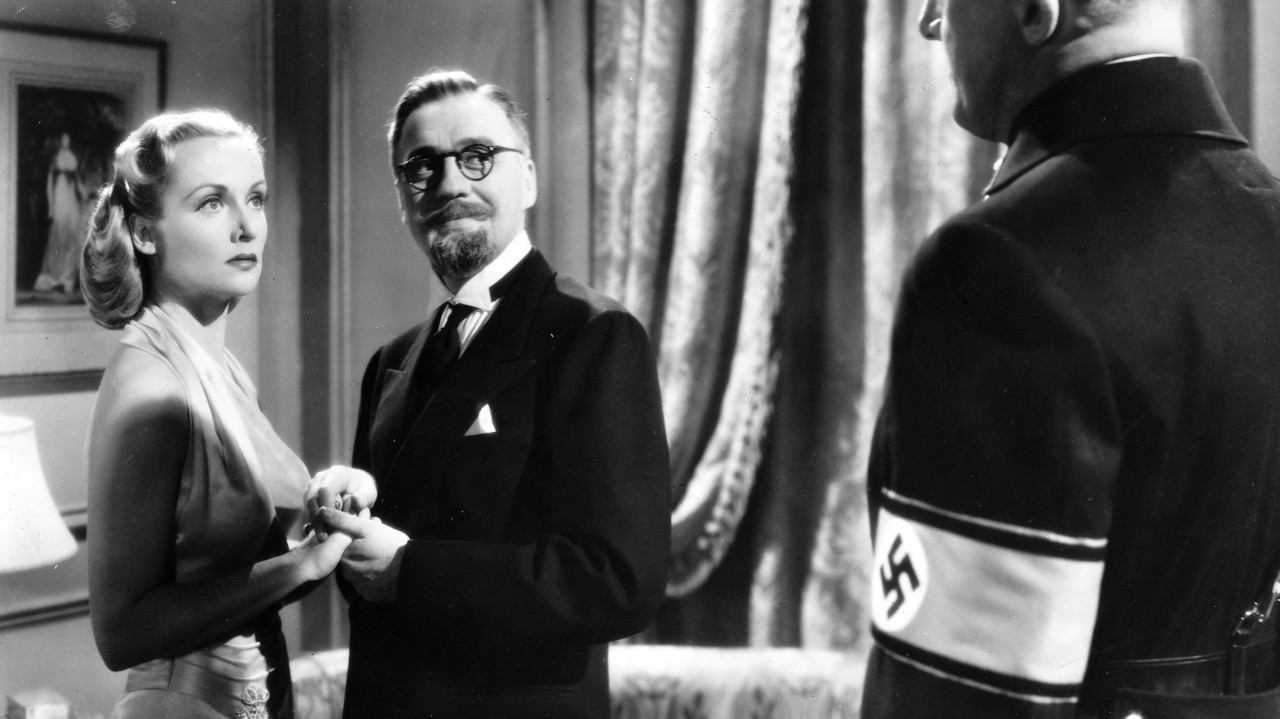
But most of all, I believe it is a movie of our time! Naturally, it is always easy with today’s lenses on to root against the Nazis, but it applies to many resistance fights there exist in the world today if one thinks about it a bit more. And I don’t mean some nebulous fascism concept, I mean standing up for our values. In one scene, Maria Tura is enticed to betray her country with all sorts of material goods and comforts; she immediately retorts with her conscience (in an absolute amazing diva mode throughout the whole runtime). Would we do the same today or do we often take the easy route of material comfort?

Casablanca tends to be remembered as *the* movie of 1942 that dealt with Nazi themes and a great love story. And it is good, but I honestly responded to the satire of this movie much more than the schmaltzy romance of the former. It is comedians and laughter that will save us in the end!

1941 – The Maltese Falcon

1941 – The Maltese Falcon

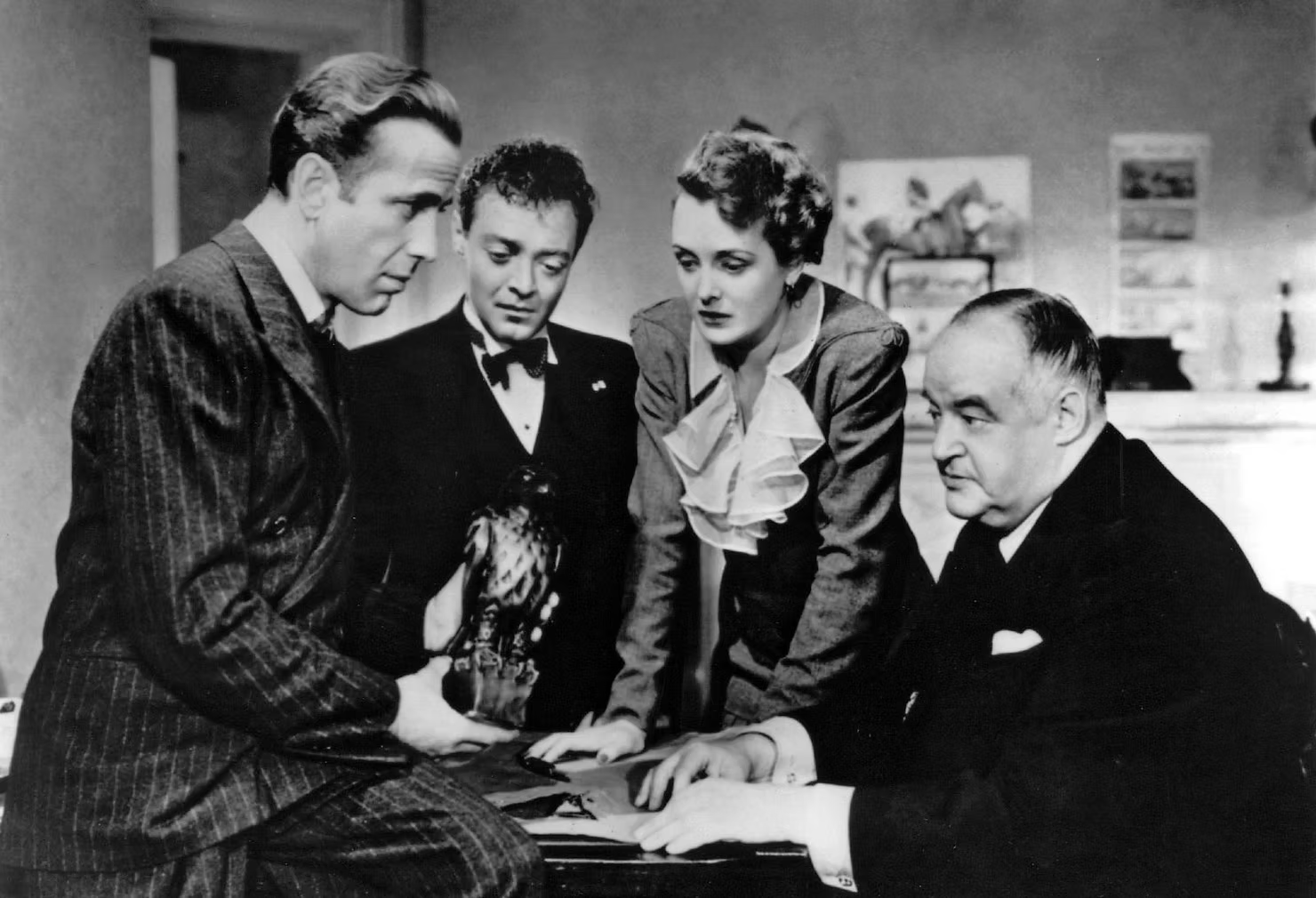
It’s an American film noir movie written and directed by John Huston in his directorial debut. It stars Humphrey Bogart as private investigator Sam Spade, Mary Astor as his femme fatale client and the great Peter Lorre as one of the villains. It is based on a 1930 novel by Dashiell Hammett and is actually a remake of a 1931 movie. I rented it on AppleTV for 3.99 Eur.

Tell me if you’ve heard this one: a bombshell of a woman walks into a private eye agency. In there, she meets a drizzled, cynical detective. He is sceptical of the woman’s story, but agrees to take on the case. In it ensues a fantastical, intriguing story, along with a romantic subplot with the knockout femme fatale of a woman. The weary and sardonic hero escapes all sort of tight situations with his cool, almost aloof demeanor, but in the end he must choose between a life with the tragic woman or righteousness. Of course he chooses the latter leading to the demise of the doomed woman. Yes, that is the plot of many hard-boiled film noirs and it is for this one, too. The actual Maltese Falcon is just a plot device to get the story going.

What makes this one special then? For one, it launched both Humphrey Bogart as a leading man and a blue-ribbon John Huston as a director into the stratosphere of greatness. It would be just the next year that Bogart would play the lead it Casablanca, I don’t think this would’ve happened without this movie. I am not a big fan of Bogey – he sure does have a big head on a small body and his weary face just signifies that, not wisdom.

“The Maltese Falcon” also is one of the pioneers of this style of hard-boiled story. There were detective stories before, but this look that I described in the first paragraph, is premiered by this one, especially the weird fast-talking way of the protagonist. I swear, like half an hour after seeing this movie, I kept describing things in my head in the same manner that Sam Spade did. A sort of “look, honey, we all know what’s going on here, but let’s call this dinner sandwich for what it is, nothing more, nothing less. some ham in the middle, little bit of butter, i’ve always liked it this way, perhaps today with a pickle on the side…” when having dinner.

It also features the decisive film noir low angles and lightning that make the genre so distinctive – just pay attention to that lamp in Sam’s apartment, it’s like an additional protagonist. Several movies after that emulated that style – some I have seen are Double Indemnity and The Third Man, the last one being my favorite with a plot of someone making a fortune by selling fake penicillin.

And yes, that’s just the crux – it was more style over story. It was all well and good, but the story of this black bird is way less interesting than the question that drives someone to doom hundreds of people by selling them fake medicine. Or the water politics of Los Angeles in another hard-boiled, femme fatale story in Chinatown with its devastating reveal. Here, the assured Spade just calmly solves everything, avoiding not just three antagonists, but also the police. The only thing that saves the movie and the characters as a whole is Peter Lorre as Joel Cairo. His weird elegant, but somehow false style is so funny and intriguing at the same time. That little man already made left me with his mouth open as the villain in M and here he was also the spice that made this movie bearable.

I am glad I watched this movie for this “100 movies” project of mine. At one point, before I became a mother and Netflix was still sending DVDs, I was going through AFI’s Top 100 movies and this had been on the back burner and I am happy to cross it off so many lists. But I don’t think I will visit this one any time soon – it may have kicked of the genre, but since then, there have been many more and better examples of the genre generated.