2025 I was looking for a New Year’s resolution. There’s always the typical ones – “I want to read more”, “I want to be healthier”, “I want to keep caught up on astro-ph”, the listserver we get our newest 60-70ish papers delivered to every day! Nah, I wanted a fun challenge. So movies, those are fun, but if chosen wisely, they can linger with you for a long time, teach you something and change your perspective on stuff. But rather than simply going after famous “100 / 250 lists” (AFI 100, IMDB Top 250, Letterboxd Top 250), many of which I have already seen, I decided to make my own list, that is 1 movie per year from 1925 – 2024! Of course, I couldn’t have seen the movie before, duh! Choosing a movie is as easy as me googling “movies from 19xx” and me going by name recognition on something I always wanted to see and look if I can stream or rent it somewhere (I still get my classics via DVD, we don’t have Criterion in Germany, grrr). But I do still have a life, I can’t watch 100 movies in a year. Last year, I watched like 85 and that included movies watched on planes and dumb Netflix movies, like “Carry On” (which was fine, but not what I’m looking for). So let’s make this a 4 year project. 25 movies per year, One every 2 weeks and I get a grace period somewhere in the year. By the way, if you like this movie blog, I do log my movies over at letterboxd, too. So…
1925 – “Battleship Potemkin“
Produced by Mosfilm. Directed and co-written by Sergei Eisenstein. Main character Aleksandr Antonov portraying Vakulinchuk.You can watch it on YouTube
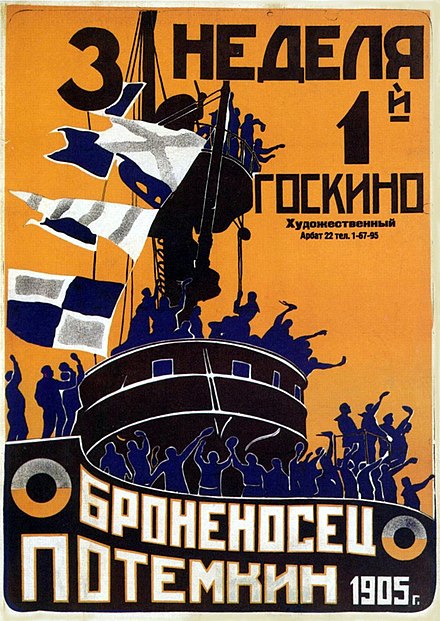
What does it take to start a revolution? Just like not every stone falling from a mountain will cause a landslide, likewise not every action against a represive regime will start a revolution. Just think of how difficult it was until finally the English gave up their colonial reign in India, how many failed attempts, horrifying in their brutalness. Similarly, before the Bolchevik revolution in 1917, there was the Revolution of 1905, which did NOT end the Tsarist regime, though it introduced the Duma. If you read about “The Bloody Sunday” (aka Red Sunday) it is quite clear that this is a catalyst of civil unrest.
This movie takes place during that time. It is based on true events, though the film has been changed for propaganda sakes and you need to take this into account at all times, when watching this movie. In any case, because of the Russo-Japanese war happening at that time, the Black Sea was controlled only by dingy warships, none of which were given much importance, let alone proper maintanenance. It is when the ship is given rotten meat (cinematically disgustingly exaggerated with maggots crawling all over it), that the mutiny starts. Vakulinchuk, a simple sailor, emboldened by hearing about the unrests happening in Russia decides with many other sailors to refuse to eat the rotten meat. In any case, things escalate quite quickly and I don’t want to give things away, but the sailors do take over the ship and go to Odessa to bury the ones they lost. In Odessa, the actions of the soldiers inspire the common folk in the city to join in on the fight against the higher powers.
It is then in the movie when the most dramatic and most well known scene of the movie happens: The Odessa steps. Cossacks from the top simply firing on fleeing civilians, children, women, even a dreadful sequence of a baby carriage barreling down the steps… It is a silent movie and yet I got anxious and even had to flinch away a few times. The battleship retaliates this inhuman attack by firing onto the opera house where the Tsarist leaders are meeting. Battleship Potemkin now has a big target on its back, all the rest of the Russian fleet in the Black Sea will go after them. Will they survive or go down in a flame of glory?
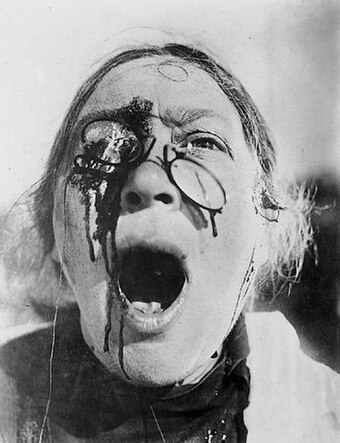
It is quite ironic that the actions take place in modern day Ukraine, that atrocious acts are done on Ukrainian citizens, in the name of a higher government.
In any case, the movie had a big influence on the next years. It is always weird to watch these old films and World War 2 hasn’t happened. Apparently Goebbels was impressed with it and the power of movies as propaganda. It is really quite simple, yet effective in its propaganda, you immediately know who to sympathize with, but they are easy to sympathize with. But just like this Salon article makes clear – the propaganda isn’t what is captivating about this movie. Otherwise it would’ve disappeared in the archives of the Soviet Union only to be studied by historians and not a movie enthusiast in 2025. It is the revolution in filmmaking that made this movie remarkable, the art of the montage, the capturing of emotion on the steps recreated in many movies even with the carriage as an homage. And that’s what will stay with me, a remarkable movie!
 Tanya's Astro Blog