The other side – serving on a Telescope Time Allocation Committee

This week I want to talk a bit about observing and TACs (Time Allocation Committees). Usually, when you want to observe at a big telescope, you must submit a proposal for your program. In that proposal you have to explain in detail what you want to observe and the scientific merits of your program among other things. Some telescopes (especially of the space variety) want to include how your program might relate to public outreach activities, other telescopes require an extensive list of your previous work, so that high quality and timely output is ensured.

All these things are graded by a group of people called the TAC. It is usually a group of people familiar with the facility and the scientific field of the proposal. However, large leeway can be made in either of these directions. If there is a time oversubscription, that is if the number of proposed observing hours exceed the number of available hours, then only the highest graded proposals will get any observing time. For highly sought after telescopes, such as the Hubble Space Telescope, the oversubscription rate can be as high as 10:1. Considering that only very few outright unfeasible or unscientific (aehm, bad) proposals get submitted, that is a lot of pressure on the TAC, making sure that only the best programs are selected. Every member has to carefully read the proposal and make personal notes, grades and comments, but each proposal gets discussed by the time the panel meets, to make sure that there are no conflicts of interest, personal vendettas or even to clear out some potential misunderstandings. The TAC then sends the recommendations and grades to the telescope scheduler, who actually has final say which programs get chosen. The proposer then gets the comments back with a likelihood with which the program will actually be observed.

During the last few years all of this was pretty much a black box to me. I submitted and submitted proposals. Sometimes I got the time, sometimes I didn’t. Sometimes the negative feedback was extremely helpful, sometimes… well, it really wasn’t and actually made me angry. Sometimes the feedback was a bit bizarre. A few examples (paraphrasing to make shorter): “This program is great, but the proposers should have asked for more time, so we chose to not give any time”, “This program is great, but the proposer is not senior enough”, “You have convinced us that red quasars are young, but we don’t think the young phase is really interesting”. And of course, there is the flattering comments: “This was the best proposal in its category, it should definitely be awarded time!” ha! Also, it seemed some telescopes were, hmmm, how to put this delicately, fairer than others, it was about the science and not about who you knew at the TAC.

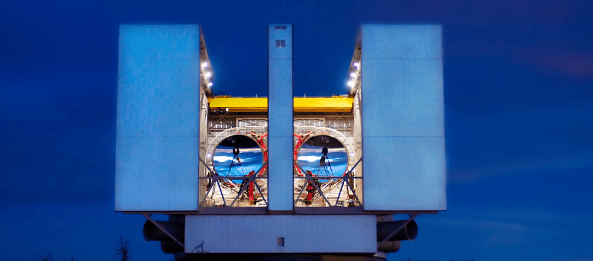
In the last year I have now been part of the LBT TAC relating to the german time allocated. The AIP gets about 5% of the total observing time, since it is building the PEPSI high resolution spectrograph. Because the amount of time is so small, about 40 hours of observing time divided into 20 hours good time and 20 hours doubtful time, the TAC has to actually evaluate every science category and not just your field of expertise (which would be extragalactic science for me).

It has been an interesting experience to be sitting on the other side of the process (similar to being referee for a paper). As usual, I am always very impressed with all the good work that my colleagues are doing in astronomy. The following are a few things, I kind of picked up these last 3 TAC meetings and evaluations:

It is not necessary to go for the home run (“this will fundamentally change our understanding in galaxy evolution”) – in baseball, as in science OBP – on base percentage (projects to work on) are the meat and potatoes. Describe to me your project in context of other work going on. It’s ok if your result will be just a grain of salt within a big field, but be sure to thoroughly make me understand that grain of salt and why it is important.

Be very aware of the telescope / instrument you are applying for. Look, we all recycle our proposals for different telescopes, but you need to at least address why this instrument is best suited for your science. Otherwise, since I am trying to cut time among a lot of good projects, I will just tell you to propose at that other instrument (that you have access to), which is better suited. This is just like applying for a job and just replacing the name and institution in your cover letter – don’t! At least change your proposal somewhat to tailor it for the facility.

This relates very much to the first point above, try to write a proposal without too much jargon in it. I know this is difficult, especially for graduate students. Believe me, practice makes perfect and you will become much better at it explaining you research to all different levels of an audience. For example, instead of saying “the M-sigma relation” write that the mass of the central supermassive black hole is related to many properties of its host galaxy. An expert will know what you mean with both statements, but a stellar astronomer might not have known everything about it.

I think those are the most important points. Of course, the actual process of the proposal (e.g. simulations or previous work) should be careful, precise and honest, but I assume that as a given. The actual TAC meetings are always fun. We are genuinely sad, even though we were looking for them, when points come up, that make your proposal unfeasible. I am definitely looking forward to continuing the work in the next few semesters.

We carry around a lot of baggage

I was pretty sick last week. No life-threatening sickness, just a common, but hard cold, the ones you get almost every year at beginning of flu season. It’s fine, you feel miserable for a few days and then go on with business as usual being essentially cured for the winter. But those few days truly are horrible.

In that sense you can’t do anything which requires lots of thought. The dumber the TV program, the better. There was no way I would be reading any of my usual science or geekery stuff, even a simple newsmagazine turned out to be much too difficult. However, I did not want to subject myself to the torture that is daytime german TV, either.

So I opted to start to marathon a series that has been on my list forever, but which I wanted to leave for a vacation or one of these sick periods (it was only last year, exactly when sick, too, that I discovered “Breaking Bad”). It was “Friday Night Lights“, a series about a high school football coach in Texas. While the football is an important part of the story, it is more about the interplay and the hardships in a small american town. It is sometimes a bit soapy (“will they or won’t they get together?”), preachy (“everybody deserves a second chance”) and boy does it try to get the tears out of you. But overall a fine series, of which I finished the first 2 seasons during those sick days.

What got me the most is how these high school kids were under so much pressure and all that before they got to college. Even getting to college was a hard thing, but kids already have lived through a lot by the time they are sitting in my “Intro to Astronomy” class. They were carrying around a lot of baggage.

It dawned on me how great it is that the kids (and yep, I feel like more of a mom now) that are sitting in my class actually chose to take a course that might be considered hard. I had to compete with a lot of personal factors to get them to sit in that lecture. And not only that, a lot of them actually like it.

In the October I held a lecture, the first real one of the semester dealing with Kepler’s laws and stuff like that. The homework was something really simple, they just had to go through the last few APODs (Astronomy Picture of the day) and send us the one they liked most and why. Fortunately, the day of the lecture was video of the Space Shuttle going through the streets of LA. I had chosen before the lecture to just let it play in the background while the people were filing in and I was preparing my notes. Suddenly, the people were pointing at the screen, whispering to each other and looking fascinated. I choose to take a short detour on my lecture and we talked about the Shuttle and the Space Program for 15 minutes. A lot of the students were very knowledgeable and it was more of a conversation. I could see the sparkle in their eyes, that they loved to talk about it. Good times!

And so I was smiling when a few days ago, I received an e-mail from two of my students from last semester. How they want to keep active in astronomy, whether they could use the 70cm telescope at the institute. When I asked them which days would be best, they responded that Friday nights would be best. These are 20-year-old kids, which are choosing to spend their Friday nights observing (for science purposes) on a crappy telescope rather than going to a pub or whatever kids do these days 😉

We carry a lot of baggage, we all have stuff going on at home, so I am always thankful when somebody shares my interests and is willing to spend time on it with me. I hope most of those students find that interest, it doesn’t have to be Astronomy, but I hope there is something that incites passion in them, that let’s them not succumb to bad stuff at home that might be drawing them down.

Workshop on “Nuclei of Seyfert galaxies and QSOs” in Bonn

On November 6th-8th I attended the “Workshop on: Nuclei of Seyfert galaxies and QSOs – Central engine & conditions of star formation” in Bonn. While it was a full meeting with lots of talks and international attendees, it seemed quite relaxed to me, since it was in Germany and didn’t take that much time away from the office.

I went to work on Monday the 5th, stayed there even longer than the typical day and then took the train at 7pm. Even so, I still managed to make it to the hotel before midnight. The journey was also relaxed for me to catch up to TV series that were stored on my computer. Once in Bonn, the hotel was just a short walk away from the main station.

2012-11-06_00-02-23_854

Oh, the hotel… I don’t know how these things work. I was looking on HRS for the best combination of offers between price and luxury and kind of stumbled on this hotel. Without even visiting the website, based on good reviews I booked it. It was a nice hotel in the center of town right next to all the sights that Bonn has to offer, no question about that, but imagine my surprise when I entered the room. I mean, look at that picture! It was the kitchiest place I have ever stayed in and believe me, years of staying in Vegas – I have been to some kitchy places. In the picture you cannot see the lavish decorations elegantly hanging from the ceiling. Or the pictures of Beethoven and women from that era. Or the many mirrors. Such a weird room. But it was comfy!

Anyway, the next day, promptly at 9, was the start of the meeting at the Max Planck Institute for Radio Astronomy. I had never been there, but I quickly realized that I hadn’t missed that much. It is basically a big block of concrete with offices in it. But anyway, I was not there to admire the architecture, I was there to listen to talks, learn something and network.

2012-11-07_18-53-19_249

What I liked about the conference was the wide range of topics covering the conference. Often, in specialized conferences, you are sometimes stuck in a box, everybody trying to research the same questions that you are tackling, with the same techniques. But here, for example, a few hours were devoted to the black hole in the center of the Milky Way and the gas cloud accretion event that is set to occur soon . I mean, this obviously will not result in an AGN and is as low powered accretion as you can name it, but it still is very interesting to see the things from that spectrum and compare.

So in that sense, the session on Narrow Line Seyfert 1 (NLS1) Galaxies was quite eye opening for me (as was a lot of the low luminosity, nearby AGN science in general), because their techniques could be applied to a lot of the red quasars I study, too. In the end, it could be that our dust-obscured quasars are just high luminosity analogues of those NLS1s. It gave me a lot to think about.

In all, it was a quite varied conference. Good enough, that I got a lot of ideas and met a lot of people. Not so good in that some parts were a bit tedious and it was just too filled. It’s hard, finding a balance on how many talks to allocate, but I was really beat at the end of the day, retreating to my hotel room early to just watch some videos.

2012-11-08_08-30-15_366

I did spend some time wandering the center of the city, though, trying to find a present for my daughter and in general just enjoying the peatonal zone in the center. Bonn is not a huge city, but it was at the center of politics for a while, when it became the capital of Germany for a long time, this was a bit on purpose, as the allied forces did not want a huge, prominent city to be the driver of Germany’s political decisions. It still is in my mind from old times, when some newscaster would start with the grave words “Bonn. …”.

Anyway, the hotel where I was staying was in the Bonngasse, which is a sort of mini Hollywood-inspired walk-of-fame of important personalities that had something to do with Bonn. The most prominent, born in Bonn, was Beethoven, whose house was just a few steps away from the hotel. During the night pictures of the celebrities are lighted and shine a sort of path. This alley also lead right to the “Marktplatz” (market place), which overlooks the old city hall, another kitchy building, hehe. When going to the conference I passed the vendors setting up shop and shouting profanities at each other. Unfortunately, it was already quite late when coming back from the conference, so I never really saw the market in action.

2012-11-07_21-35-03_395We had our conference dinner, of course. It was at a chinese restaurant right on the Rhine river. Beautiful views, with the theater and opera house shining right at us from the other side. Right now, I can’t fully remember all the details of the conversation at our table, but I’m proud to say that ours was the funnest. it was a lot of gossip and jokes – lots of laughs.

And so I will remember this little conference in its bleak beginning of November. With good times gathered around food, mostly fast food during lunch, discussing AGN science, but in a fun way: “Do you think that guy is ready to handle that data?”, “I have no idea what that means, but it’s interesting and I need to write a paper about it”, etc.

Playing with boys

I realize the title of this post might be prone to misinterpretation, but it’s at the heart of the stigma that I’m about to describe. It’s a purely personal post this time and I’m putting myself out there, but it’s stuff that I’ve seen relating to traditional gender stereotypes. As such, I might have exaggerated something in my mind and generalizations are meant as such – they don’t pertain to everybody!

It was my birthday last week. I was very happy for all the congratulations from all around the world given to me. In the evening we went out for an amazing gourmet dinner with my husband and daughter. It was in a restaurant called “Hexenhaus” (witches’ house) and since it was around Halloween the decoration was very according to theme. Anyway, I am not a foodie in the strictest sense of the word, but I do love good food and that it was, yum!

But the funnest part was spent the night before, celebrating INTO my birthday – playing poker! And since I don’t know that many girls/women that play poker as passionately as I do, it meant playing poker with the boys. What was touching, was that promptly at midnight, the boys stood up and sang their “Happy birthdays”, brought out cake and gave me big hugs. I had not told them it was my birthday, they looked it up on their own. awww.

The next few days I got all into this introspective mood, how I am still “playing with boys”. All my life I’ve done that, I’ve enjoyed it much more. It has influenced me to the point that I choose to make those interests that were traditionally pursued by “boys” my own. I am not entirely sure if it was if I enjoyed playing with the boys more of it were more traditional male activities that I liked, but I’ve often found myself in situations where I suddenly had to stop, look around and see I was the only female around. I don’t notice this as often, because you are so immersed in those activities when you are having fun.

When I was a child it meant going go-karting with my dad amongst a trough of boys doing the same thing with their respective dads. It meant playing soccer with my male classmates. As a young teenager it meant organizing Super Nintendo outings with other boys where we would order pizza and just trash talk to each other. It meant playing basketball with the younger boys in my neighborhood. As a teenager it meant long afternoons at the comic book store playing Magic: The Gathering. And here I am, grown woman with a family, still playing with the boys.

Don’t get me wrong, it’s not that I don’t like activities that are mostly populated by women – I love chick flicks and girly books, for example. Some of my best friends are female 😛 – nah, they all are. It’s just that again and again, when I’m doing something socially, with people around, I find boys around me. It’s almost as if it is easier for me to communicate to you via games – especially card and strategy games.

You know what has been great? All throughout the years all of the boys have taken me in. I don’t recall an instance where I was told I wasn’t welcome because I was a girl. Sure, there was some trash talk along the way, when I excelled (“you got beaten by a girl”), but I don’t recall anybody ever turning me away.

You know what hasn’t been great? The reaction from outside! “Why do you want to try out for karate? A girl doesn’t fight!”, “I’m having trouble accepting the fact that you are not hanging out with girls of your age (14-15) and are spending your afternoons with 10-11 year old boys”. There is a whole lot more skepsis from outside, mostly born out of ignorance, sometimes out of cultural biases. Or maybe they think men and women can never be friends. Or what do I know, it’s from the outside, not the people dealing with the substance, but the people just looking in.

And here is where the astrophysics relation comes in. Over the course of my time studying and working in physics it has been quite similar. Never once did any fellow student or colleague think any less of me because of my gender. And yep, there are mostly boys around me at work, too (though maybe not that pronounced as I have witnessed with other interests in my life). But from outside: “Why do you feel the need to lie to strangers by telling them you are getting your degree in astrophysics?” (yes, this really happened). More examples came when I became a mother, but I’m not sure if that had anything to do with the profession or the fact that I was going to work at all, so they probably don’t apply here.

I guess readers will counter all the numerous studies about how women thrive in STEM fields exactly *when* they are separated and amongst themselves. Since they do, there must be some inherent discrimination in the group itself, otherwise the good ones will always succeed. Well, I have no counter for that, I just want to say that either a) I’m very blind/deaf to that discrimination or b) I did not experience it. Ah, this now sounds all wrong. My main point is that I just want people to thrive at what they have fun and don’t just do something, because it is social convention to do it! If it means crochet, then you should pursue that, no matter what the others say. May the people outside think what they want, the people in the crochet club will welcome you with open arms, I’m sure!

So to all my boys I’ve spent so many countless hours with, sharing a similar interests, competing, discussing “pointy elbows” or some sports opinion (Trout over Cabrera, imo), I say: “Thank you! And see you at the tables, soon!”